Beautiful Virgin Islands

Sunday, Mar 01, 2026

Covid-19: The secret life of museums during lockdown

Covid-19: The secret life of museums during lockdown

Museums and art galleries are closed but inside their walls, a select few people are busy at work. Curators, conservators, cleaners, art handlers and security guards are among those caring for the nation's treasures during lockdown.

"I've absolutely loved it," says James Maclaine, senior fish curator at the Natural History Museum. "Obviously I have missed my colleagues but the peace and quiet has been really nice.

"Walking into an area like our central hall and having that majestic space all to yourself is such a privilege," he says. And amid the pandemic, it can feel like a sanctuary.

"When you consider the chaos going on elsewhere, it was definitely a place I could go where I would forget some of the horror."
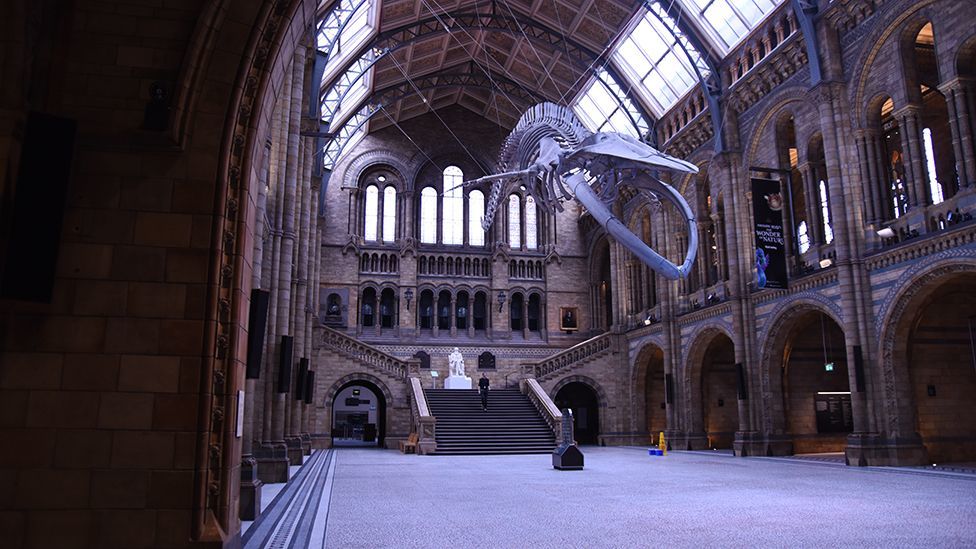
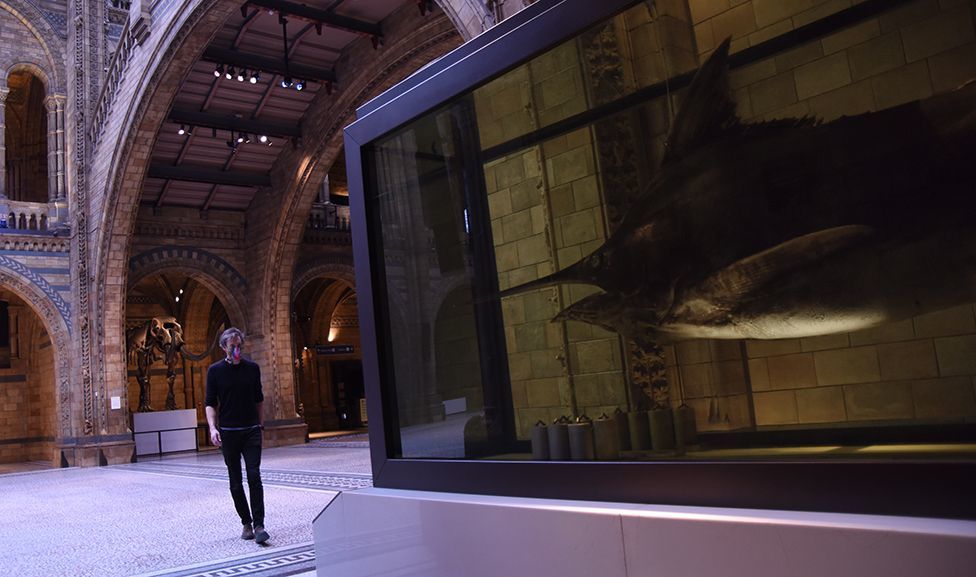
James highlights how he feels "exceptionally lucky" to still be able to go into work
One of his jobs is to check that the huge 7,000 litre tank containing a large marlin specimen is circulating well

During each lockdown, James has cycled to the London museum two days a week for essential work. He checks the wet collections - specimens preserved in alcohol and formalin - as well as doing jobs for colleagues and caring for the museum's colony of live beetles. (The flesh-eating beetles are used to strip meat from new specimens, so just the skeletons are left.)

He looks for water leaks or any fire risks - "which in a building filled with ethanol would be disastrous" - as well as insect pests among the dried specimens in the basement. "Another potential problem is the frozen collection," he says. "We have a lot of material in freezers which we haven't been able to process yet and if anything goes wrong there it would be extremely unpleasant for all concerned."
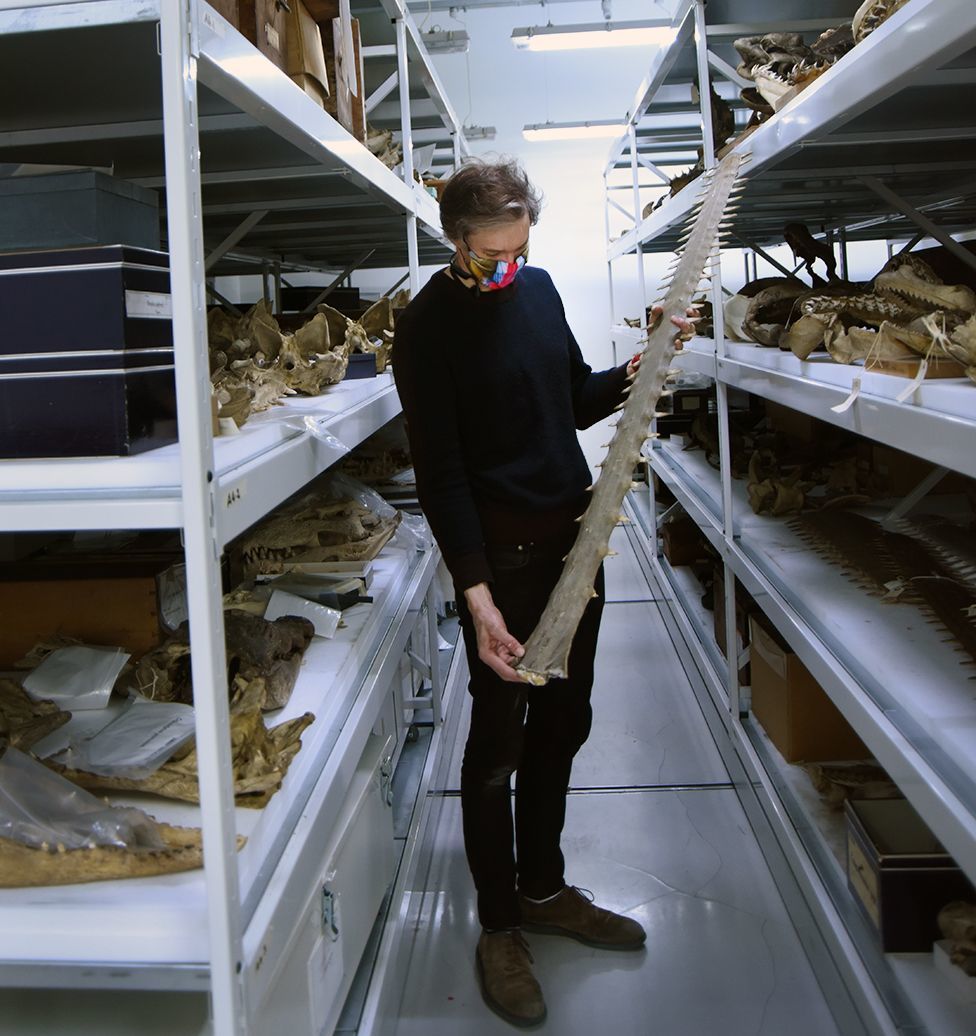
James says it's "such an honour" to help look after a museum collection "that will be around long after I'm dead"
Pests are something the National Museum of Scotland has also had to deal with. "We froze a mountain hare which had its tail nibbled by moths," says Chanté St Clair Inglis, who is head of collection services. The hare was quarantined and stored at -30C for three days. How is it now? It's good, says Chanté, and back on display.

Stuffed lions and tigers also had to be brushed and vacuumed to get rid of dust, while elsewhere oil was leaking from an engine.
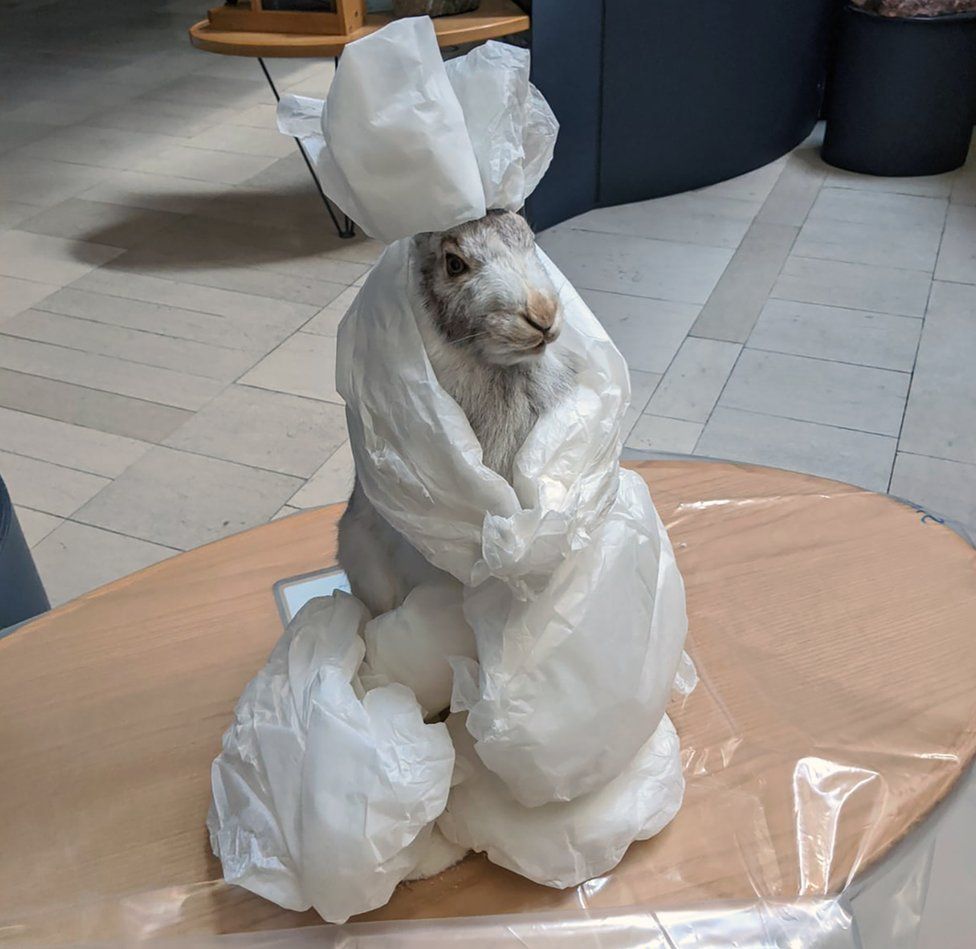
After a clothes' moth was spotted inside a display case, the hare was quarantined and put in the freezer
In ordinary times, the museum in Edinburgh relies on its whole workforce to spot and report items that need work, and then specialists go and investigate. But with most people now working from home, that can't happen - so the staff who are on-site have to do thorough checks of the huge collection.

"It's definitely an unusual experience," says Chanté. "I find walking around an empty museum quite weird, and inspiring in another way. Before Covid, even when the museum was closed it was still a time of activity. It was never as quiet as it is now."

"I feel very, very lucky, really privileged," she adds. "It's a remarkable job. In a way, at times like this, you realise how important national collections are."
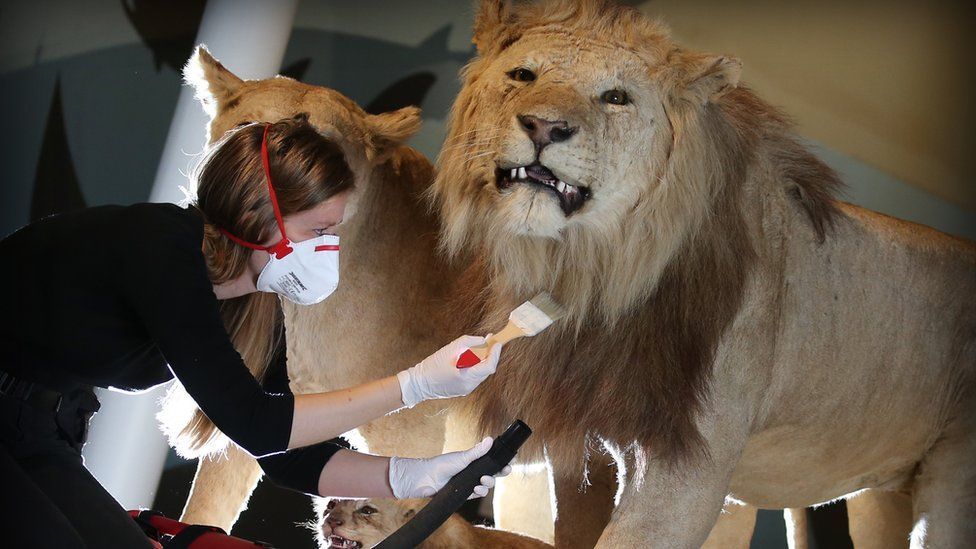
Each time lockdown happened, the museum in Scotland "put the collections to bed"
At the Science Museum, the keeper of medicine Natasha McEnroe has been working on a new project - collecting items relating to the pandemic. As a historian, she says it is "a very odd feeling" to have the sense that we are living through history.

"This is the collecting project we never wanted to happen," she says. "Obviously it is a sad story... but a lot of the objects we are collecting are actually demonstrating human ingenuity in the face of adversity."

One item she has is the vial and syringe used in the UK's first vaccination, which were driven to the museum by NHS England's medical director Prof Stephen Powis.

"I did well up, it was quite a moment," says Natasha. "These vaccine vials will be thrown away in their millions. But one was a historic item, it's unique."
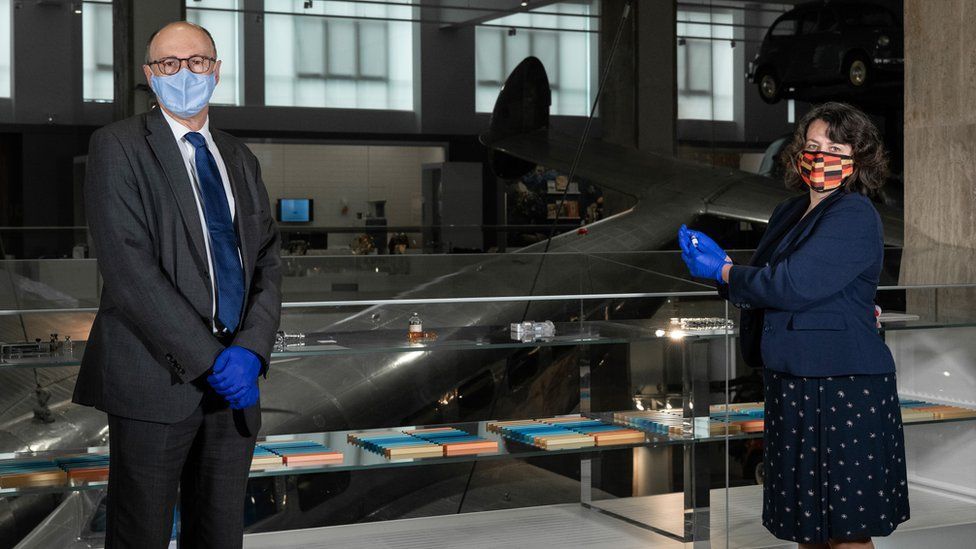
Natasha has mainly been working from home but went to the museum to collect new items
The museum has to "move quickly" otherwise items will be gone for good. But with medics so busy, it's been difficult knowing "when to jump" and ask for an item.

A few miles away, inside the British Museum, staff are grappling with something more ancient. Egyptian mummies and coffins are being prepared for a future international tour, while staff have been conserving and mounting collections for shows due to open in the spring.

Engineers are also on site to boost the level of ventilation leading to a delicate balancing act of Covid guidance and what the items need.

"We miss our visitors - they directly contribute to the care of the collections by increasing the temperature and humidity in the building which helps preserve the collection," says the museum's head of collection care Sandra Smith. Staff also miss visitors' "curiosity, enthusiasm, sense of wonder and awe", she adds.

Galleries are also busy preparing for when visitors can reopen. At the Tate Liverpool, art handling manager Jenny Hunter and her team are removing the current displays and setting up the delayed Liverpool Biennial.
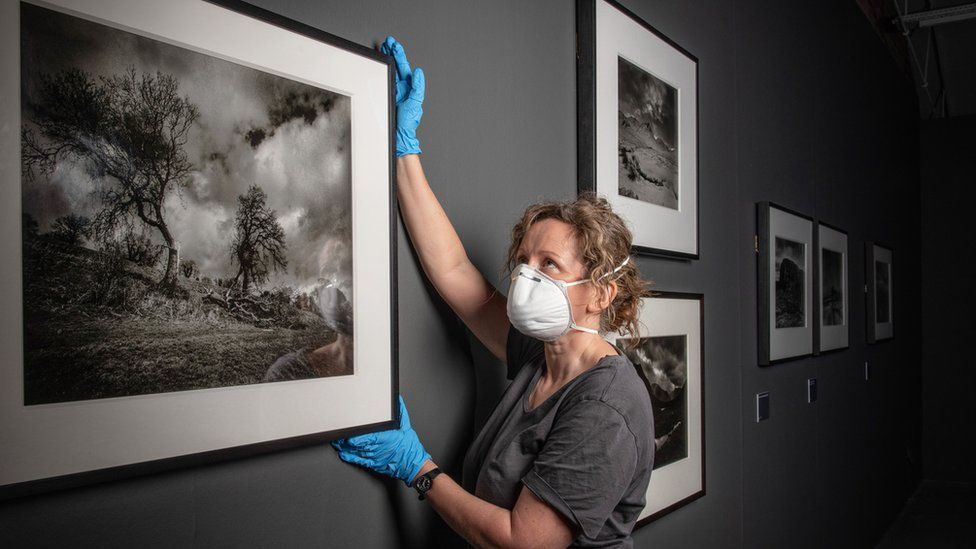
Jenny says she has spoken to her art handlers to make sure they are comfortable coming to work

"It's unavoidable to work [less than] two metres apart when you're art handling," she says - especially if the art is big or heavy. Her teams work in bubbles of two or three, wear medical-grade face masks and their shifts are staggered. There's even been a timetable for the staffroom.

But the gallery has been a calming space, says Jenny. "It feels a luxury having all this artwork to yourself." In one exhibition, the lights are off to preserve the art. "I go up to check everything's ok, it's quite eerie."

At the Tate in St Ives, gardener Jodi Dickinson - who tends to the Barbara Hepworth Sculpture Garden - says his seasonal agenda of work "continues in the garden, despite the chaos in the world".

He's missed knowing which plants people ask about or decide to photograph. "All these things help me to build a sense of what people value in the garden. Without the people... something very integral is missing."

There have been some positives of lockdown. At the National Museum of Scotland, staff working from home have had time to start digitising historical records. And Chanté says she has been impressed with how museums have rallied together to cope. "We didn't have to invent the wheel if someone else had one," she says.
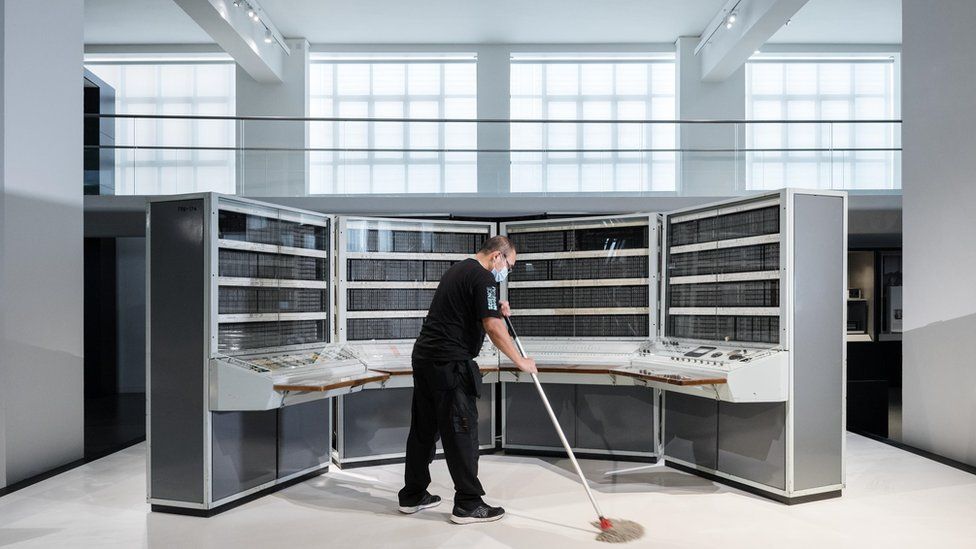
A conservator cleans a supercomputer during lockdown at the Science Museum

For James, it's meant he's had the time to work on some personal projects: "There was one job that I started in 2004 that I've finally been able to finish."

And of course, staff are looking forward to when they can reopen again. "A perk of the job is to be in the museum after hours and to walk through when it's echoing and silent," says Natasha. "But suddenly, when you're closed to the public full time, it stops being a perk and starts being quite sad. We want to see people."

Chanté agrees. "That period where we reopened just before this lockdown was just hands-down wonderful. It was just so exciting. The first people were this family with this little boy dressed as superman who ran into the gallery. He was so full of joy."


Newsletter

Related Articles

Beautiful Virgin Islands
0:00
0:00
Close
When the State Replaces the Parent: How Gender Policy Is Redefining Custody and Coercion
Bill Clinton Denies Knowing Woman in Hot Tub Photo During Closed-Door Epstein Deposition
Former U.S. President Bill Clinton Testifies on Ties to Jeffrey Epstein Before Congressional Oversight Committee
Dyson Reaches Settlement in Landmark UK Forced Labour Case
Barclays and Jefferies Shares Fall After UK Mortgage Lender Collapse Rekindles Credit Market Concerns
Play Exploring Donald Trump’s Rise to Power by ‘Lehman Trilogy’ Author to Premiere in the UK
Man Arrested After Churchill Statue Defaced in Central London
Keir Starmer Faces Political Setback as Labour Finishes Third in High-Profile By-Election
UK Assisted Dying Bill Set to Fall Short in Parliament as Regional Initiatives Gain Ground
UK Defence Ministry Clarifies Position After Reports of Imminent Helicopter Contract
Independent Left-Wing Plumber Secures Shock Victory as Greens Surge in UK By-Election
Reform UK Refers Alleged ‘Family Voting’ Incidents in By-Election to Police
United Kingdom Temporarily Withdraws Embassy Staff from Iran Amid Heightened Regional Tensions
UK Government Reaches Framework Agreement on Release of Mandelson Vetting Files
UK Police Contracts With Israeli Surveillance Firms Spark Debate Over Ethics and Oversight
Spain to Conduct Border Checks on Gibraltar Arrivals Under New Post-Brexit Framework
Engie Shares Jump After $14 Billion Agreement to Acquire UK Power Grid Assets
BNP Paribas Overtakes Goldman Sachs in UK Investment Banking League Tables
Geothermal Project to Power Ten Thousand Homes Marks UK Renewable Energy Milestone
UK Visa Grants Drop Nineteen Percent in 2025 as Migration Controls Tighten
Barclays and Jefferies Among Banks Exposed to Collapse of UK Mortgage Lender MFS
UK Asylum Applications Edge Down in 2025 Despite Rise in Small Boat Crossings
Jefferies Reports Significant Exposure After Collapse of UK Lender MFS
FTSE 100 Reaches Fresh Record Highs as Major Share Buybacks and Earnings Lift London Stocks
So, what's happened is, I think, government policy, not just under Labour, but under the Conservatives as well, has driven a lot of small landlords out of business.
Larry Summers, the former U.S. Treasury Secretary, is resigning from Harvard University as fallout continues over his ties to Jeffrey Epstein.
U.S. stocks ended higher on Wednesday, with the Dow gaining about six-tenths of a percent, the S&P 500 adding eight-tenths of a percent, and the tech-heavy Nasdaq climbing roughly one-and-a-quarter percent.
From fears of AI-fuelled unemployment to Big Tech's record investment, this is AI Weekly.
Apple just dropped iOS 26.4.
US Lawmakers Seek Briefing from UK Over Reported Encryption Order Directed at Apple
UK Business Secretary Calls on EU to Remove Trade Barriers Hindering Growth
Legal Pathways for Removing Prince Andrew from Britain’s Line of Succession Examined
PM Netanyahu welcome India PM Narendra Modi to Israel
Shadow Diplomacy: How Harry and Meghan’s Jordan Trip Undermines the Monarchy
Britain’s Channel Crisis: Paying Billions While the Boats Keep Coming
Downing Street’s Veteran Deception Scandal
UK HealthCare Expands ‘Food as Health’ Initiative Statewide to Tackle Chronic Illness in Kentucky
Leonardo Chief Says UK Set to Decide on New Medium Helicopter Programme
UK Slows Chagos Islands Agreement After Concerns Raised in Washington
European and UK Stock Markets Reach Fresh Highs as Banks and Miners Lead Rally
UK Government Insists Chagos Islands Negotiations Continue After Minister’s ‘Pause’ Remark
No Confirmed Deal for Engie to Acquire UK Power Networks Amid Market Speculation
UK Reaffirms Updated Entry Requirements for Travellers as of February 25, 2026
Lord Mandelson Condemns Arrest as Driven by ‘Baseless Suggestion’ He Would Flee Abroad
Former UK Ambassador Released on Bail Following Arrest in Epstein-Linked Investigation
UK Parliament Orders Release of Former Prince Andrew’s Government Vetting Files
Reddit Fined £14 Million by UK Regulator Over Failures in Age Verification Controls
UK Moves to Tighten Regulation of Netflix, Disney+ and Prime Video Under New Media Rules
British Woman Who Reported Rape in Hong Kong Faces Possible Prosecution
UK Sanctions New Zealand Insurer Maritime Mutual Following Allegations Over Russian Oil Cover
×









