

Europe's vaccine rollout needs AstraZeneca -- but public confidence is dented
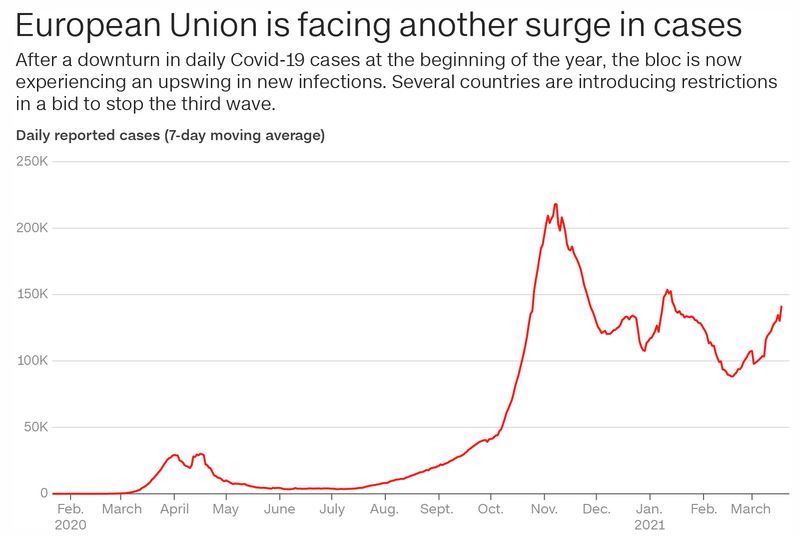
Europe's vaccine rollout has already been slower than expected. Meanwhile, the continent is confronting a third wave of the pandemic, fueled by variants of the virus.
European heavyweights Germany, France and Italy -- all of which have seen a recent surge in coronavirus cases -- were among more than a dozen countries to pause their rollout of the Oxford-AstraZeneca shot while Europe's medicines regulator, the European Medical Authority (EMA), investigated the concerns.
The EMA "has come to a clear scientific conclusion. This is a safe and effective vaccine," executive director Emer Cooke said Thursday. She said the group did not find that the vaccine causes clotting, though it could not definitively rule out a link to a rare blood clotting disorder.
Cooke added that the benefits of the vaccine outweigh the risks, a message already stressed this week by both the EMA and the World Health Organization (WHO).
Italy, France, Germany, Spain, Cyprus and the Netherlands all announced plans to resume Oxford-AstraZeneca vaccinations, with other countries expected to follow. Milan's largest vaccine center told CNN it would overbook appointments in an attempt to make up for the shortfalls of the past few days.
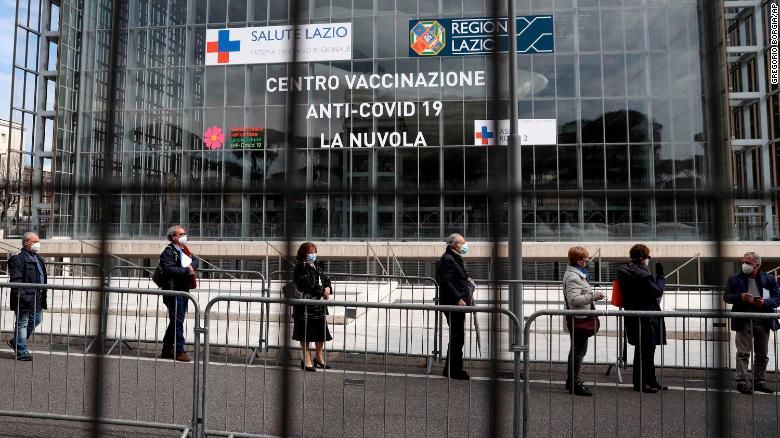
But it's unclear whether the EMA's findings will do much to assuage public concerns after a torrid week in the EU's vaccination campaign. Norway, Denmark and Sweden have all said they will keep Oxford-AstraZeneca vaccinations on hold for now.
And vaccine hesitancy is already high in some countries, notably France, where Covid cases are surging. An online poll conducted March 15 to 16 by Elabe for BFM TV, a CNN affiliate, suggests that only 20% of the French people surveyed trust the Oxford-AstraZeneca vaccine.
While the French health authority green-lit the resumption of the Oxford-AstraZeneca vaccine rollout on Friday, it recommended its use only for people aged 55 and older, a document sent to CNN shows, based on the fact that "almost all" the reports of blood clots that prompted the suspension involved people under 55.
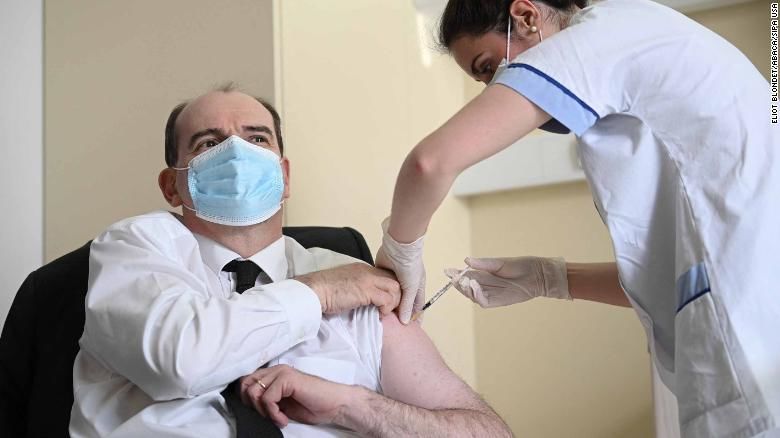
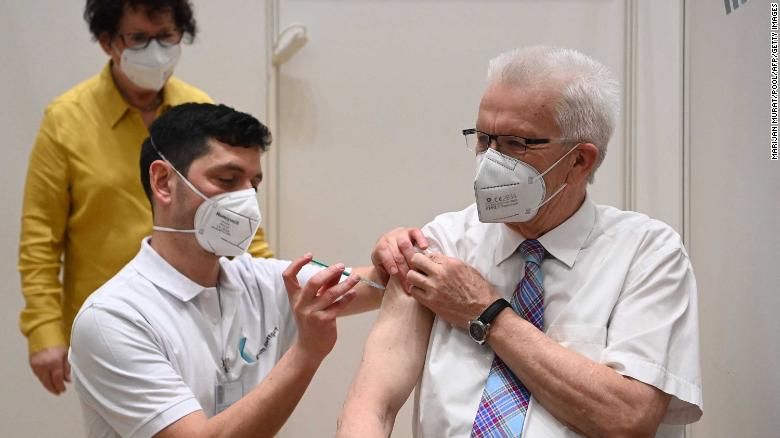
French Prime Minister Jean Castex, 55, rolled up his sleeve for an Oxford-AstraZeneca shot Friday in a bid to reassure his compatriots that it was safe, as did UK Prime Minister Boris Johnson.
But a senior Paris hospitals official, Remi Salomon, said this week that he feared the impact of the Oxford-AstraZeneca suspension on vaccine confidence in France.
"Maybe people are being overly cautious," Salomon told BFM TV. "My fear is that we are in France where many people are vaccine hesitant, I'd almost say defiant, I fear people will not interpret this the right way."
Michael Head, senior research fellow in global health at the University of Southampton in the UK, said the decision to hit pause on Oxford-AstraZeneca could "have possibly a serious knock-on effect, in terms of vaccine confidence and vaccine hesitancy and uptake beyond that."
"It takes a while to build up confidence in a vaccine which we [the global health community] did with rigorously conducted trials, with really good safety data, with being open and transparent about what we did and didn't find," he told CNN, in an interview conducted before the EMA findings were released.
"When we have widespread withdrawal of the vaccine across multiple countries, in some countries that are quite vaccine-hesitant anyway, it might take a long time to rebuild that confidence."
There's then a risk that people may start to favor one vaccine over another and so delay being inoculated to wait for the one they prefer, added Head, despite safety and efficacy data being pretty similar across all the vaccines approved.
"We don't want to see that happen. I fear we will see it happen. And if people do wait for another vaccine or choose not to take up a vaccine at all, then the pandemic goes on longer than it needs to," he said. "Obviously you will see more Covid-19 cases and hospitalizations and deaths as a result."
'Political football'
Oxford-AstraZeneca insists its vaccine is safe and welcomed the EMA finding Thursday that its benefits outweigh the risks. The company stated Sunday that of the 17 million people vaccinated in the European Union and the United Kingdom so far, blood clot incidents were "much lower than would be expected to occur naturally in a general population of this size."
WHO's Global Advisory Committee on Vaccine Safety also said Friday that available data "do not suggest any overall increase in clotting conditions" following vaccination, noting that people naturally develop blood clots, and that Covid-19 infection can also cause them.
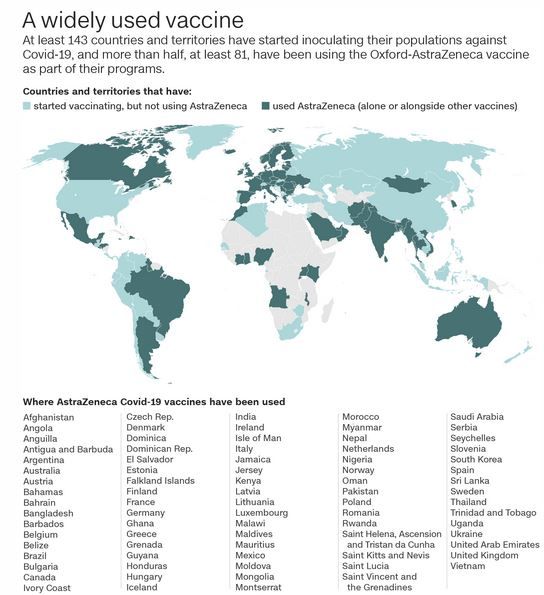
The UK stood by the vaccine throughout the furor, as did some other European nations, such as Belgium and Poland, and countries further afield, including South Korea, Malaysia and Canada. Britain's medicines regulator on Thursday said there was no evidence that blood clots in veins were occurring "more than would be expected in the absence of vaccination" in the UK, where more than 11 million doses of Oxford-AstraZeneca have been administered.
Results from the UK's program have been encouraging so far. A single shot of the two-dose vaccine reduces the risk of hospitalization from Covid-19 by more than 80% in people aged over 80, data from Public Health England showed earlier this month.
Studies indicate that vaccination also reduces transmission of the virus, Head said. "So in a highly vaccinated population there will be less transmission. If there's lower uptake of the vaccine, and lower availability of the vaccine, again you have more Covid-19 than you really need."
Oxford-AstraZeneca isn't the only vaccine available in the EU, which has also authorized the BioNTech-Pfizer, Moderna and Johnson & Johnson vaccines, but it is a key component of the rollout.
Doses of the BioNTech-Pfizer and Moderna vaccines, both more costly and harder to store than the Oxford-AstraZeneca jab, are currently being rolled out to Europeans, but the first deliveries of the Johnson & Johnson vaccine aren't expected to arrive until mid-April.
Meanwhile, the Oxford-AstraZeneca vaccine has become a symbol of division amid the EU's faltering rollout.
In the space of a few weeks, several EU countries have angrily rebuked the firm for failing to provide its full amount of promised doses; then walked back doubts about its efficacy in older people; blocked shipments of the vaccine from leaving the continent; and then halted their rollouts over blood clot concerns.
Speaking in Brussels on Wednesday, European Commission President Ursula Von der Leyen blamed Oxford-AstraZeneca for what she called a "difficult beginning" to the vaccination campaign, saying it "has unfortunately under-produced and under-delivered."
While she then voiced her "trust" in Oxford-AstraZeneca, the spectacle has been less than inspiring.
"Oxford-AstraZeneca has been a bit of a political football over the past few weeks. It's been a little bit unedifying to see from a scientific perspective," said Head. "And any delays in getting people vaccinated, any involvement of politics that might delay rollouts and transportation of the vaccines, will hinder uptake and might make it more likely that countries miss their targets."
The Oxford-AstraZeneca jab should play a "significant" part in the European Union meeting its target of vaccinating 70% of all adults by September, particularly since it is produced on a large scale in the region, said Head, but it's hard to know how much leeway was allowed.
"If you can meet your targets then you retain public confidence in the program," he said. "Any further negative headlines around vaccines generally or around Oxford-AstraZeneca might not be good for public confidence."
Rebuilding confidence
Even following the EMA's conclusion that Oxford-AstraZeneca is safe and effective, European governments may have a tough job rebuilding confidence in their own populations.
Germany is a case in point. Trust in the Oxford-AstraZeneca vaccine was dented there from the outset, when the German vaccine commission said it should not be given to people older than 65 years, citing a lack of data. That recommendation -- which came hot on the heels of erroneous reporting about the jab's efficacy in older people in German media outlets -- was revised earlier this month to remove the upper age limit.
But confidence in the shot had been building as it was more widely rolled out, particularly to younger people. As of March 16, 7.75 million doses of the BioNTech-Pfizer vaccine had been administered in Germany, compared with 1.76 million doses of Oxford-AstraZeneca vaccine and 338,000 Moderna doses, according to figures collated by Our World in Data.
But Germany's decision Monday to follow the lead of Denmark, Norway and Iceland and others in putting Oxford-AstraZeneca jabs on hold was another blow. The Health Ministry explained it took the step after seven cases of cerebral vein thrombosis were reported in connection with the Oxford-AstraZeneca vaccine, three of which were fatal.
A CNN crew who visited a vaccination center at the former Berlin-Tegel Airport on Friday found it fairly empty. Of about 500 inoculations scheduled to take place that day, 137 had been conducted by around noon.
Speaking to CNN on his way in to receive the Oxford-AstraZeneca vaccine, Jens Bodman said: "I am not sure. I am not a doctor. But I asked my doctor and he said I should do it and I follow his instructions."
Another recipient, Hannelore Bär, was more confident. "I have no problem with it. None at all," she said, explaining that the few reports of possible complications did not seem "that significant" in the context of the large numbers who had been vaccinated worldwide.
In France, Health Minister Olivier Veran on Tuesday sought to reassure those who had already received their first dose of the Oxford-AstraZeneca vaccine, saying they "are not in danger."
But the damage may already have been done. The Elabe/BFM TV poll, for which 1,000 adults were surveyed online between March 15 and 16, suggests French trust is highest in the BioNTech-Pfizer vaccine -- but even then, only 52% have confidence in it, while 43% have confidence in the Moderna shot.
A large majority of those surveyed believe the vaccination campaign has been badly managed by the government and less than a quarter believe the target of vaccinating all adults by the end of summer will be met.
"We must resume vaccination as quickly as possible," Michel Chassang, a French primary care physician and president of the Confederation of French Medical Trade Unions, told BFM after the EMA announcement.
"The only way to stop the circulation of this virus is precisely to make sure people are vaccinated," he said. "It won't be easy, we will swim against the tide, because this vaccine (has) now got bad press ... and even since the start."
Faced with a "third wave" of infections, the French government announced further restrictions Thursday in 16 areas around the country, including the greater Paris and Nice areas.
President Emmanuel Macron has resisted imposing a nationwide lockdown, preferring to rely on regional measures. He was criticized by medical experts early this year for suggesting the Oxford-AstraZeneca vaccine was "quasi-ineffective" in elderly people, a comment he later rolled back.
Meanwhile, Portugal has presented a tough stance in response to anticipated reluctance to have the Oxford-AstraZeneca jab. The head of its National Association of Family Health Units warned Friday that anyone who rejected an Oxford-AstraZeneca vaccine would be sent to the back of the queue.
"Neither the professional nor the patient get to choose the vaccine to be administered," Association President Diogo Urjais told Portuguese broadcaster TVI.
"Patients who reject the vaccine will pass onto the last stage of vaccination, to the end of the line."
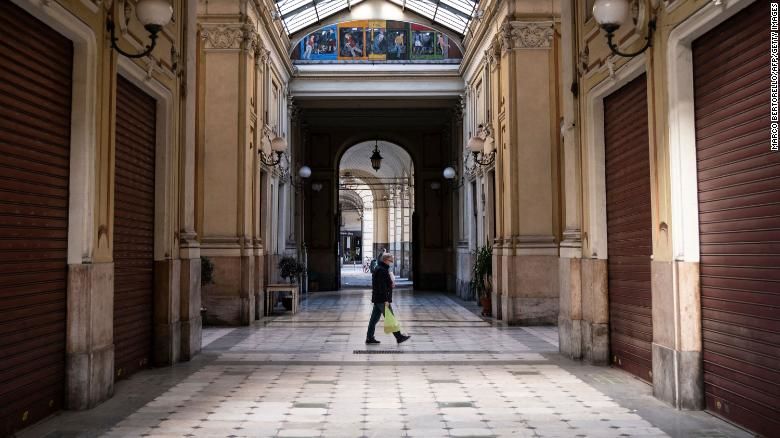
In Italy, where new lockdown restrictions were imposed this week, Health Minister Roberto Speranza insisted Wednesday that "faith in vaccines is not dented."
Meanwhile Spain's Foreign Minister Arancha Gonzalez Laya told CNN on Wednesday that her country's decision to suspend use of the vaccine for a few days was all about building confidence in its citizens.
'The damage is done'
Despite such assurances, some EU leaders could find themselves accused of playing politics over the latest crisis, at a potential cost to public health.
Nicola Magrini, head of the Italian Medicines Agency, told Italy's La Republicca newspaper that the decision to suspend the use of the Oxford-AstraZeneca vaccine "was a political choice" after several other European nations, including France and Germany, took that step.
In Belgium, which resisted the temptation to join their ranks, senior figures have been outspoken in their criticism of the move.
Leading Belgian virologist Marc van Ranst told CNN he thought the decision to suspend use of the Oxford-AstraZeneca vaccine was wrong and had "grave consequences" for Europeans' health. Even if reversed, "the damage is done," he said. "People who are vaccine-hesitant will not become less vaccine-hesitant when they watch this episode."
Belgian Health Minister Frank Vandenbroucke gave an even starker warning on VRT Radio 1's "De ochtend."
"This waterfall of decisions, this kind of chain reaction, if that is going to repeat itself continuously in the coming months, then yes, our European vaccination campaign itself will be completely dead," he said.











