

Explainer: NFTs are hot. So what are they?
The trend is perplexing those who might wonder why so much money is being spent on items that only exist in digital form and can be viewed by anyone for free.
Here are some facts about NFTs:
WHAT IS AN NFT?
An NFT is a digital asset that exists on a blockchain. The blockchain serves as a public ledger, allowing anyone to verify the asset’s authenticity and ownership.
So unlike most digital items which can be endlessly reproduced, each NFT has a unique digital signature, meaning it is one of a kind.
NFTs are usually bought with the cryptocurrency Ether or in dollars and the blockchain keeps a record of transactions. While anyone can view the NFTs, the buyer has the status of being the official owner - a kind of digital bragging rights.
WHAT KIND OF NFTS EXIST
All kinds of digital objects - images, videos, music, text and even tweets - can be turned into an NFT.
Digital art has seen some high-profile sales, while in sports, fans can collect and trade NFTs relating to a particular player or team.
For instance, on the National Basketball Association’s Top Shot platform, enthusiasts can buy collectible NFTs in the form of video highlights of moments from games.
While these highlights can be seen for free on other platforms such as YouTube, people are buying the status as the owner of a particular NFT, which is unique due to the digital signature.
NFTs can also be patches of land in virtual world environments, or exclusive use of a cryptocurrency wallet name.
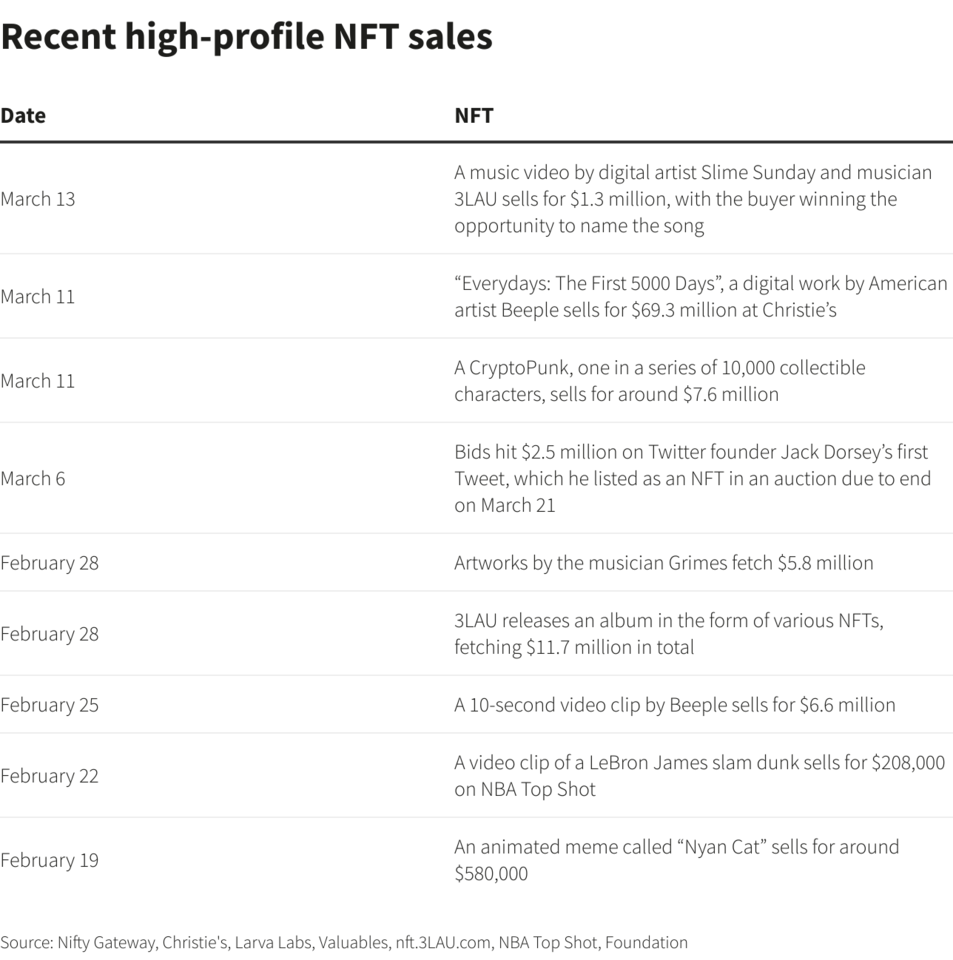
An auction for the first ever tweet from Twitter boss Jack Dorsey - "just setting up my twttr" - ends on March 21. (Graphic: Recent high-profile NFT sales, )
HOW HAS THE MARKET GROWN?
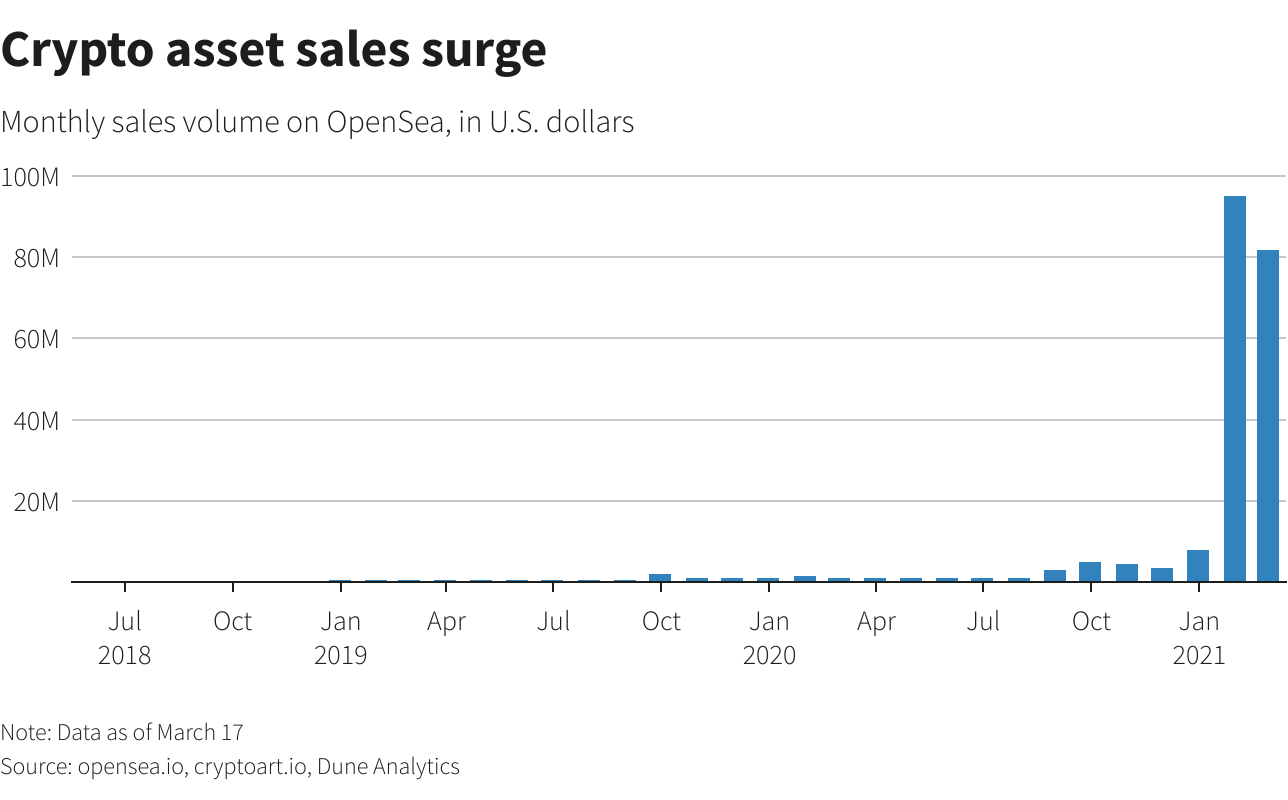
Traded since around 2017, NFTs have surged in 2021. Monthly sales on NFT marketplace OpenSea hit $95.2 million in February, up from $8 million in January.
Total NFT trading volumes on the Ethereum blockchain amount to over $400 million, nearly half of which were in the last 30 days, according to NonFungible.com, which aggregates data from NFT marketplaces.
NBA Top Shot, which is not included in NonFungible.com data, has 683,000 users and has seen $396 million in sales, $232 million of which were in February.
WHY NOW?
Some attribute it to lockdowns forcing people to spend more time at home on the internet. But NFTs are also a way to have possessions that can be viewed by owners’ online friends.
For others, the lure lies in rapidly rising prices and the prospect of big returns. Recent years have also created a lot of crypto millionaires with Ethereum to spend.
WHY ARE THEY IMPORTANT?
Enthusiasts see NFTs as the future of ownership. All kinds of property - from event tickets to houses - will eventually have their ownership status tokenised in this way, they believe.
For artists, NFTs could solve the problem of how they can monetise digital artworks. They can receive more income from NFTs, as they can get a royalty each time the NFT changes hands after the initial sale.
NFTs could also transform music. Kings of Leon’s NFT allows buyers access to limited-edition vinyl or seats at future concerts.
WHAT ARE THE RISKS?
Given that anybody can create NFTs, the scarcity of each piece does not guarantee value. Losses can stack up if the hype dies down.
In a market where many participants use pseudonyms, fraud is also a risk.











