

‘I Think We Can Learn a Lot From Black Thinkers’: An Interview With Netiwit Chotiphatphaisal
But he has not only been an influential writer and speaker. Translation has also played a key role in his political struggle.
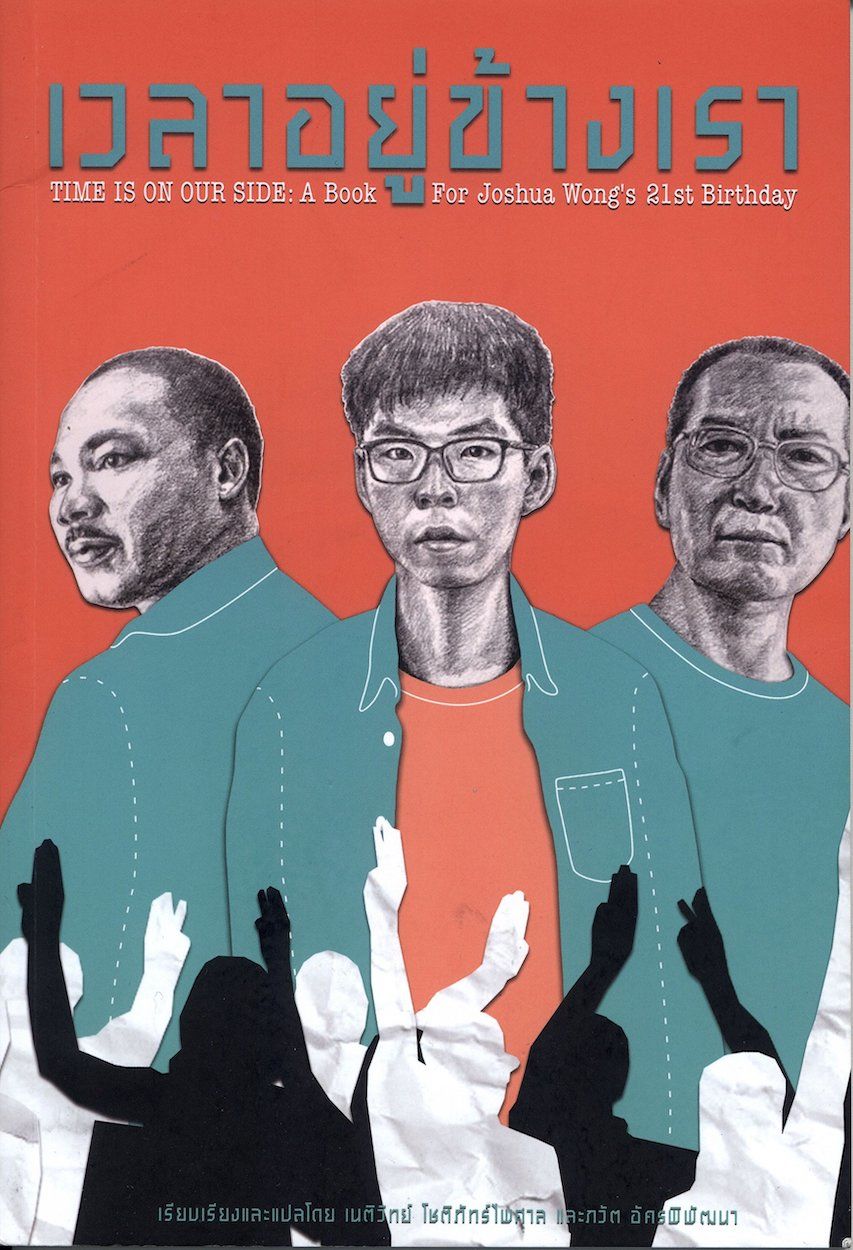
In 2017, the student press founded by Netiwit published เวลาอยู่ข้างเรา: หนังสือวันเกิดโจชัว หว่อง (Time is on our side: A book for Joshua Wong’s 21st birthday), which included translations of Liu Xiaobo’s ‘The June second hunger strike declaration’ and Martin Luther King, Jr’s ‘Letter from Birmingham city jail.’
I talked with Netiwit at the beginning of July about his translation of King’s ‘Letter,’ the influence of Black political thought on his activism, and the politics of civil disobedience in Thailand.
Eraldo Souza dos Santos: How have you decided to translate King’s ‘Letter from Birmingham city jail’ into Thai?
Netiwit Chotiphatphaisal: I have known about Dr King for a very long time. In demonstrations, or when you are simply interested in social change, you usually hear the names of Gandhi and King. However, it was always unclear for me what we, Thais, think about them as well as their ideas, concepts, and the political contexts of their struggle. Gandhi is probably a bit more read in Thailand, but, as far as I know, there are not many translations of his work on nonviolence in Thai. We know Gandhi rather as a thinker who dealt with questions concerning alternative and sufficient economy, not so much with questions around the power of truth.
Between 2013 and 2014, I got interested in Pete Seeger’s and Woodie Guthrie’s songs. At that time, I felt we, Thais, have a very dire connection with each other in the struggle for our own country: there was not much organizing and no feeling of belonging to the same community, not to mention the atmosphere of intolerance towards Thai activists. I think we must build a community if we want to win, and, during that period, I found some documentaries about the civil rights movement in the U.S. and about the songs they sang together when they marched. I think we lack this sense of community in Thailand, and I came to appreciate American folk music thanks to these white men, especially Pete. His songs are characterized by the gesture of joining a chorus, and not long after discovering his songs, I got to know about the same tradition in the Black church.
I have not dived into that deeply, but I thought then and I still think we can learn a lot from the civil rights period and Black thinkers, as I think the more someone is oppressed, the better they understand reality and have reasons for hope.
Because I had this conviction, I went to know more about the major African American thinker of the last century, Dr King, of which, I think, no text had been previously translated into Thai. And when I read King, I discovered someone who was in a position like me: How could one not resist if Jesus did? How can we be conformists? It also made me think about the ways in which people of goodwill do nothing amidst a situation of moral and political crisis.
ESS: What were the biggest challenges you found in translating King into Thai?
NC: It was not easy to translate the ‘Letter’ at that time: I was 20 years old and had no experience working with translation. Fortunately, a friend of mine, who is a student and experienced activist, was very kind and helped me to edit the translation. The most important thing to me was how to keep his voice’s strength. And I went to listen to his speeches, which are so powerful, many times when translating the ‘Letter.’
I felt a bit sad, though, because it was difficult to be very optimistic during that period. My friend Joshua Wong was in jail, I had just been kicked out from my position as President of the Student Council by Chulalongkorn University, and the Thai public opinion thought my walk-out activism was mad and radical. I found some comfort in King’s work, as his essay echoed what I did. That is why I decided to publish it along with Liu Xiaobo’s essay for Joshua’s 21st birthday, when he was still in jail.
ESS: What have activists in Thailand have said about King’s ‘Letter’ after the book came out?
NC: The atmosphere was such that not many people were interested in it, especially because the book was published in a period of fear and mourning: the anniversary of the death and the cremation of the previous king. But the ‘Letter’ became better known after I published it separately online.
Many people have quoted it to express their feelings about how we can’t wait, about how disobedience is so powerful and necessary, about how silence is not equal to peace.
ESS: What is your favorite passage of the ‘Letter’?
NC: “Injustice anywhere is a threat to justice everywhere. We are caught in an inescapable network of mutuality, tied in a single garment of destiny. Whatever affects one directly, affects all indirectly.”
I actually have known this quote since I was in high school. I read some books that cited it and found it cool, but I could not understand its meaning. But when I started my work as an activist and saw people suffering, I realized this sentence expresses a universal truth: we are in the same boat. If we want our society to be better, we cannot ignore all complex social problems that surround us and show no solidarity for others. I see it clearly in the current COVID-19 crisis.
ESS: Have you translated other texts by King since you translated the ‘Letter’?
NC: I have translated some parts of ‘A tough mind and a tender heart’. It became a kind of best seller here. Many people did podcasts about it and even asked me to authorize them to record an audio book.
One of the projects of the student-run press I founded is to translate his whole work into Thai. But I do not have time for it, and we only have a limited budget. And I will go to jail because of my status as a conscientious objector in two years. So, I will ask other students to run and participate in this project.
ESS: Have you been reading other Black authors and activists?
NC: I am now learning more about W. E. B. Du Bois, James Baldwin, Cornel West and, maybe not in the same tradition, Kwame Anthony Appiah. I have also been interested in the work of women activists such as Audre Lorde, Maya Angelou, and Angela Davis.
ESS: And what are your next translation projects?
NC: Thanks to a great extent to Dr King, who made me think about the complex web of interconnected injustices existing today, I am now alert to the ways in which the Chinese empire represses the Uyghurs and the people of Hong Kong, for example. At Sam Nak Nisit Samyan Publishing, we have done a lot to recognize these struggles.
I have translated Hannah Arendt’s ‘Personal responsibility under dictatorship’ and dedicated the translation to Xu Zhangrun, the scholar who spoke out against Xi’s misrule as well as to Anon Nampa, our lawyer for human rights.
This month, my friends and I are going to publish a collection of Ilham Tohti’s essays, the Uyghur scholar who has been imprisoned in China, with a special foreword for Thai readers by Jewher Ilham, his daughter.
We are also going to publish translations of books written by dissidents from the PRC as well as others who are part of the same struggle in Taiwan and Hong Kong. We have already published, for example, a translation of Professor Jeffrey Wasserstrom’s book, Vigil: Hong Kong on the Brink. We are considering calling this series Milk Tea Alliances.
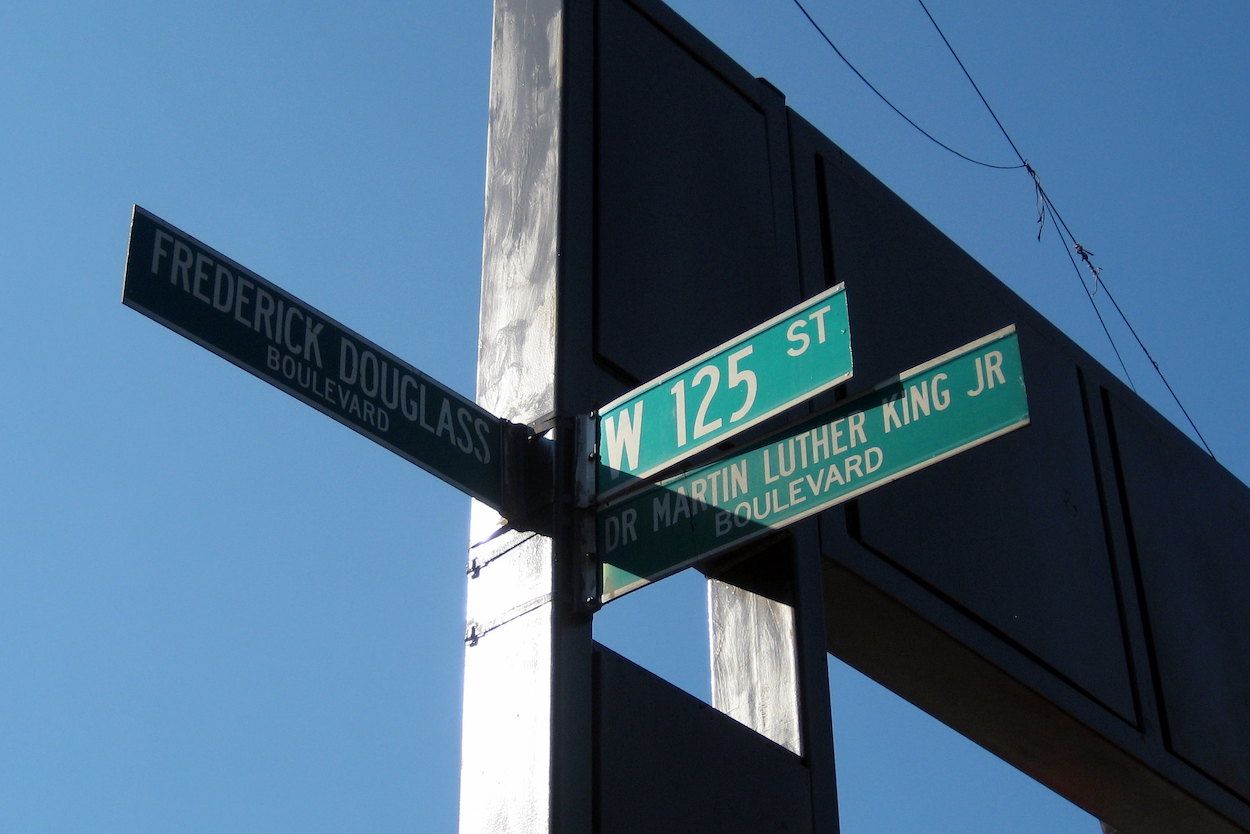
Concerning Black thinkers, apart from Dr King, I would like to publish works by Baldwin and by authors who have lived under much harsher oppression, such as Sojourner Truth and Frederick Douglass. But the main challenge has been copyrights: they are often more expensive than we expect, and the financial situation of our press does not always allow us to translate all books we would like to.
More recently, I have translated Howard Zinn’s play, Marx in Soho. It is going to be his first book translated into Thai. I hope Sam Nak Nisit Samyan and other Thai presses will publish other works by him in the future. It might be interesting, for example, to translate A People’s History of the United States. We could learn a lot from American people that are usually not included in mainstream histories of the US, be it Native and African Americans, Latinos, Italians, etc. It is my hope, in this regard, that my translation of Marx in Soho will help to introduce his work and motivate discussions about it in Thailand.
ESS: One of the most heated debates today about African American political thought concerns the similarities and differences between King and Malcolm X’s positions. Do you have any thoughts on this debate?
NC: It is not surprising to see Black political thinkers discussing different solutions or analysing in different ways the causes and roots of a certain problem, since these solutions and analyses are based on their experiences, readings, ideologies, and worldviews. I know the debates between King and Malcolm X, and it is not much different for oppressed people around the world (India is a very good example, among others) who have been trying hard to understand their society and debating which way is most beneficial for their people.
When reading them as a foreigner in another land, however, the context and the debates in which they were participating tend to be disregarded, and some thoughts on the society that I live in get mixed and turn into another interpretation of the world, a synthesis to respond to the urgent needs of my society. That is, however, the power of ideas.
ESS: For authors and activists such as Cornel West and James Baldwin, King was a radical political thinker. Would you agree with them? Do you consider yourself a radical?
NC: In Thailand, radicalism is equated with extremism. And when someone says that you are a radical, you can be quite sure it is not intended as a compliment. This common use of the concept of radicalism has been instrumentalized in problematic ways in many languages.
But, as I learnt to ask from Dr King and others, was not Jesus a radical of love? And what about Gautama Buddha? When he renounced his royal title and embraced Dalit people, was he not being radical? So, why did their radicalism become so tamed? This is one of the puzzles that have made me more and more critical of what Noam Chomsky and Edward Herman call “manufacturing consent.” There is tacit consent around the idea that radicalism means violence, and such consent makes people afraid to challenge this view.
But when you look around, the norms of our society seem to be based on violence and hatred, exploitation and oppression. Why are these social problems not considered forms of radicalism? At the same time, people tend to think that those who question violence, hatred, exploitation, and oppression and go to the streets to demand social change are radicals. This is paradoxical. That is why we have to prove that radicalism does not mean violence, that we are reclaiming a radicalism of love, a radicalism of peace, a radicalism for humanity. In my activism, I aim to show–in this regard–that being a radical does not mean being a fundamentalist or an extremist.
That being said, I am proud to be called a “radical young man.” Nowadays, people embrace more and more this kind of radicalism in Thailand and become radicals by refusing to live with fear and under the violent repression perpetrated by the monarchy and the current regime. But we only have a few radicals in the world and we need to have more.
ESS: Do you find the situation of African Americans in the US during the 1960s comparable to the situation of Thai citizens in any way?
NC: African Americans have been treated badly for centuries and they are still treated badly today. I think Thais, too, have been slaves for centuries.
Some Thais claim that we have been free since Rama V abolished slavery, but, you know, he did not abolish slavery because he was merciful to serfs and slaves (and it was not for mercy either that Alexander II or Lincoln have abolished serfdom and slavery). He abolished slavery to achieve economic centralization but replaced it with conscription for all males, and this makes us suffer until today.
The rights of students to have control over their own bodies (such as in the case of mandatory haircuts) or the military coups in Thailand have shown how far we have been treated badly and harshly. Rights are not what we learn during our academic path in Thailand but instead obedience.
And we see that, although slavery has been abolished in America, Blacks still suffer today, even after Dr King’s efforts; so how could we not say that slavery has been rooted in American culture, as W. E. B. Du Bois argued? Something similar could be said about Thais: the government and the monarchy make us live by many means, such as conscription, for their purposes
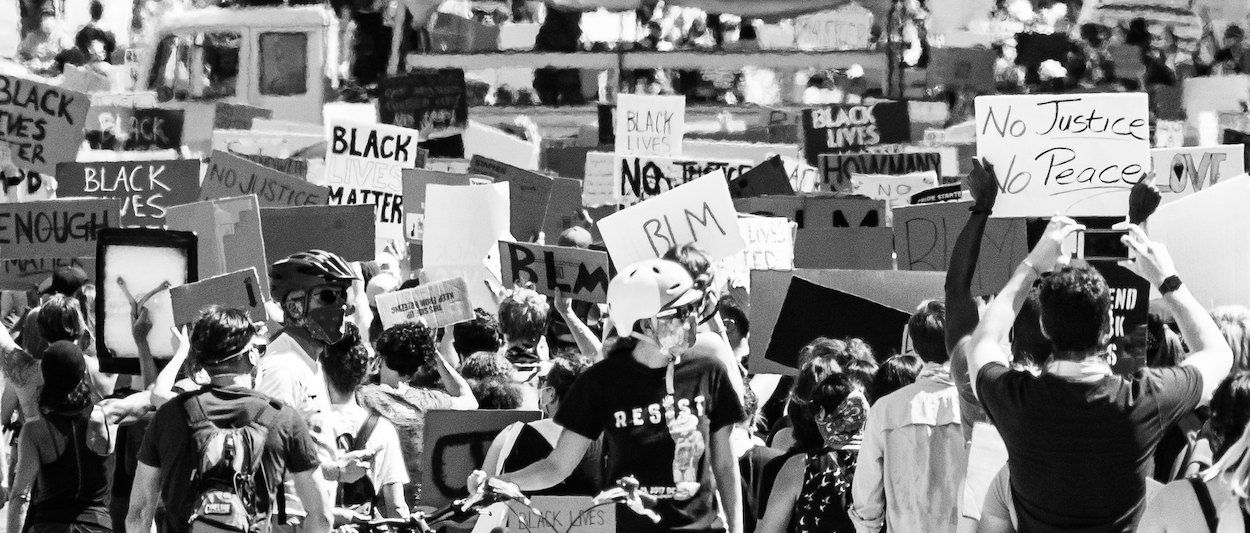
Most individuals in the US do not live under conditions of slavery. The law and the overall political atmosphere have changed for the better since the Civil Rights movement. IBut injustices persist. That is why I support #BlackLivesMatter: injustice is still ingrained in the American system.
ESS: Does Black political thought offer lessons for social movements in Thailand today?
NC: What I think Black political thought offers us today is that we have to learn that we are oppressed, not only by structure, such as in the case of persistent historical injustices, but also by how we look at ourselves. We have to restore our own sense of dignity. And the way to win it is not to live by the mercy of the oppressors but to fight them back with others: collectively, spiritually, and consciously.
ESS: In the ‘Letter,’ King offers a theory of civil disobedience. Is this theory still relevant for you today?
His theory still resonates today. The strength of our inner spirit is very important in the practice of nonviolence. It does not need to be religious: it comes rather from recognizing the value of humanity and building the society we want to see. King’s civic disobedience, I think, cannot be separated from his work on the importance of living in a community.
Our struggle has arrived so far precisely because Thais have used civic disobedience as a means. That is why the government has had to release activists who spoke out against the king. Of course, some still humiliate and laugh about these activists, but they cannot ignore the force of the truth that is expressed in these activists’ actions.











