

Asia’s Richest Man Takes on Amazon in India’s Booming Online Market
As India this week hits the peak of its biggest shopping season, the festival of Diwali, the tycoon’s retail websites -- including JioMart -- are elbowing their way into a space long dominated by Amazon.com Inc. and Walmart Inc.’s local unit Flipkart Online Services Pvt.
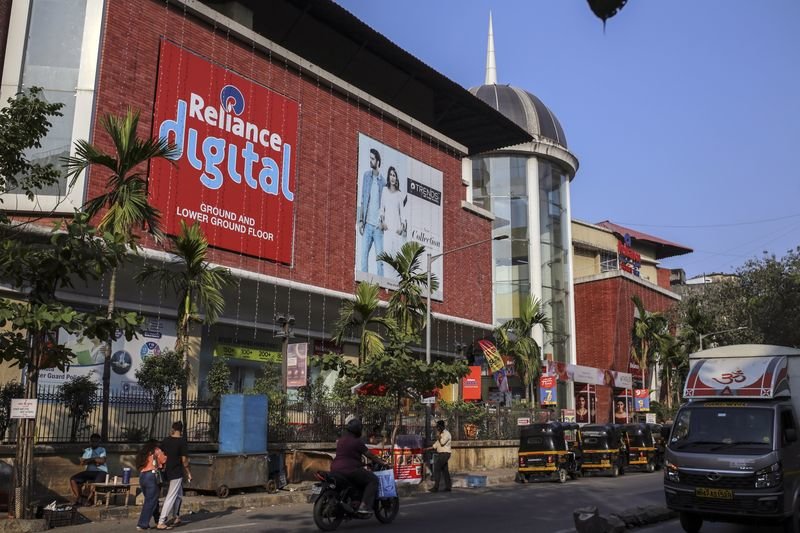
Ratcheting up competition, Ambani’s portals are offering blockbuster discounts of as much as 50% on popular sugary confections and other holiday staples like spice mixes for India’s rice delicacy, biryani. Meanwhile, his Reliance Digital website is selling some flagship Samsung smartphones at prices cheaper than rivals, with as much as 40% rebates.
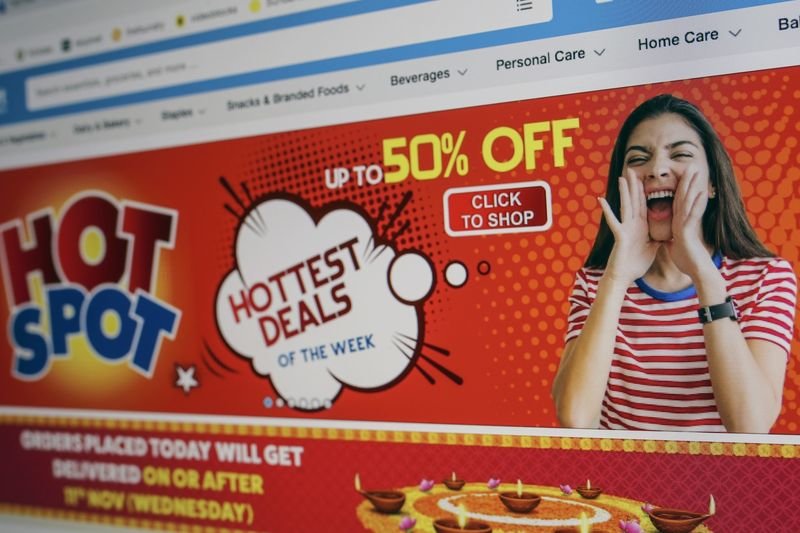
It’s a push that comes as Ambani’s sprawling conglomerate, Reliance Industries Ltd., is flush with cash. After raising an eye-popping $20 billion for its technology venture, it’s shifted fundraising to its retail arm, which has won over $6 billion in investment in recent weeks from heavyweights like KKR & Co. and Silver Lake. Already India’s biggest brick-and-mortar retailer, Ambani’s online ambitions pit him against the two U.S. giants, both of which have invested big in India.
The country, one of the last big consumer markets, is still up for grabs, and Morgan Stanley estimates that India will generate $200 billion in e-commerce sales by 2026. Yet, the billionaire’s triumphs in telecommunications -- where he started as a tiny player, but outpaced established rivals by undercutting them on price and capitalizing on regulatory changes -- are a cautionary tale for the American giants.
Huge Edge
In retail, Ambani’s firm has a huge edge: Government policies are increasingly stacked in favor of domestic retailers, of which Reliance is the largest. Since the end of 2018, India’s foreign investment rules have also barred Amazon and Walmart’s local unit Flipkart from featuring exclusive products and owning inventory, in a bid to restrict their ability to directly influence prices and offer discounts. International companies aren’t allowed to own more than 51% of local brick and mortar supermarket chains. Even that limit is subject to conditions such as setting up only in cities with populations of less than 1 million.
With his local strategy, low-cost procurement and chain of brick-and-mortar stores, Ambani has the ability to shake up online retail, said Siju Narayan, Chief Experience Officer, RexEmptor Consult LLP in Mumbai. “JioMart can dent the fortunes of grocery e-commerce majors like Bigbasket & Grofers,” he said, referring to the country’s biggest online grocers. “And impact the grocery, home & personal care category of e-tail majors like Amazon and Flipkart in coming days.”
Representatives for Reliance and Bigbasket declined to comment, while those for Walmart, Amazon and Grofers didn’t respond to requests for comment.
Tweaked Rules
Ambani’s success in telecom shows his ability to benefit from pricing and policy. India’s government tweaked rules in 2013 to create a “unified license” that allowed operators with a broadband wireless permit to offer voice calls by paying a one-time fee. Only one operator had such a permit nationwide at that time – Reliance Jio. The new rules helped it move swiftly.
After receiving a unified license and rolling out Reliance Jio’s telecom services in September 2016, Ambani sold voice and data plans at rock bottom prices. That made digital services more affordable for millions of Indians. Although rivals won similar licenses, some went bankrupt amid the ensuing price war, including his younger brother Anil’s Reliance Communications Ltd. Non-state operators in telecommunications eventually dropped to three from at least a dozen. Jio turned profitable in 2018. It’s currently India’s biggest wireless operator with over 400 million subscribers.
Non-state operators in telecommunications eventually dropped to three from at least a dozen. Jio turned profitable in 2018. It’s currently India’s biggest wireless operator with over 400 million subscribers.
High Stakes
In India, the stakes are high for the American retailers. Jeff Bezos, Amazon’s hard-charging founder and chief executive officer, has pledged to invest $6.5 billion there. Walmart spent $16 billion in 2018 to acquire Indian portal Flipkart in its biggest ever deal, and has invested over $1 billion this year in the e-tailer and steadily plowed cash into its sister unit, payments service PhonePe.
But for Ambani, 63, Asia’s richest man with a net worth of $78 billion, the e-commerce push may turn out to be tougher than telecom. First, he will be up against formidable rivals. The wireless operators he defeated were mostly homegrown players, lacking the heft, experience and deep pockets of Amazon or Walmart. Also his group’s e-commerce websites are newer compared to its rivals’.
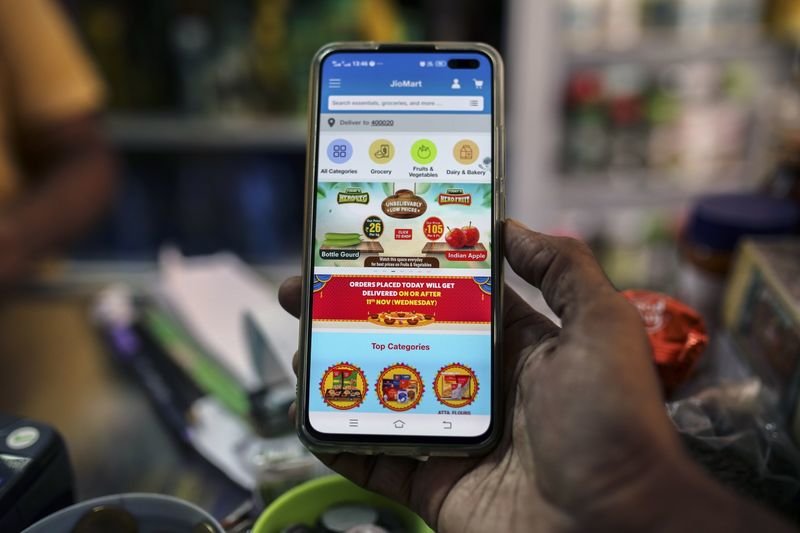
Reliance group’s JioMart – which only started this year and is still in the beta phase – has had delivery snafus and refund delays, and some users haven’t been shy about venting on Twitter. All that means winning big against Walmart and Amazon could take years.
Future Business
Yet, getting it right is key because Ambani has cast retail and technology as the future of Reliance, which got its start in textiles under his father and then progressed into petrochemicals and oil refining. Two of his oldest children, Ivy-league educated twins Isha and Akash, are on the board of Reliance Retail Ventures Ltd.
Reliance is already India’s biggest company and its market capitalization of $185 billion equals about 6.6% of India GDP. Its heft would only increase if it wins a greater foothold in e-commerce -- something that’s increasingly becoming important in India, which has suffered a lockdown for much of the year due to the pandemic and where organized retail is yet to penetrate rural corners.
The pandemic is offering a boost to Reliance because many local stores can’t offer aggressive discounts due to financial difficulties, said Laiji Varghese, who runs a provision store in Nerul, a town in the outskirts of Mumbai, and has a partnership with Reliance to deliver orders.
“Reliance Retail is a big bulk player with deep pockets,” she said. “They have the financial muscle to offer such discounts compared to others.”
Samsung Phones
For Diwali, JioMart has a “Bestival Sale” on and has been touting the “season’s biggest grocery sale” with large discounts and cashback running through Nov 8. Flipkart and Amazon are also showcasing a slew of discounts, putting the three companies neck to neck.

Yet on some key items, Ambani’s sites are offering bigger price cuts. A Samsung S20, this year’s flagship model from the world’s biggest smartphone maker, for instance, was going for 43,999 rupees at the start of this week on Reliance Digital. The same phone on Amazon’s India website was available for 47,990 rupees and on Flipkart for 69,999 rupees.
Regardless of who draws more customers and offers the biggest price cuts this holiday season, a pitted, protracted battle for India’s online shoppers is likely to play out in the coming years.
Complex Restrictions
Despite the complex pricing restrictions that Walmart and Amazon face in India, they have been able to showcase discounts offered via manufacturers and brands. In some cases, they are able to restructure their relationships with sellers so they can legally offer price cuts, and have allied with banks and credit card companies, which are allowed to offer deals that give shoppers price benefits on websites.
Yet, in the long term, pricing rules favoring local companies would allow Ambani’s JioMart and other websites to be more nimble in tweaking costs since they are bound by fewer restrictions.
JioMart and Reliance Retail account for around $12 billion of India’s retail market combining brick and mortar and digital sales, according to Ankur Bisen, senior vice president and head of Technopak’s retail consulting division. Meanwhile, Amazon and Flipkart, leveraging their pure online plays, can claim about $14 billion each, he said.

Although Amazon and Walmart are far ahead in online retail, a winner will need to straddle both domains, physical and virtual, to cater to India’s diverse and heavily rural geography. Yet the restrictions on foreign companies owning grocery stores, puts them on a backfoot. That’s in keeping with Prime Minister Narendra Modi’s goal of nurturing home-grown champions. Across the border, China’s protection of domestic companies has created technology behemoths like Alibaba Group Holding Ltd. and Tencent Holdings Ltd.
Ambani has built his businesses with a decades-long understanding of India’s bargain-hungry consumers. Over the years, he’s also aligned Reliance’s own ambitions with government goals across different administrations. In 2016, when he launched Reliance Jio, the telecom business, he promoted it as part of Modi’s Digital India initiative.
India’s Alibaba
“Narendra Modi has clearly decided that he wants to produce an Indian equivalent of Alibaba or Tencent, and he knows Reliance is the only plausible candidate,” said James Crabtree, an associate professor of practice at the Lee Kuan Yew School of Public Policy at the National University of Singapore, author of The Billionaire Raj, which chronicles India’s economic opening and has Ambani’s much-storied Mumbai home on its cover.
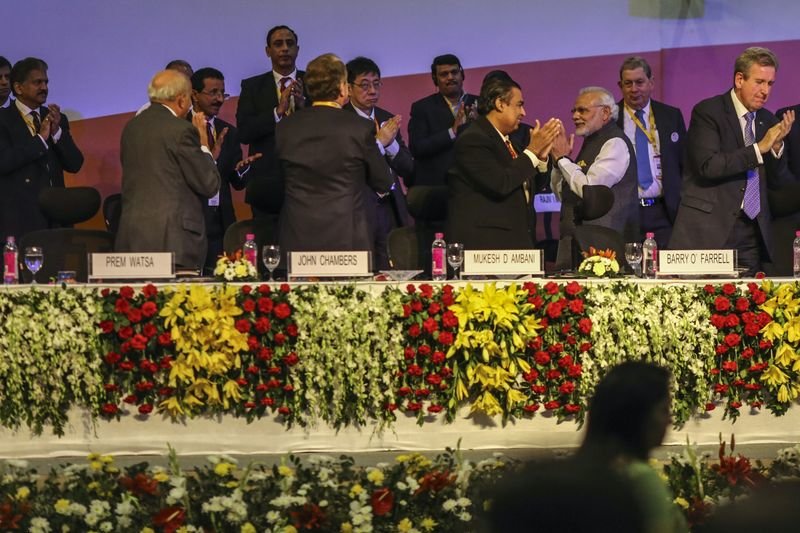
Narendra Modi greets Mukesh Ambani during the Vibrant Gujarat Global Summit in January 2017.
To cement his position as the nation’s No. 1 retailer, Ambani bought the
retail, wholesale, logistics and warehousing units of Future Group for
$3.4 billion in August. Amazon, which owns a tiny stake in one of the
unlisted firms under the Future Group, has sought to block the sale in
an arbitration court. Reliance, meanwhile, said it intends to complete
the transaction without any delay.
it intends to complete the transaction without any delay.
“It’s
a head-on competition in online retail,” said Devangshu Dutta, CEO of
retail consultancy Third Eyesight. “An extremely well capitalized, very
aggressive player is the new challenger.”











