

A cutting-edge tourism model in Newfoundland
Standing outside the boatshed at The Wooden Boat Museum of Newfoundland & Labrador, on Newfoundland's Avalon Peninsula, I was surprised when Jerome Canning, the museum's boat builder, invited me into his workspace. He was putting the final touches on a Grand Banks Dory, a small fishing vessel that was once found in every protected cove and harbour on this rugged North Atlantic coast.
"Everyone would have had a boat back then," Canning told me, as he explained how dories were an integral part of the cod fishing industry that shaped Newfoundland's economy and culture for 500 years.
A few minutes later, I found myself helping to caulk seams. Participation, I would learn, is an essential part of tourism in Canada's Newfoundland and Labrador province, where culture and traditions are shared rather than sequestered behind ropes in a museum. Canning explained it this way: "In order for me to build a boat, I had to learn from someone else. But that's been interrupted. To save heritage boat building, we needed to do more than put a few old boats on display. We need to keep teaching and learning how to build them."
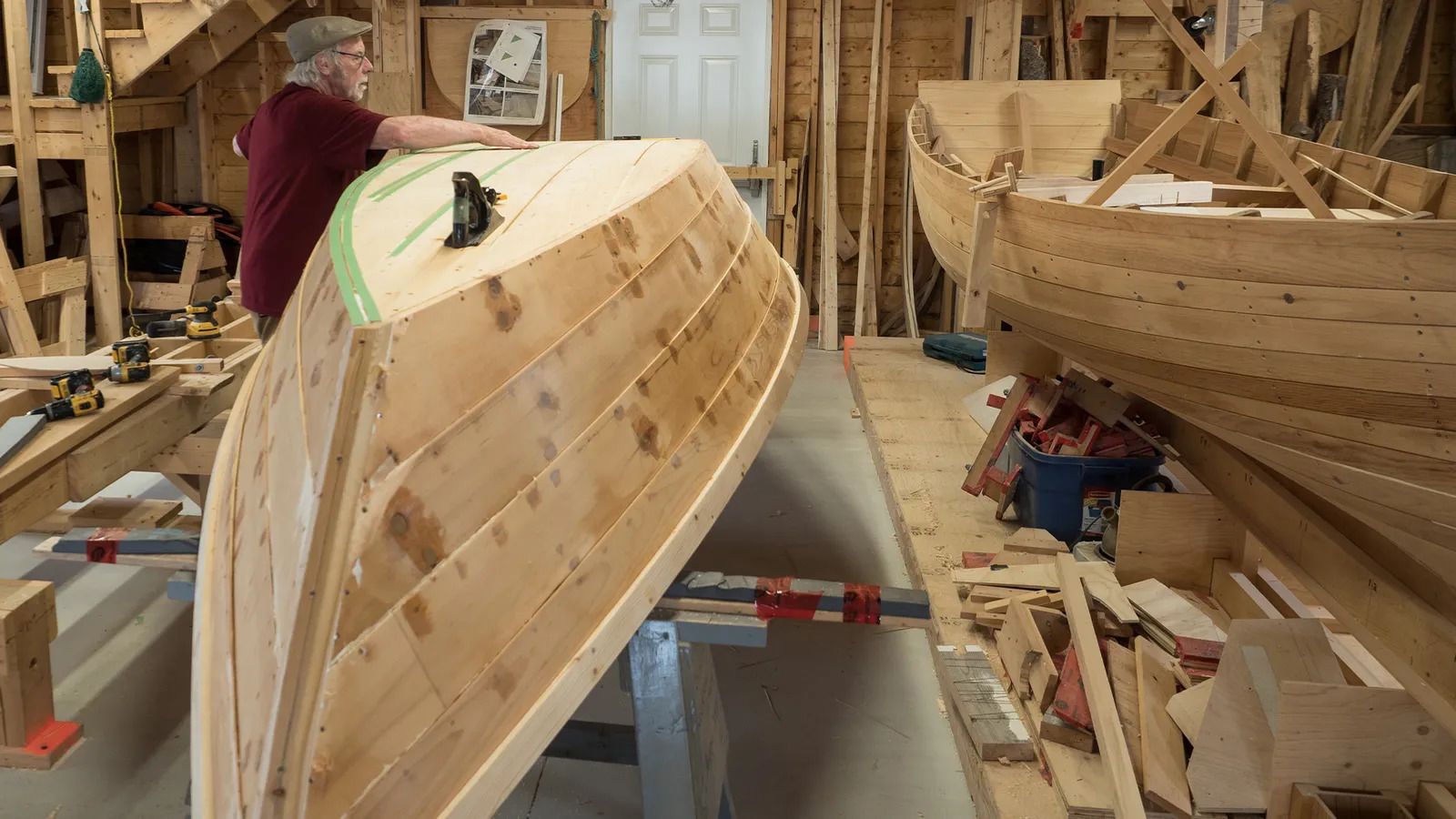 The Wooden Boat Museum is preserving the story of boat building in Newfoundland through hands-on experiences
 At the time, Newfoundland was in crisis. Ten percent of the population had left the province between 1992 (when the cod stocks collapsed and the Canadian government put in place the moratorium that ended the fishery) and 2001, and unemployment was more than double the national average. Locals knew they were on the verge of losing their unique culture, but hadn't found a way to pass their traditions along.
"We had all these different skills and crafts focused on 'making do with very little' that were being lost," explained Elizabeth Murphy, a member of the board of The Heritage Foundation of Newfoundland and Labrador. "The Department of Tourism looked at this… and realised people travel to become connected to new ideas. Suddenly these skills… and our respectful treatment of the environment seemed valuable."
Even though they had something meaningful to share, many communities had no place for people to stay or eat. But rather than looking to outside investors to develop resorts in the gorgeous but rural landscape, the government encouraged a grassroots approach, favouring locally owned restaurants, inns and experiential tourism experiences with community experts. By supporting the development of the things community members wanted to do, Newfoundland and Labrador used tourism as a tool to protect local culture. By 2020, tourism employed upwards of 20,000 people (9% of all jobs) across more than 2,700 businesses (78% of which are small businesses).
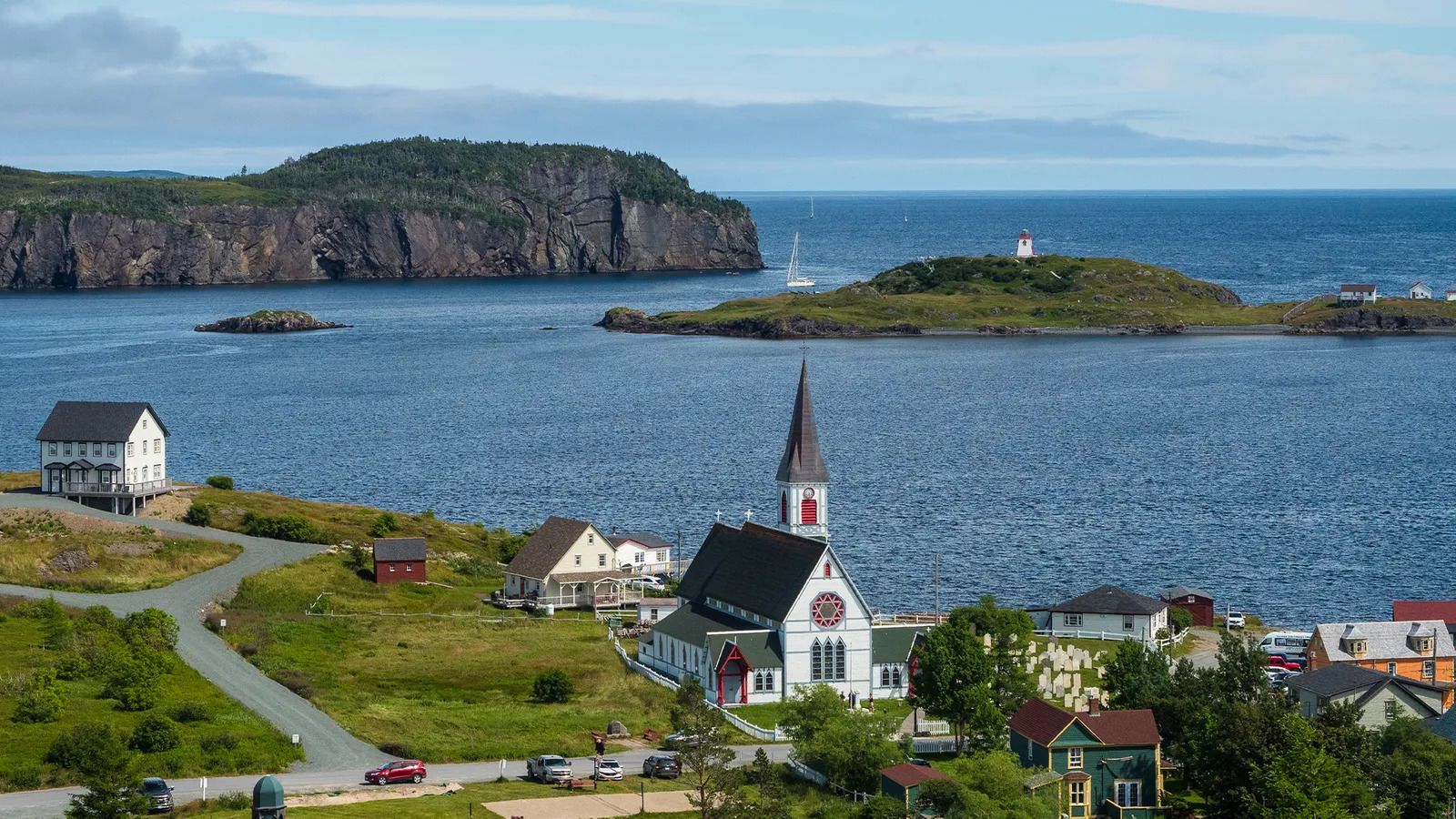 Trinity is known as one of the most picturesque villages in
Newfoundland, thanks to the active effort to restore the settlement’s
heritage buildings
Trinity is known as one of the most picturesque villages in
Newfoundland, thanks to the active effort to restore the settlement’s
heritage buildings
"Our experiences began to grow," said Murphy. "Someone would have an idea to promote and preserve a skill or craft and they'd get support to do it."
Murphy said travellers now love hearing stories and taking hands-on classes in the province's small museums and heritage centres. "You can go to a museum and stand 10ft from an old flour sifter... or you can learn to cook with one; hearing stories about how it was used."
This outside interest also changed the way locals feel about their culture. "We felt looked down on – for our ways, our language and our subsistence living," Murphy said. "Now we look at all these skills and we're proud of how self-sufficient we were. From there we started to value other things; our music, our food, our sense of humour."
Branching off the Trans-Canada Highway along Bonavista Peninsula's loop road, I travelled over a rocky landscape dotted with shallow bogs and windswept forests. Passing weathered clusters of homes, I'd slow down to take in long, open views of the sea. At one point, I crested a hill and the crayon-coloured buildings in the village of Trinity come into view. It was this stunning vista, as well as the region's pebble beaches, craggy outcroppings and untouched swaths of wilderness that recently caught the eye of Disney, which thought the Bonavista Peninsula would be the perfect stand-in for Neverland in the upcoming live-action film Peter Pan & Wendy.
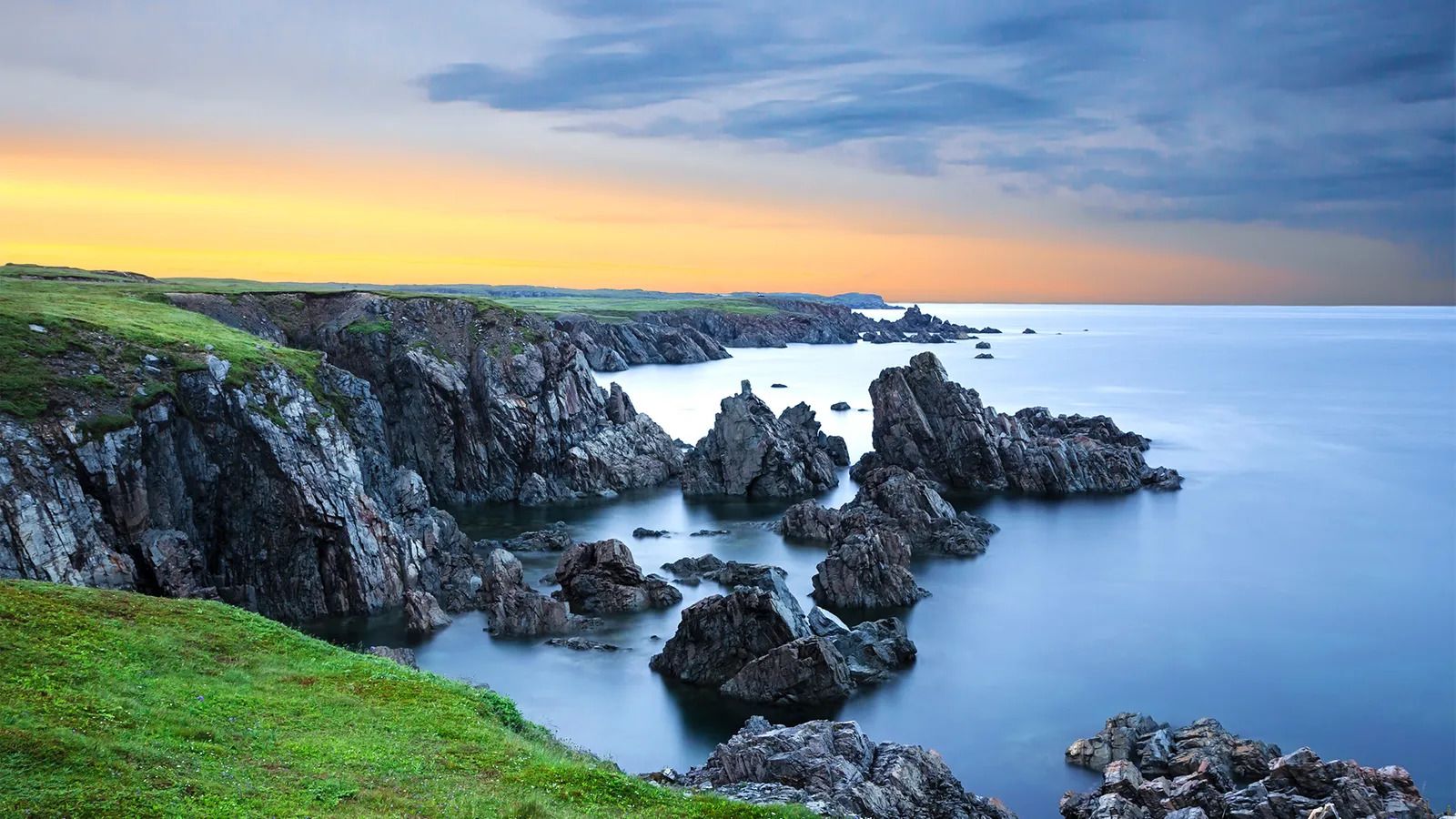 The stunning Bonavista Peninsula is the natural backdrop for Neverland in Disney's upcoming Peter Pan & Wendy film
For Marieke Gow, co-owner of the Artisan Inn in Trinity, it's not surprising that it took outsiders to fully appreciate the region's dramatic beauty. Gow said when her Dutch-born mother, Tineke Gow, first visited Trinity more than 40 years ago; the once-bustling shipbuilding village was filled with empty houses. Fascinated by the cliff-lined bay and the village's historic splendour, she bought one of the oldest houses – a dilapidated saltbox – and hired local carpenters, whose shipbuilding jobs were gone, to restore it. A few years later, Tineke bought another derelict property, and Campbell House became one of the town's first B&Bs in 1992. From there, she added more homes and opened the Twine Loft restaurant in 2000, expanding her small business into a full-service inn.
At the same time, Trinity's Historical Society was realising how much was being lost. Projects to preserve the town's history had been underway for decades, but many of the historical sites were only restored over the past 10 years or so, including the Court House, Gaol and General Building, the Cooperage (which is now a living history museum) and Fort Point military site and lighthouse.
"People saw that even without cod, these towns could offer good jobs – and sustain our way of life," Marieke said. "Business in the summer of 2022 exceeded even pre-pandemic levels."
Continuing around the peninsula, I passed a bay filled with the blue and white floats of a defunct mussel farm. Marieke explained that jokes and storytelling are a big part of local culture and said a tour guide had told visitors that because it's hard to bury people in Newfoundland's rocky earth, they were experimenting with underwater graveyards. "He said the blue markers were for men, the white for women," said Marieke. "They believed him!"
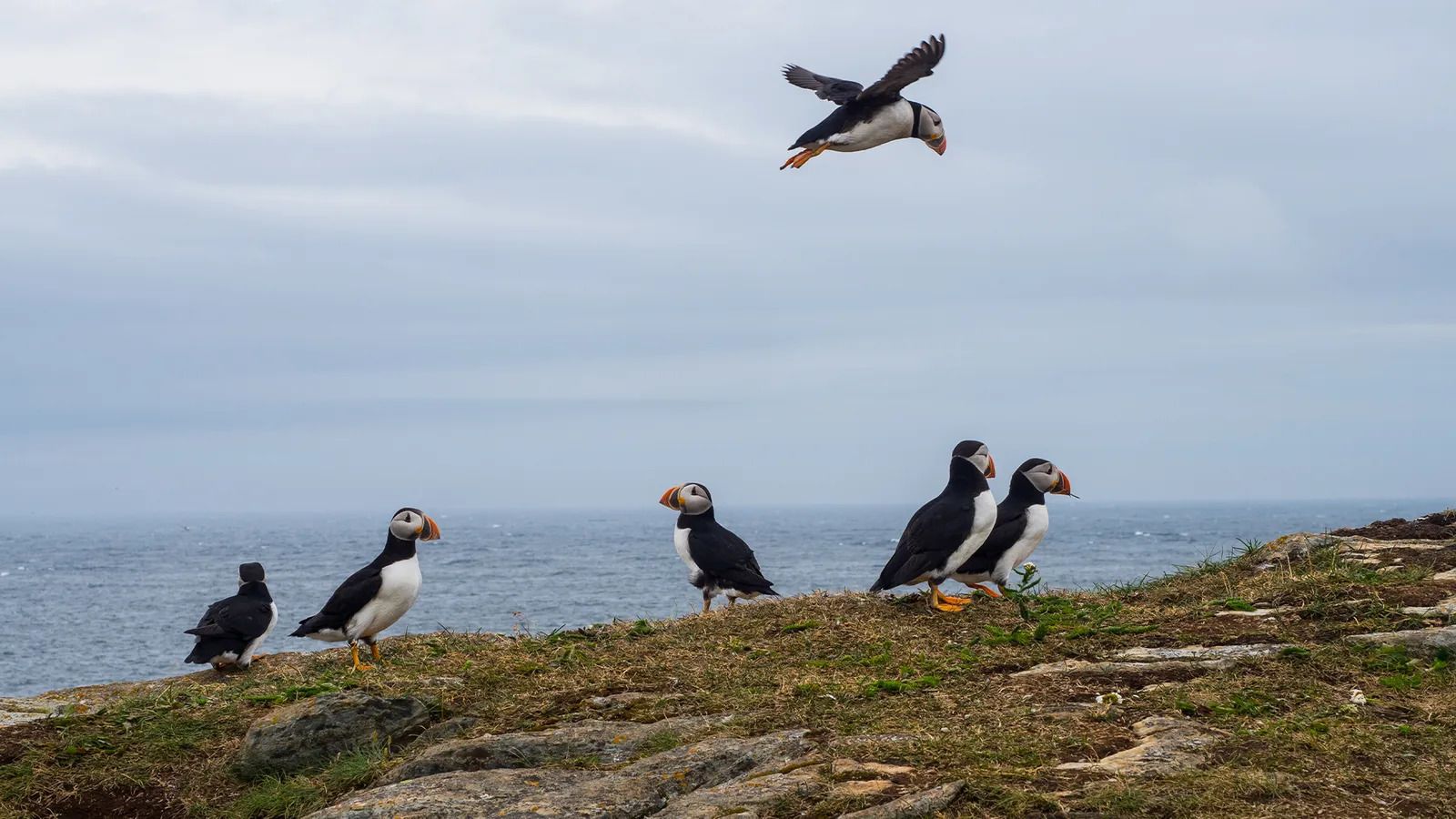 Elliston is one of the best places in North America to spot puffins
I thought of this at my next stop, the Elliston puffin viewing site, a rocky ledge just downwind from a busy nesting islet. I was cautioned by a teasing local not to take my eyes off thestocky, short-winged birds with their cartoonishly colourful beaks. "They're terrible at flying in a breeze," he said. "If you don't watch, one could hit you in the back of the head!"
Unsure about puffin projectiles, I shifted so I could look upwind while continuing my conversation with my hosts, Mike Chaulk and his granddaughter. The two volunteered to show me Elliston's highlights, and despite being one of the best places in North America to view puffins, the 315-person village's real claim to fame is its stone- and turf-built root cellars.
Chaulk said the government asked villagers what they wanted to preserve, and in 2013, they designated these charming, hobbit-like constructions, declaring themselves "The Root Cellar Capital of the World". Because the village's 133 cellars were built into the hills and ground as long as two centuries ago, Chaulk was asked to repair some of the structures, which were used to keep vegetables from freezing in the winter or rotting in the summer. "Of all the hair-brained ideas… I said who would come here to look at our root cellars," Chaulk recalled.
But when we opened the door to one of the primordial-looking structures where locals, until recently, stored cabbage and parsnips, he seemed reverent. "But they do come – and we're able to teach people what life was like, how hard it was to grow food on solid rock," he said "and how fun it was".
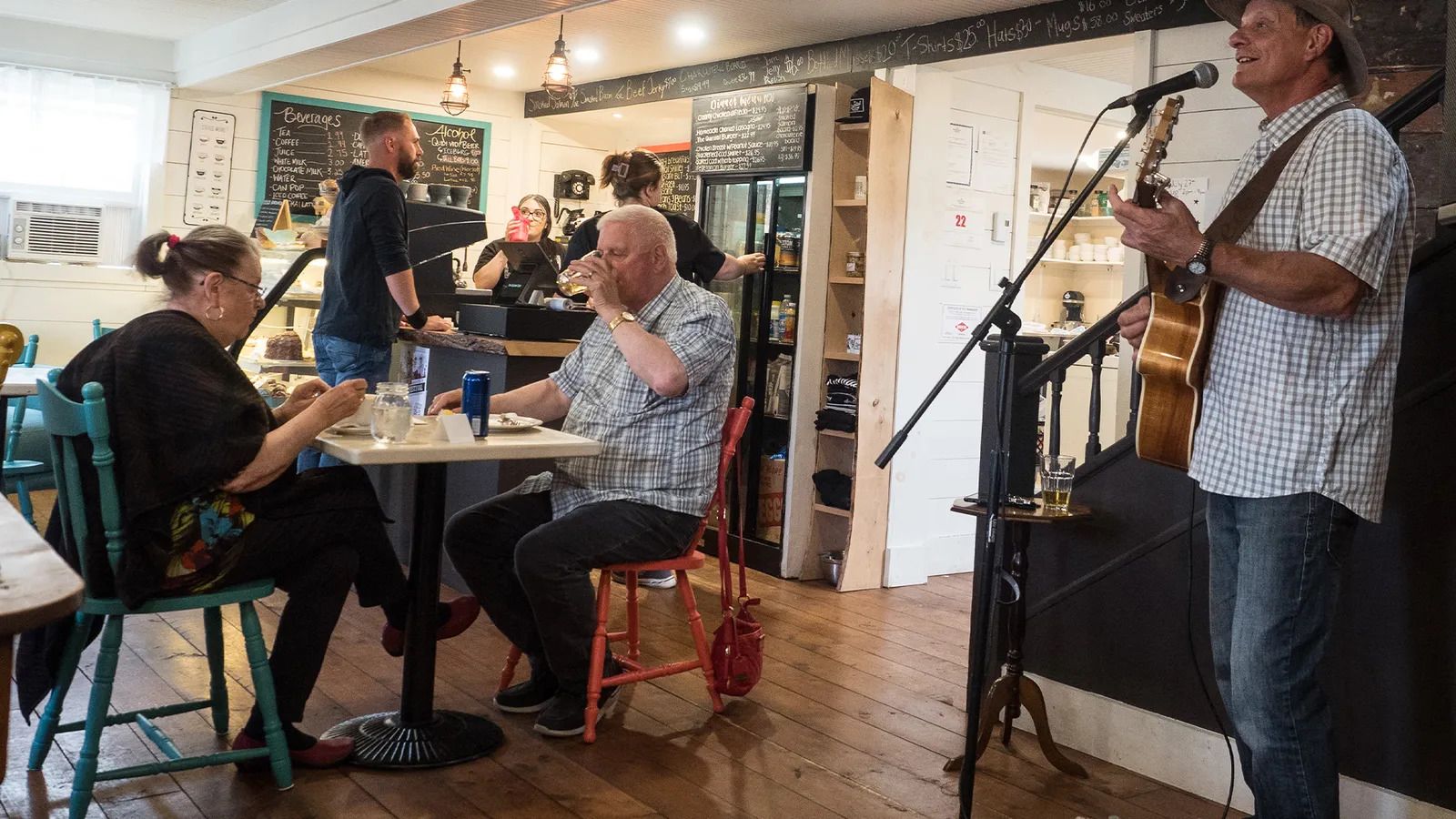 The Quintal Café opened in 2019 with the goal of creating a restaurant that feels like a welcoming home
Winding around the peninsula, I stopped at a cliff-top viewpoint to watch some humpback whales before heading for dinner at the town of Bonavista's Quintal Café. Sitting with the young owners, Bonnie and Jordan Stagg, I learned they're "moratorium kids", the generation who grew up after the 1992 end of the cod fishery. "Family said, 'move away, get an education, live somewhere with a future,'" Bonnie told me, as a local fisherman/musician filled the cosy space with music about the loss of cod and the loss of hope.
The couple left for school and jobs, but missed their hometown. By 2016, they saw Bonavista's population had stopped shrinking and, thanks to tourism, new businesses were opening. They decided they wanted to raise their kids where they grew up.
In 2017, the pair started Bonavista Adventure Tours – a tour company that offers hands-on activities like foraging for berries and a traditional Newfoundland beach "boil up" picnic and bonfire. Jordan said everything they do has to offer a sense of place. "We wanted to give tours that could only happen in Newfoundland."
Two years later they opened the cafe. With the goal of creating a restaurant that feels like a welcoming home, they found regional potters to make their dishes, source food and drink locally and employ neighbourhood musicians to give the restaurant a kitchen party atmosphere.
"Sometimes I pinch myself. I never dreamed we'd come home," said Bonnie. "I used to hear stories about these towns when they were alive. So, it's surreal seeing people coming back, fixing the old houses and deciding to stay. They're filled with hope."











