0:00
0:00
NATO Unable to Confirm Iran’s Role in Strike on UK-US Base as Tehran Denies Involvement
Alliance urges caution amid conflicting claims following attempted attack on Diego Garcia during escalating regional tensions
NATO has said it cannot confirm that Iran was responsible for a recent attempted strike on a joint UK-US military base, as Tehran firmly denies any involvement and the wider conflict in the Middle East continues to intensify.
The incident centres on a reported missile attack targeting the strategically significant Diego Garcia base in the Indian Ocean, a key installation supporting United States and British military operations.
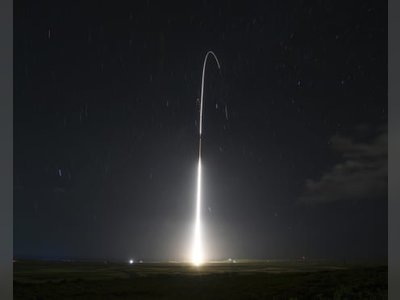
According to available information, two missiles were launched, with one intercepted by a US warship and the other falling short of its target, resulting in no direct damage to the facility.
Despite initial suspicions directed toward Iran, NATO officials have emphasised that attribution remains uncertain.
The alliance has refrained from making definitive claims about the origin of the attack, reflecting the complexity of intelligence assessments in a rapidly evolving security environment.
Iran has categorically rejected allegations of responsibility, describing the claims as unfounded and reiterating its position amid mounting regional tensions.
The denial comes as diplomatic and military activity intensifies across multiple fronts, with competing narratives emerging from different actors involved in the conflict.
Western governments, including the United Kingdom, have expressed concern over the attempted strike, characterising it as part of a broader pattern of threats to military and commercial infrastructure in the region.
At the same time, officials have sought to avoid escalation, stressing the importance of measured responses and continued coordination with allies.
The episode follows a series of incidents linked to the ongoing confrontation involving Iran, the United States, and Israel, including drone and missile attacks on military facilities and critical shipping routes.
These developments have heightened fears of a wider regional conflict, with significant implications for global security and energy markets.
The United Kingdom has reinforced its defensive posture, deploying additional naval assets and maintaining close cooperation with international partners.
Leaders have underscored that their priority remains the protection of personnel, infrastructure, and vital trade routes, while pursuing diplomatic avenues to reduce tensions.
As investigations into the attempted strike continue, NATO’s cautious stance highlights the challenges of establishing clear accountability in modern conflicts, where attribution can be contested and rapidly politicised.
The situation remains fluid, with further developments expected as intelligence assessments evolve and diplomatic efforts continue.
The incident centres on a reported missile attack targeting the strategically significant Diego Garcia base in the Indian Ocean, a key installation supporting United States and British military operations.
According to available information, two missiles were launched, with one intercepted by a US warship and the other falling short of its target, resulting in no direct damage to the facility.
Despite initial suspicions directed toward Iran, NATO officials have emphasised that attribution remains uncertain.
The alliance has refrained from making definitive claims about the origin of the attack, reflecting the complexity of intelligence assessments in a rapidly evolving security environment.
Iran has categorically rejected allegations of responsibility, describing the claims as unfounded and reiterating its position amid mounting regional tensions.
The denial comes as diplomatic and military activity intensifies across multiple fronts, with competing narratives emerging from different actors involved in the conflict.
Western governments, including the United Kingdom, have expressed concern over the attempted strike, characterising it as part of a broader pattern of threats to military and commercial infrastructure in the region.
At the same time, officials have sought to avoid escalation, stressing the importance of measured responses and continued coordination with allies.
The episode follows a series of incidents linked to the ongoing confrontation involving Iran, the United States, and Israel, including drone and missile attacks on military facilities and critical shipping routes.
These developments have heightened fears of a wider regional conflict, with significant implications for global security and energy markets.
The United Kingdom has reinforced its defensive posture, deploying additional naval assets and maintaining close cooperation with international partners.
Leaders have underscored that their priority remains the protection of personnel, infrastructure, and vital trade routes, while pursuing diplomatic avenues to reduce tensions.
As investigations into the attempted strike continue, NATO’s cautious stance highlights the challenges of establishing clear accountability in modern conflicts, where attribution can be contested and rapidly politicised.
The situation remains fluid, with further developments expected as intelligence assessments evolve and diplomatic efforts continue.