Portugal’s narcotics police chief: “Europe is simply being flooded with cocaine” — criminal organizations are buying it from South America
Semi-submersible vessel seized mid-Atlantic in international operation targeting cocaine trafficking to Iberia and beyond
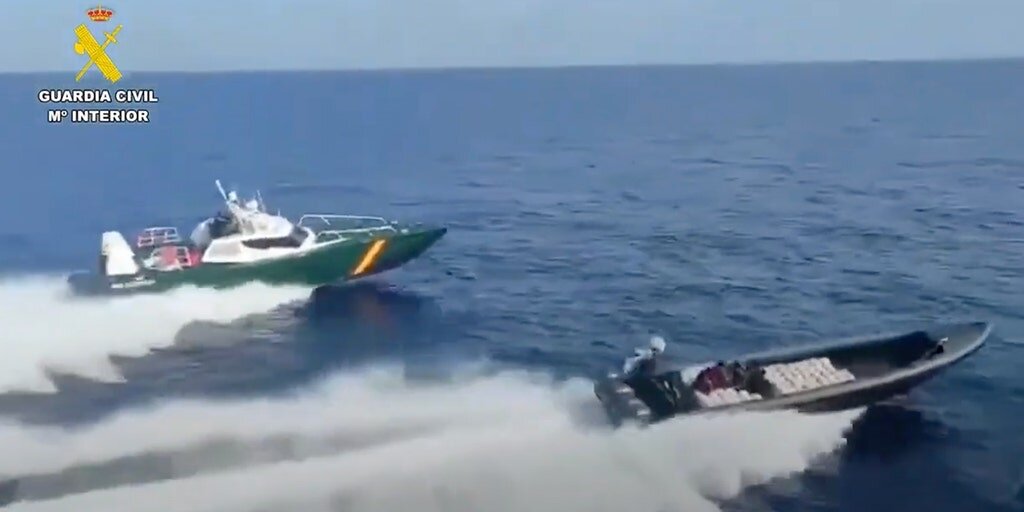
In a coordinated maritime operation this November, Portuguese authorities intercepted a semi-submersible “narco-submarine” in the Atlantic Ocean carrying approximately 1.7 tonnes of cocaine destined for the Iberian Peninsula and wider European markets.
The seizure was carried out by the Portuguese Judicial Police (PJ) in conjunction with the Portuguese Navy and Air Force, with operational support from the United Kingdom’s National Crime Agency (NCA), the U.S. Drug Enforcement Administration (DEA), and the Lisbon-based Maritime Analysis and Operations Centre – Narcotics (MAOC-N).
The vessel was intercepted roughly 1,000 nautical miles west of Lisbon.
Four crew members—identified as two Ecuadorians, one Venezuelan, and one Colombian—were arrested.
After the submersible was boarded and the narcotics confiscated, authorities allowed the fragile craft to sink, citing its unstable construction and poor weather conditions.
Authorities said the drugs were intended for distribution across multiple European countries; the varied nationalities of the detainees suggest the involvement of a transnational trafficking network rather than a local operation.
This is the second major narco-submarine interception by Portuguese forces in 2025 — earlier, in March, a sub carrying around 6.5 tonnes of cocaine was caught roughly 500 nautical miles south of the Azores.
The operation underscores the growing trend among drug cartels to employ low-profile semi-submersible vessels that sail partially submerged in a bid to evade radar and aerial surveillance.
These methods form part of a broader shift in smuggling tactics, as traffickers respond to increased pressure on traditional container-ship and land-based routes.
Officials described the interception as a significant blow to a major trafficking network, but acknowledge that many such vessels likely remain undetected.
The maritime corridor between South America and Europe remains highly vulnerable.
The multinational nature of the operation — involving police and naval forces from multiple countries — highlights the necessity of international cooperation to stem the flow of drugs across the Atlantic.
As long as demand remains high and enforcement gaps persist, these maritime smuggling networks will continue adapting, testing new routes, and pushing the limits of law enforcement’s reach.
The recent bust sends a stark reminder: the Atlantic is no longer just a shipping highway — for some, it has become a freight corridor for narcotics.
The seizure was carried out by the Portuguese Judicial Police (PJ) in conjunction with the Portuguese Navy and Air Force, with operational support from the United Kingdom’s National Crime Agency (NCA), the U.S. Drug Enforcement Administration (DEA), and the Lisbon-based Maritime Analysis and Operations Centre – Narcotics (MAOC-N).
The vessel was intercepted roughly 1,000 nautical miles west of Lisbon.
Four crew members—identified as two Ecuadorians, one Venezuelan, and one Colombian—were arrested.
After the submersible was boarded and the narcotics confiscated, authorities allowed the fragile craft to sink, citing its unstable construction and poor weather conditions.
Authorities said the drugs were intended for distribution across multiple European countries; the varied nationalities of the detainees suggest the involvement of a transnational trafficking network rather than a local operation.
This is the second major narco-submarine interception by Portuguese forces in 2025 — earlier, in March, a sub carrying around 6.5 tonnes of cocaine was caught roughly 500 nautical miles south of the Azores.
The operation underscores the growing trend among drug cartels to employ low-profile semi-submersible vessels that sail partially submerged in a bid to evade radar and aerial surveillance.
These methods form part of a broader shift in smuggling tactics, as traffickers respond to increased pressure on traditional container-ship and land-based routes.
Officials described the interception as a significant blow to a major trafficking network, but acknowledge that many such vessels likely remain undetected.
The maritime corridor between South America and Europe remains highly vulnerable.
The multinational nature of the operation — involving police and naval forces from multiple countries — highlights the necessity of international cooperation to stem the flow of drugs across the Atlantic.
As long as demand remains high and enforcement gaps persist, these maritime smuggling networks will continue adapting, testing new routes, and pushing the limits of law enforcement’s reach.
The recent bust sends a stark reminder: the Atlantic is no longer just a shipping highway — for some, it has become a freight corridor for narcotics.