

SpaceX's Starship explodes minutes after landmark launch of world's most powerful rocket system
SpaceX has launched the biggest and most powerful rocket ever made in a landmark test - but it exploded just minutes later.
Three days after an inaugural flight was scrapped due to a last-minute glitch, Starship took off from Boca Chica in southern Texas as thousands of spectators watched nearby.
But the rocket system failed to separate as planned, and exploded less than four minutes into its flight.
SpaceX said Starship experienced a "rapid, unscheduled disassembly before stage separation".
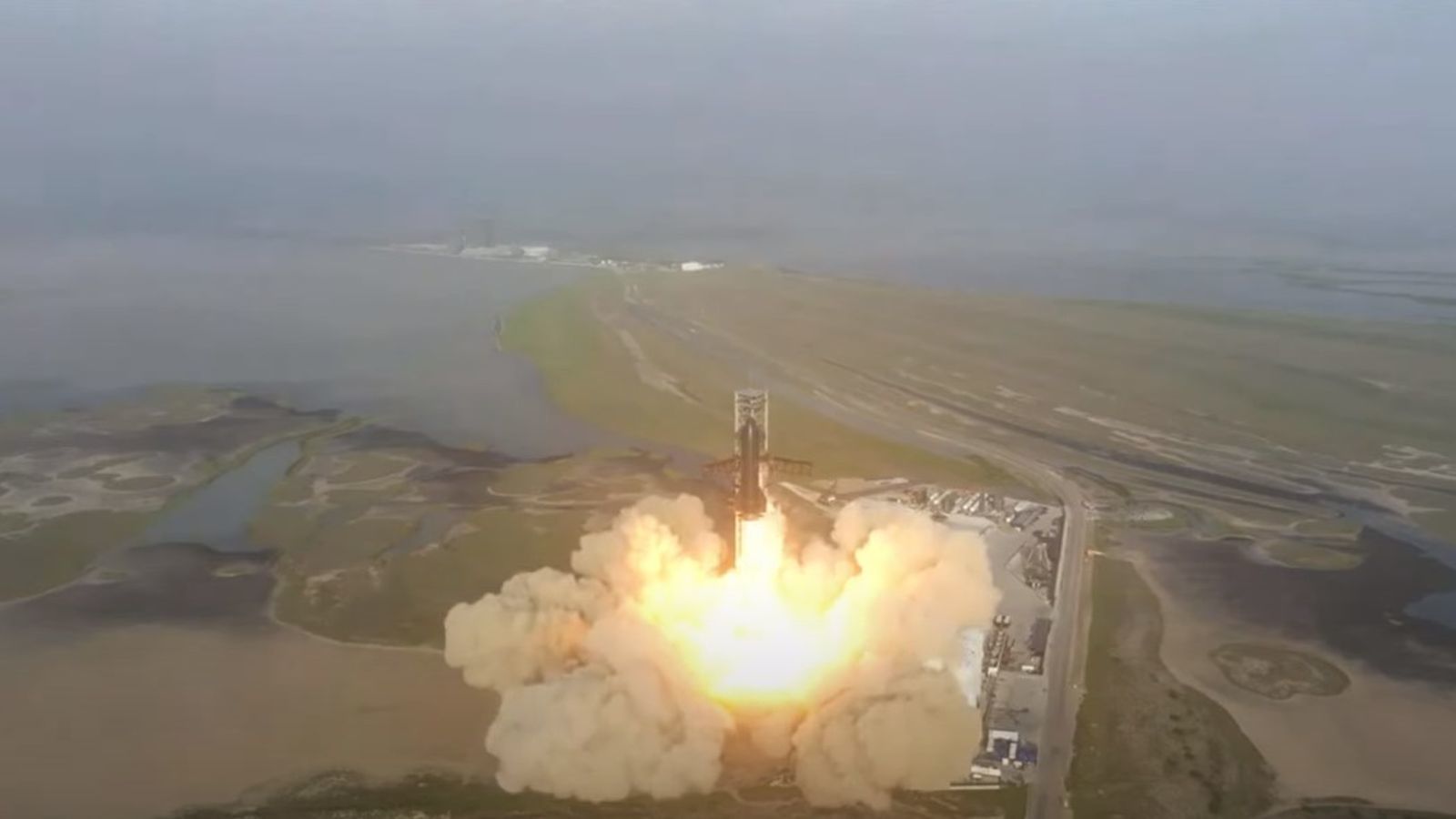 The rocket system launched…
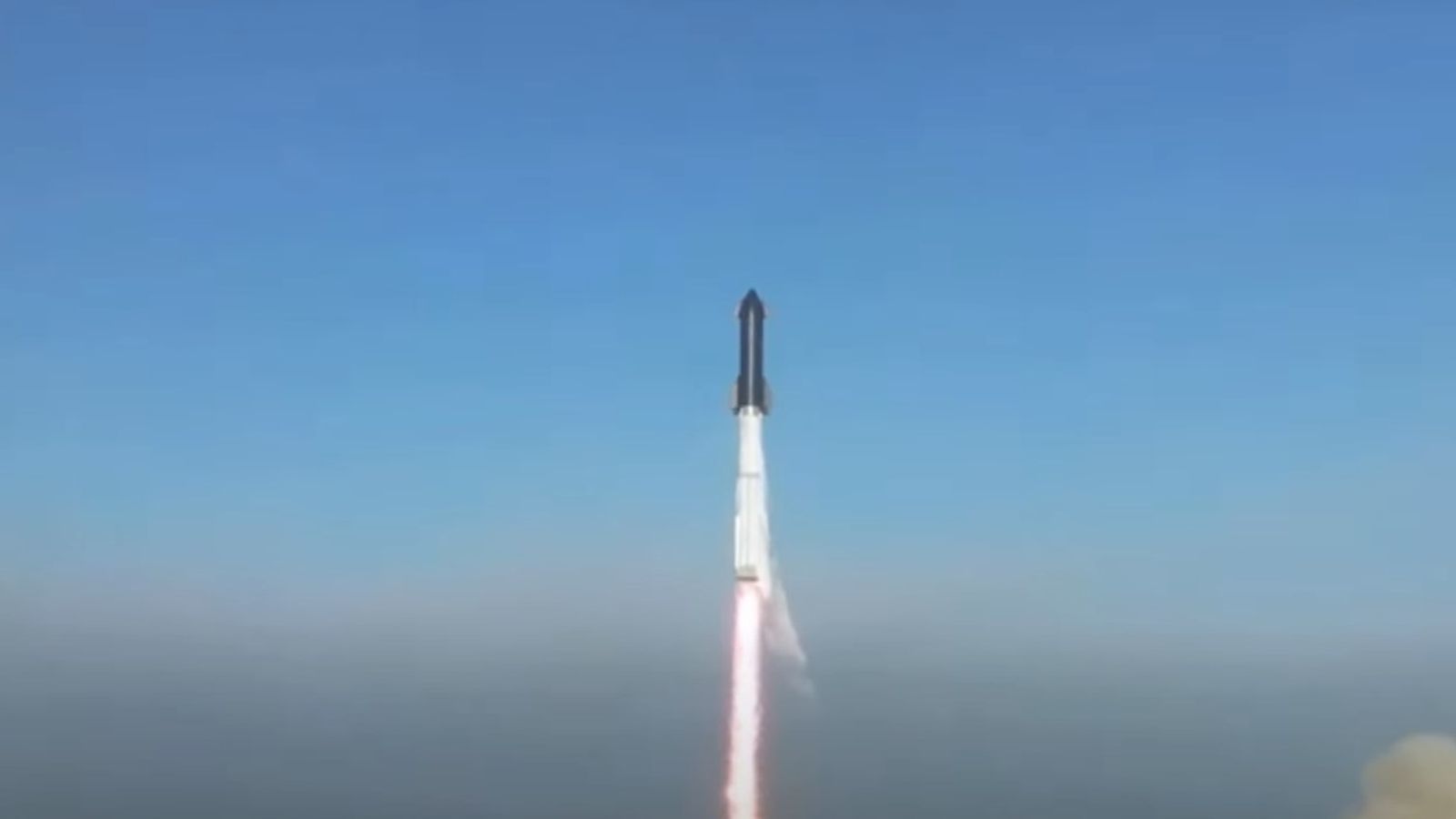 …took to the sky…
 …but didn't reach orbit
SpaceX officials still declared the ambitious mission a success, as it marked the first time Starship and its massive booster rocket had taken to the skies.
Company boss Elon Musk congratulated the team on an "exciting test launch".
Musk had sought to keep expectations in check beforehand, saying it had a 50% chance of reaching orbit at the first try.
But more launches are planned, and he believes there's an 80% chance of success before the end of the year.
"Learned a lot for next test launch in a few months," Musk tweeted after Thursday's test.
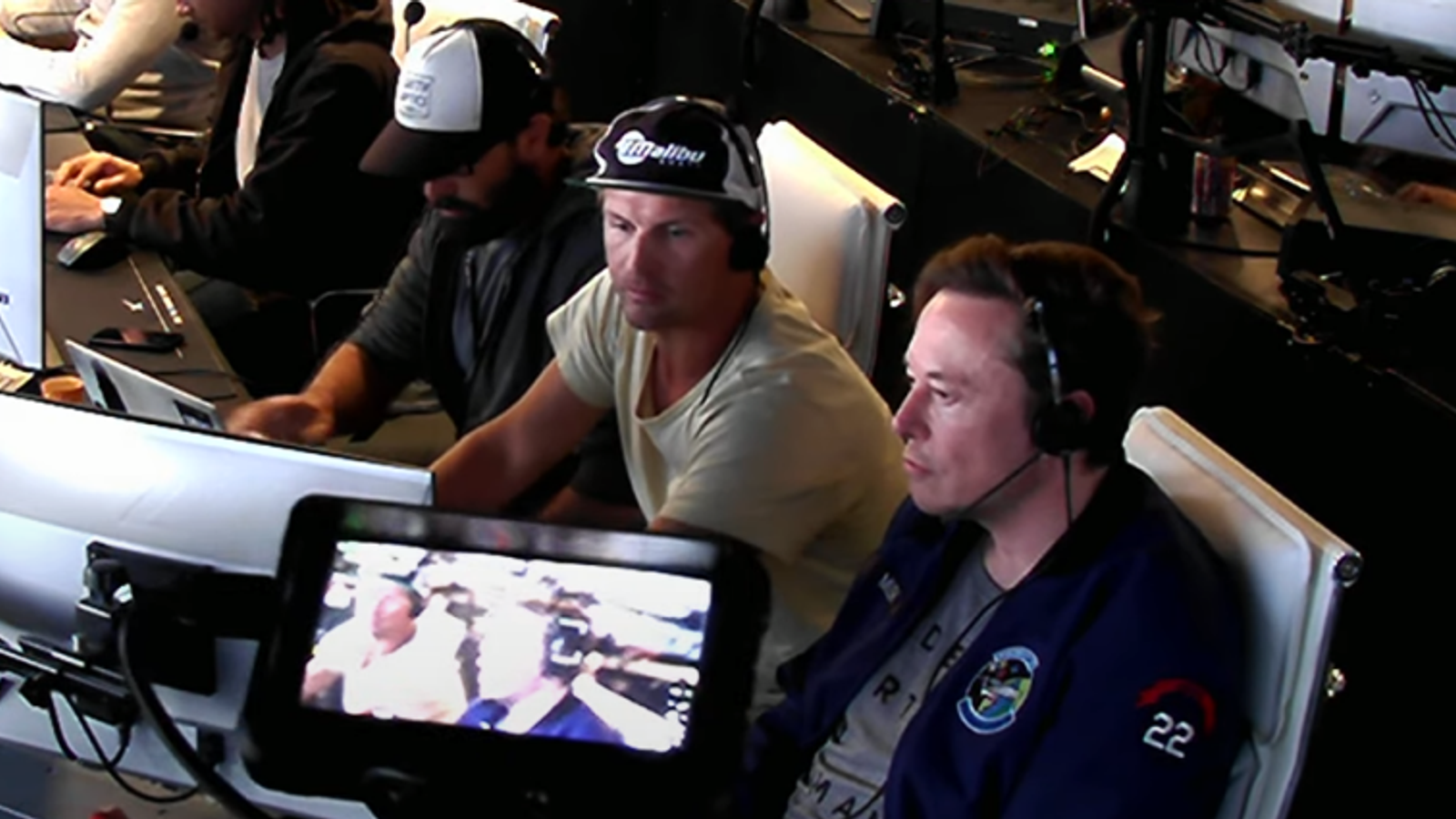 Elon Musk was seen on SpaceX's livestream shortly after the explosion
SpaceX's record-breaking rocket
Starship is made up of two stages - a Super Heavy booster that generates the needed power to reach orbit, and the spacecraft tipped to one day take humans back to the moon and eventually Mars.
Combined, the craft and booster - which has 33 rocket engines - have a record-setting height of 120m.
It was hoped Thursday's test would see the craft separate from the booster and complete a full orbit of the Earth.
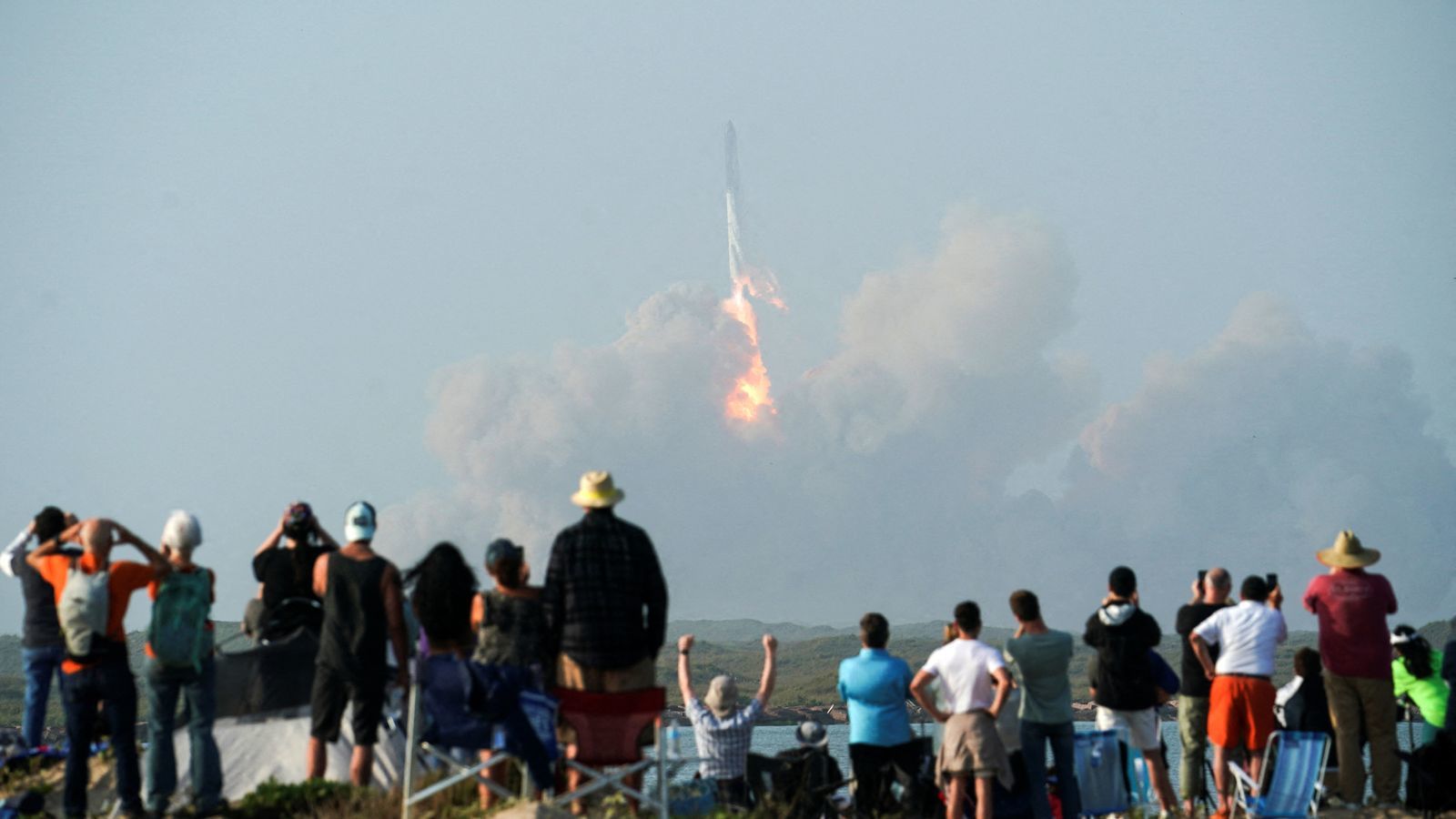 Thousands of people watched from near the launchpad
What might have been…
If completely successful, Starship would have completed a full orbit of the Earth and splashed down into the Pacific.
The booster - a prototype called Booster 7 - would have been discarded into the Gulf of Mexico.
The whole flight would have taken about 90 minutes.
Thankfully, there was no cargo aboard Starship for Thursday's launch, let alone people.
Musk hopes Starship will eventually be used to carry satellites into space - and take humans to the moon and Mars.
NASA has signed up to use it to transport astronauts back to the lunar surface via its Artemis programme by 2025.
Starship's first orbital test comes after the US flight regulator issued SpaceX with a five-year licence, saying it met all safety and environmental requirements.











