World War II munitions discovered after wildfires in southern France
The discovery of 400 historic shells follows intense burning in Le Porge, where explosions were mistaken for gas cylinders.
Wildfires in southern France have uncovered a cache of approximately 400 World War II-era munitions in the village of Le Porge, local authorities confirmed.
The heat from the blazes triggered the detonation of both German and French ordnance, including anti-tank and mortar shells.
While initial reports attributed loud blasts to exploding gas cylinders, the local fire commander suggested the intense heat likely detonated the buried explosives.
Mayor Martial Zaninetti told France Info that over 100 explosions occurred during the second night of the fire, describing the experience as resembling "the sound of war." He noted that while ammunition depots were buried within the municipality, their existence was previously unknown.
According to Zaninetti, the projectiles moved erratically, with at least one shell passing through a residence.
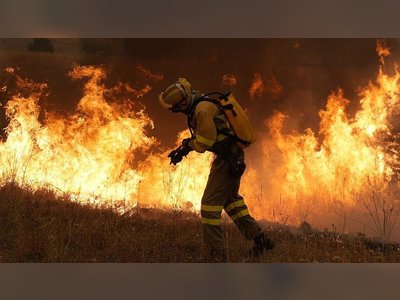
The wildfire, which burned for approximately ten days in the Gironde area, destroyed more than 180 houses.
Although demining operations have allowed most residents to return, certain areas—including a campsite, the village of La Jenny, and coastal access points—remain cordoned off.
French Prime Minister Sébastien Lecornu commended firefighters for their response to what he termed an "unprecedented crisis," noting that the battle against the fires has entered a new phase as evacuations end.
The regional fire was among the largest in France since World War II, consuming 42,000 hectares in the south-west.
The broader European wildfire season has seen more than 330,000 evacuations, primarily across France and Spain.
The heat from the blazes triggered the detonation of both German and French ordnance, including anti-tank and mortar shells.
While initial reports attributed loud blasts to exploding gas cylinders, the local fire commander suggested the intense heat likely detonated the buried explosives.
Mayor Martial Zaninetti told France Info that over 100 explosions occurred during the second night of the fire, describing the experience as resembling "the sound of war." He noted that while ammunition depots were buried within the municipality, their existence was previously unknown.
According to Zaninetti, the projectiles moved erratically, with at least one shell passing through a residence.
The wildfire, which burned for approximately ten days in the Gironde area, destroyed more than 180 houses.
Although demining operations have allowed most residents to return, certain areas—including a campsite, the village of La Jenny, and coastal access points—remain cordoned off.
French Prime Minister Sébastien Lecornu commended firefighters for their response to what he termed an "unprecedented crisis," noting that the battle against the fires has entered a new phase as evacuations end.
The regional fire was among the largest in France since World War II, consuming 42,000 hectares in the south-west.
The broader European wildfire season has seen more than 330,000 evacuations, primarily across France and Spain.