

A new UN report urges a radical shift in the way we think about nature
The report, "Making Peace with Nature," spans 168 pages and distills the latest science on climate change and mankind's "war" on the planet. It also argues that amid our pursuit of wealth and security, humans must now learn to value the fundamental "natural capital" of geology, soil, air and water -- and urgently.
"For too long, we have been waging a senseless and suicidal war on nature," said UN Secretary-General Antonio Guterres at a news briefing Thursday presenting the report. "The result is three interlinked environmental crises: climate disruption, biodiversity loss and pollution that threaten our viability as a species."
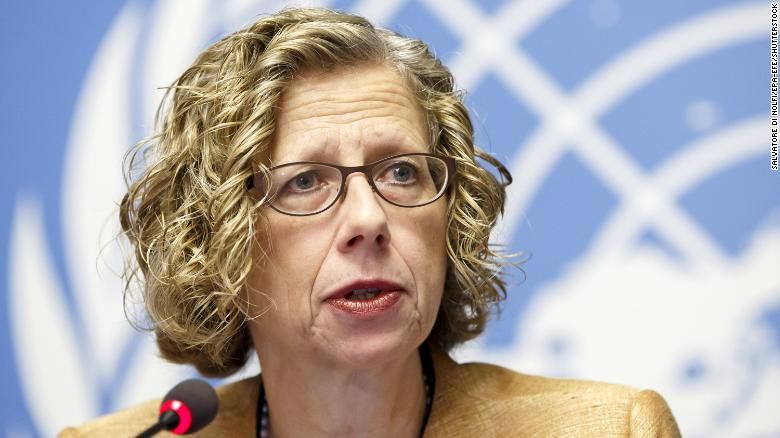
"We are destroying the planet, placing our own health and prosperity at risk," said Inger Andersen, executive director of the United Nations Environment Program, which released the report.
The world is far from meeting its agreed objectives to protect the planet. Species and ecosystems are vanishing faster than ever, despite long-standing global commitments to protect them. While the ozone layer is slowly being restored, mankind has fallen off track to limit global warming as envisioned in the landmark Paris Agreement, the report says.
"At the current rate, warming will reach 1.5°C by around 2040 and possibly earlier. Taken together, current national policies to reduce greenhouse gas emissions put the world on a pathway to warming of at least 3°C by 2100," it reads.
Humans are already paying a bitter price, and not only in the form of the increasingly extreme weather. According to the report, a quarter of the world's disease burden now stems from environment-related risks, including diseases that emerge from increasing proximity to wildlife -- such as Covid-19, thought to have originated with bats -- and exposure to our own toxic waste; pollution causes some 9 million premature deaths every year, according to the report.
Now could be the time to change all that, as the world reemerges from a pandemic that has upturned business as usual. Governments thinking about big policies to restart their economies could seize this unique historic moment to prioritize the planet, the report says. "The COVID-19 crisis provides the impetus to rethink how society can accelerate the transformation to a sustainable future."
The report offers suggestions for everyone from governments to financial institutions to individuals, but its proposition for a new way to think about the environment and the global economy is civilizational in scale.
"Economic and financial systems fail to account for the essential benefits that humanity gets from nature and to provide incentives to manage nature wisely and maintain its value. ... Conventional metrics like gross domestic product (GDP) overstate progress because they fail to adequately capture the costs of environmental degradation or reflect declines in natural capital," it says.
If mankind began to factor the value of our environment -- and the costs of its degradation to our health and security -- into economic activity, our decisions might be different, the report argues. "Excluding the value of nature skews investment away from economic solutions that conserve and restore nature, reduce pollution, expand renewable energy and make more sustainable use of resources while also increasing prosperity and well-being."
Guterres put it this way: "Just to give you an example of how important is this mind-shift requirement, even in the way we organize economic policies and economic data, we can see GDP growth when we overfish. We are destroying nature, but we count it as increase of wealth."
He added, "We can see the GDP growth when we cut forests, and we are destroying nature, and we are destroying wealth, but we consider it GDP growth."
Several global meetings planned for this year could begin to shift mankind's perspective on nature. The virtual UN Environment Assembly falls next week, followed by the COP15 Conference on Biodiversity and the UN Climate Change Conference later in the year.
Guterres said another "key moment" in the momentum of 2021 will come as early as Friday, when the United States officially rejoins the Paris Climate Agreement. Former US President Donald Trump withdrew the country from the accord last year.
"There is indeed no precedent for what we have to do, but if 2020 was a disaster, let 2021 then be the year humanity began making peace with nature and secured a fair, just and sustainable future for everyone," he said.











