
Armenia’s Diplomatic Pivot: Turkey Normalisation, UK Security Ties and Zelensky Meeting Signal Strategic Rebalancing
Yerevan hosts a dense round of diplomacy linking Ankara normalisation talks, expanded UK defence cooperation, and renewed engagement with Ukraine amid shifting South Caucasus geopolitics
Armenia’s recent diplomatic engagements reflect a coordinated push to reposition its foreign policy across three directions at once: normalization with Turkey, deepening security ties with the United Kingdom, and renewed political alignment with Ukraine.
The activity is not an isolated sequence of meetings but part of a broader attempt by Yerevan to diversify its external partnerships after years of security dependence on a narrower set of regional actors.
The most immediate developments unfolded on the margins of the European Political Community summit in Yerevan, where Armenian Prime Minister Nikol Pashinyan met Ukrainian President Volodymyr Zelensky.
The talks focused on restoring structured bilateral dialogue, economic cooperation, and shared assessments of regional security dynamics shaped by the ongoing war involving Russia and Ukraine.
Zelensky described the meeting as a step toward reviving active diplomatic channels between the two countries after a long period of limited high-level contact.
Both sides also discussed institutional mechanisms for future economic coordination, including proposals to restart intergovernmental cooperation frameworks.
What is confirmed is that the meeting took place in the context of broader European diplomacy, with Ukraine actively seeking expanded support networks across the continent during the summit.
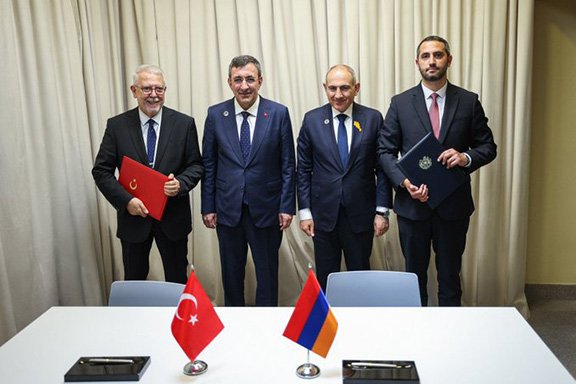
In parallel, Armenia has been steadily advancing its long-running normalization process with Turkey.
While no comprehensive political settlement has been announced, recent engagement has centered on incremental confidence-building measures rather than final-status agreements.
These include technical cooperation, cross-border infrastructure discussions, and symbolic restoration projects such as joint cultural and transport initiatives.
Turkish and Armenian special representatives have continued structured dialogue aimed at reopening economic and logistical links, including railway rehabilitation discussions and border-related technical coordination.
These steps are part of a phased normalization track that both sides have publicly framed as gradual and conditional on regional stability.
A third layer of engagement involves Armenia’s strengthening ties with the United Kingdom.
Prime Minister Keir Starmer held bilateral discussions with President Zelensky in Yerevan that also intersected with wider European security coordination efforts.
The talks addressed defence cooperation, air defence capabilities, energy security, and sanctions enforcement related to Russia.
While the meeting was formally UK–Ukraine focused, it took place within a summit setting where Armenia acted as host, reinforcing its role as a platform for broader European security discussions.
The UK has in recent years upgraded its relationship with Armenia into a more structured strategic partnership framework, including expanded cooperation in security and economic domains.
The convergence of these three diplomatic tracks highlights a structural shift in Armenia’s external positioning.
The country is attempting to reduce strategic dependence on any single partner while expanding its ties with European institutions, regional neighbours, and Western security actors.
This approach is shaped by recent regional shocks, including the post-conflict recalibration in the South Caucasus and ongoing geopolitical competition involving Russia, Turkey, the European Union, and the United States.
What is emerging is a layered strategy rather than a single pivot.
Normalisation with Turkey remains technically complex and politically sensitive, with progress dependent on sustained regional de-escalation and parallel developments in Armenia’s relationship with Azerbaijan.
UK engagement is driven primarily by defence and economic diversification goals, while cooperation with Ukraine reflects shared diplomatic alignment within European multilateral forums rather than formal alliance structures.
The combined effect of these engagements is a gradual reconfiguration of Armenia’s diplomatic landscape.
Rather than a formal realignment, the country is building overlapping partnerships designed to increase policy flexibility, economic access, and security options in a region where traditional alignments are increasingly fluid.
The activity is not an isolated sequence of meetings but part of a broader attempt by Yerevan to diversify its external partnerships after years of security dependence on a narrower set of regional actors.
The most immediate developments unfolded on the margins of the European Political Community summit in Yerevan, where Armenian Prime Minister Nikol Pashinyan met Ukrainian President Volodymyr Zelensky.
The talks focused on restoring structured bilateral dialogue, economic cooperation, and shared assessments of regional security dynamics shaped by the ongoing war involving Russia and Ukraine.
Zelensky described the meeting as a step toward reviving active diplomatic channels between the two countries after a long period of limited high-level contact.
Both sides also discussed institutional mechanisms for future economic coordination, including proposals to restart intergovernmental cooperation frameworks.
What is confirmed is that the meeting took place in the context of broader European diplomacy, with Ukraine actively seeking expanded support networks across the continent during the summit.
In parallel, Armenia has been steadily advancing its long-running normalization process with Turkey.
While no comprehensive political settlement has been announced, recent engagement has centered on incremental confidence-building measures rather than final-status agreements.
These include technical cooperation, cross-border infrastructure discussions, and symbolic restoration projects such as joint cultural and transport initiatives.
Turkish and Armenian special representatives have continued structured dialogue aimed at reopening economic and logistical links, including railway rehabilitation discussions and border-related technical coordination.
These steps are part of a phased normalization track that both sides have publicly framed as gradual and conditional on regional stability.
A third layer of engagement involves Armenia’s strengthening ties with the United Kingdom.
Prime Minister Keir Starmer held bilateral discussions with President Zelensky in Yerevan that also intersected with wider European security coordination efforts.
The talks addressed defence cooperation, air defence capabilities, energy security, and sanctions enforcement related to Russia.
While the meeting was formally UK–Ukraine focused, it took place within a summit setting where Armenia acted as host, reinforcing its role as a platform for broader European security discussions.
The UK has in recent years upgraded its relationship with Armenia into a more structured strategic partnership framework, including expanded cooperation in security and economic domains.
The convergence of these three diplomatic tracks highlights a structural shift in Armenia’s external positioning.
The country is attempting to reduce strategic dependence on any single partner while expanding its ties with European institutions, regional neighbours, and Western security actors.
This approach is shaped by recent regional shocks, including the post-conflict recalibration in the South Caucasus and ongoing geopolitical competition involving Russia, Turkey, the European Union, and the United States.
What is emerging is a layered strategy rather than a single pivot.
Normalisation with Turkey remains technically complex and politically sensitive, with progress dependent on sustained regional de-escalation and parallel developments in Armenia’s relationship with Azerbaijan.
UK engagement is driven primarily by defence and economic diversification goals, while cooperation with Ukraine reflects shared diplomatic alignment within European multilateral forums rather than formal alliance structures.
The combined effect of these engagements is a gradual reconfiguration of Armenia’s diplomatic landscape.
Rather than a formal realignment, the country is building overlapping partnerships designed to increase policy flexibility, economic access, and security options in a region where traditional alignments are increasingly fluid.