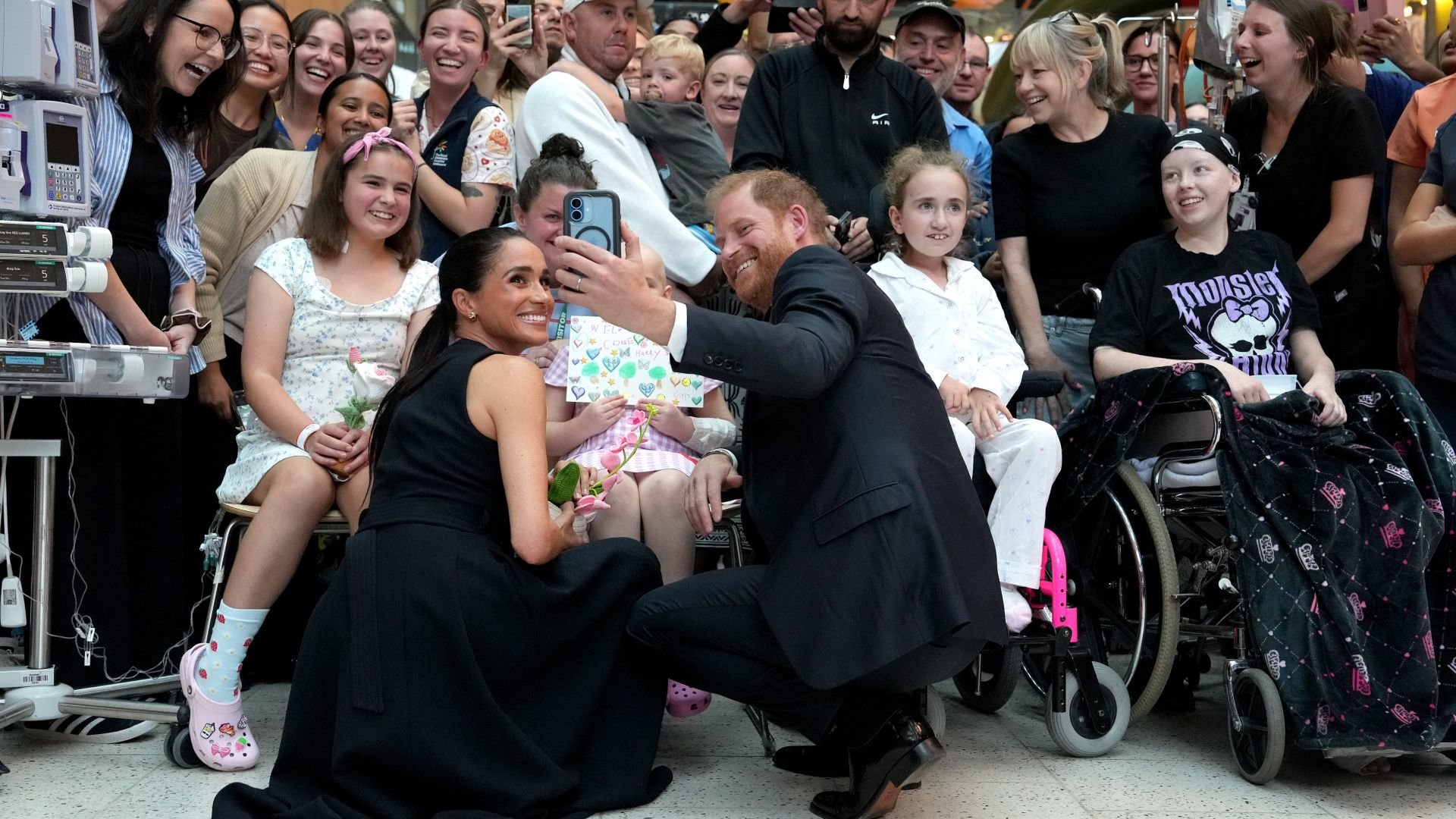
Claims of Palace Fury Over Harry and Meghan’s Australia Visit Highlight Ongoing Royal Rift
Unverified reports of Buckingham Palace calling the trip “outrageous” underscore tensions, but no official statement confirms the claim
The British royal household is at the center of renewed scrutiny following claims that Buckingham Palace reacted angrily to Prince Harry and Meghan Markle’s reported plans for an Australia visit.
The core issue is not the यात्रा itself, but the credibility and significance of alleged internal palace reactions, which remain unconfirmed.
What is confirmed is that Prince Harry and Meghan, who stepped back from official royal duties in 2020, continue to operate independently of the monarchy while maintaining high global visibility.
Their international engagements, whether charitable, commercial, or personal, are no longer coordinated with royal protocols, a shift that has repeatedly generated friction with royal institutions.
The specific claim that Buckingham Palace described a potential Australia visit as “outrageous” has circulated widely but has not been substantiated by any formal palace communication.
The allegation has not been proven.
In practice, the royal household rarely comments on the private travel or independent activities of the Duke and Duchess of Sussex, particularly since their departure from official roles.
The mechanism behind such disputes lies in the blurred boundary between royal branding and private activity.
Harry and Meghan retain their titles but do not represent the monarchy in an official capacity.
This creates recurring tension when their appearances resemble quasi-royal tours, especially in Commonwealth countries such as Australia, where the British monarch remains head of state.
Australia is a particularly sensitive context.
It is both a key Commonwealth nation and a country with an active republican debate.
Any high-profile visit by members of the royal family—official or otherwise—carries political and symbolic weight.
A visit by Harry and Meghan could draw public attention comparable to an official tour, even without formal endorsement, potentially complicating the monarchy’s positioning.
The stakes are therefore reputational rather than procedural.
For Buckingham Palace, the priority is maintaining a clear distinction between sanctioned royal duties and private initiatives.
For Harry and Meghan, global visibility is central to their post-royal identity and funding model, which includes media production, philanthropy, and public speaking.
Recent developments reinforce this pattern.
The couple has continued to undertake international travel tied to charitable causes and partnerships, often attracting significant media coverage.
At the same time, the monarchy under King Charles III has sought to streamline its public role, emphasizing a smaller, more controlled group of working royals.
The broader implication is that any perceived overlap between the Sussexes’ activities and official royal functions will continue to generate controversy, regardless of whether specific claims—such as the reported “outrageous” remark—are accurate.
The dynamic is structural, rooted in competing interpretations of legitimacy, visibility, and control over the royal brand.
In practical terms, the situation leaves governments and institutions in countries like Australia navigating a delicate balance: engaging with globally prominent figures who are no longer official representatives of the Crown, while maintaining clarity about diplomatic and constitutional boundaries.
That tension is now a persistent feature of the post-2020 royal landscape.
The core issue is not the यात्रा itself, but the credibility and significance of alleged internal palace reactions, which remain unconfirmed.
What is confirmed is that Prince Harry and Meghan, who stepped back from official royal duties in 2020, continue to operate independently of the monarchy while maintaining high global visibility.
Their international engagements, whether charitable, commercial, or personal, are no longer coordinated with royal protocols, a shift that has repeatedly generated friction with royal institutions.
The specific claim that Buckingham Palace described a potential Australia visit as “outrageous” has circulated widely but has not been substantiated by any formal palace communication.
The allegation has not been proven.
In practice, the royal household rarely comments on the private travel or independent activities of the Duke and Duchess of Sussex, particularly since their departure from official roles.
The mechanism behind such disputes lies in the blurred boundary between royal branding and private activity.
Harry and Meghan retain their titles but do not represent the monarchy in an official capacity.
This creates recurring tension when their appearances resemble quasi-royal tours, especially in Commonwealth countries such as Australia, where the British monarch remains head of state.
Australia is a particularly sensitive context.
It is both a key Commonwealth nation and a country with an active republican debate.
Any high-profile visit by members of the royal family—official or otherwise—carries political and symbolic weight.
A visit by Harry and Meghan could draw public attention comparable to an official tour, even without formal endorsement, potentially complicating the monarchy’s positioning.
The stakes are therefore reputational rather than procedural.
For Buckingham Palace, the priority is maintaining a clear distinction between sanctioned royal duties and private initiatives.
For Harry and Meghan, global visibility is central to their post-royal identity and funding model, which includes media production, philanthropy, and public speaking.
Recent developments reinforce this pattern.
The couple has continued to undertake international travel tied to charitable causes and partnerships, often attracting significant media coverage.
At the same time, the monarchy under King Charles III has sought to streamline its public role, emphasizing a smaller, more controlled group of working royals.
The broader implication is that any perceived overlap between the Sussexes’ activities and official royal functions will continue to generate controversy, regardless of whether specific claims—such as the reported “outrageous” remark—are accurate.
The dynamic is structural, rooted in competing interpretations of legitimacy, visibility, and control over the royal brand.
In practical terms, the situation leaves governments and institutions in countries like Australia navigating a delicate balance: engaging with globally prominent figures who are no longer official representatives of the Crown, while maintaining clarity about diplomatic and constitutional boundaries.
That tension is now a persistent feature of the post-2020 royal landscape.