
UK Convicts Four Activists After Break-In at Israeli Defence Contractor Site
Court ruling raises fresh questions over protest tactics, security at sensitive facilities, and escalating tensions around UK–Israel-linked defence operations
ACTOR-DRIVEN legal enforcement in the United Kingdom has resulted in the conviction of four activists linked to the group Palestine Action after they were found guilty of breaking into a facility associated with an Israeli defence company operating in the UK. The case highlights the intersection of protest activity, national security infrastructure, and foreign-linked defence manufacturing on British soil.
What is confirmed is that a UK court has convicted four individuals for their involvement in a break-in at premises connected to an Israeli defence contractor.
The defendants were associated with Palestine Action, a protest group known for direct action targeting companies it believes are linked to the Israeli military or defence sector.
The convictions relate specifically to unlawful entry and damage or attempted disruption of operations at the site.
The incident took place at a facility operated by or affiliated with an Israeli defence firm involved in the production or support of military technology.
Such facilities in the UK typically operate under strict security conditions due to their involvement in sensitive defence supply chains and export-controlled technologies.
The break-in represents a breach of those security perimeters, triggering both criminal prosecution and broader scrutiny of facility protection standards.
The prosecution argued that the defendants intentionally entered the site without authorization and engaged in conduct designed to disrupt operations.
The court accepted that the threshold for criminal liability had been met, leading to convictions.
Sentencing is expected to reflect both the unauthorized entry and the broader security implications of interfering with defence-related infrastructure.
Palestine Action has repeatedly targeted companies it identifies as linked to Israel’s military industry, often using direct-action tactics such as trespass, property disruption, and occupation of facilities.
Supporters of such actions frame them as political protest aimed at disrupting supply chains, while authorities treat them as criminal acts that endanger security, operations, and staff safety.
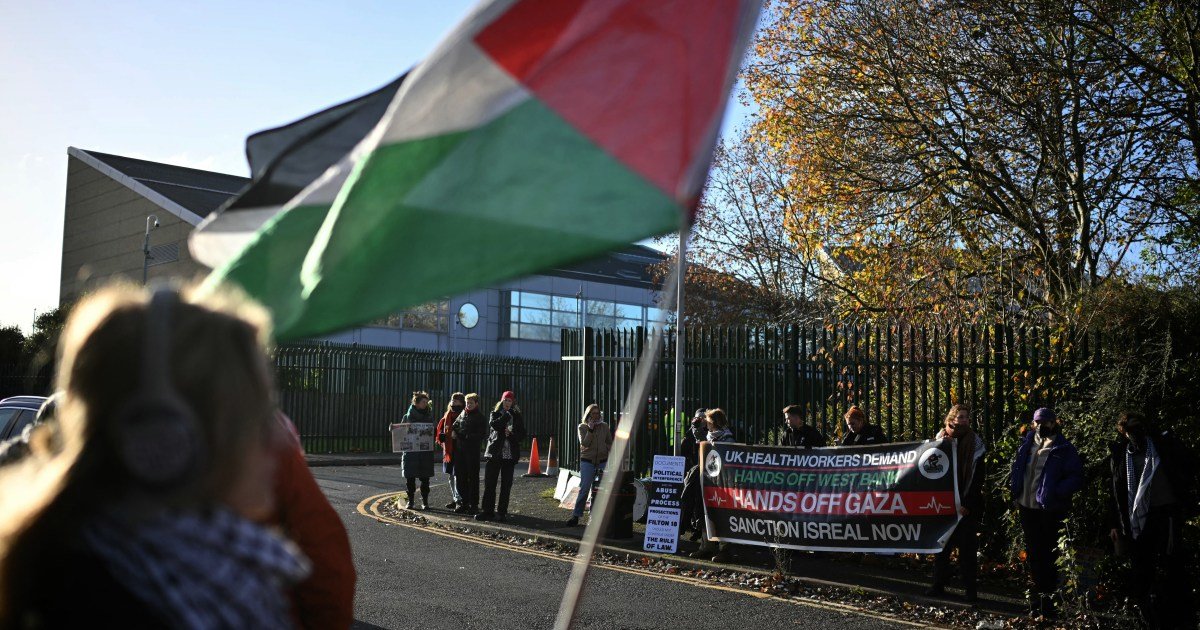
The case sits within a wider context of heightened political tension in the UK surrounding the Israel–Gaza conflict, which has led to increased activism, protests, and counter-protests.
Authorities have faced pressure to balance the right to protest with the need to protect critical infrastructure and prevent disruption to regulated industries, particularly those tied to defence exports and international security cooperation.
For the UK legal system, the convictions reinforce the application of existing trespass and criminal damage laws to politically motivated direct action.
The outcome signals that intent framed as protest does not exempt individuals from liability when actions cross into unlawful entry or disruption of protected facilities.
Beyond the courtroom, the case underscores ongoing security challenges faced by companies operating in politically sensitive sectors.
Defence-linked firms in the UK remain subject to both physical security requirements and increasing scrutiny from activist groups, particularly those engaged in campaigns tied to international conflicts.
The convictions also add to a growing body of legal precedents in which courts have been asked to adjudicate between protest activity and industrial security, reinforcing the state’s position that infrastructure associated with defence manufacturing is subject to strict protection regardless of political context.
What is confirmed is that a UK court has convicted four individuals for their involvement in a break-in at premises connected to an Israeli defence contractor.
The defendants were associated with Palestine Action, a protest group known for direct action targeting companies it believes are linked to the Israeli military or defence sector.
The convictions relate specifically to unlawful entry and damage or attempted disruption of operations at the site.
The incident took place at a facility operated by or affiliated with an Israeli defence firm involved in the production or support of military technology.
Such facilities in the UK typically operate under strict security conditions due to their involvement in sensitive defence supply chains and export-controlled technologies.
The break-in represents a breach of those security perimeters, triggering both criminal prosecution and broader scrutiny of facility protection standards.
The prosecution argued that the defendants intentionally entered the site without authorization and engaged in conduct designed to disrupt operations.
The court accepted that the threshold for criminal liability had been met, leading to convictions.
Sentencing is expected to reflect both the unauthorized entry and the broader security implications of interfering with defence-related infrastructure.
Palestine Action has repeatedly targeted companies it identifies as linked to Israel’s military industry, often using direct-action tactics such as trespass, property disruption, and occupation of facilities.
Supporters of such actions frame them as political protest aimed at disrupting supply chains, while authorities treat them as criminal acts that endanger security, operations, and staff safety.
The case sits within a wider context of heightened political tension in the UK surrounding the Israel–Gaza conflict, which has led to increased activism, protests, and counter-protests.
Authorities have faced pressure to balance the right to protest with the need to protect critical infrastructure and prevent disruption to regulated industries, particularly those tied to defence exports and international security cooperation.
For the UK legal system, the convictions reinforce the application of existing trespass and criminal damage laws to politically motivated direct action.
The outcome signals that intent framed as protest does not exempt individuals from liability when actions cross into unlawful entry or disruption of protected facilities.
Beyond the courtroom, the case underscores ongoing security challenges faced by companies operating in politically sensitive sectors.
Defence-linked firms in the UK remain subject to both physical security requirements and increasing scrutiny from activist groups, particularly those engaged in campaigns tied to international conflicts.
The convictions also add to a growing body of legal precedents in which courts have been asked to adjudicate between protest activity and industrial security, reinforcing the state’s position that infrastructure associated with defence manufacturing is subject to strict protection regardless of political context.