Beautiful Virgin Islands

Sunday, Jul 12, 2026

COP27 in deadlock as US envoy John Kerry contracts COVID-19

COP27 in deadlock as US envoy John Kerry contracts COVID-19

The issue of ‘loss and damage’ remains a sticking point at COP27, particularly how to compensate poor countries hit by climate change.

US climate envoy John Kerry has tested positive for COVID-19 at the United Nations climate talks in Egypt, where negotiators were desperately trying to break a deadlock over loss and damage funding for developing countries battered by weather disasters.

Kerry’s illness has added worries to the negotiations, which were scheduled to end on Friday but have been continuing with no clear end in sight.

The talks at the COP27 summit in the Red Sea resort of Sharm el-Sheikh have stumbled on the controversial issue of “loss and damage” funding for less developed countries to deal with the effects of climate change.

“He is fully vaccinated and boosted and experiencing mild symptoms. He is working with his negotiations team and foreign counterparts by phone to ensure a successful outcome of COP27,” Kerry’s spokeswoman Whitney Smith wrote in a statement late on Friday.

Loss and damage remains the main sticking point between rich and poor nations, particularly the issue of how to compensate countries that have already been ravaged by climate-driven floods, droughts, mega-storms and wildfires.


Negotiations, at least those in public, hit a lull by Friday evening as press conferences and plenaries were postponed or cancelled. Diplomats said they hoped for late-night progress as they changed airline reservations for talks going into extended overtime on Saturday.

“I think we’re in for a bit of a long haul,” World Resources Institute’s International Climate Director David Waskow said.

“Loss and damage sits at the centre in terms of what needs to be done to get this over the finish line,” he said.

Representatives from nearly 200 countries have gathered at the COP27 in Egypt for two weeks with the aim of driving forward action on climate change as the world faces a worsening onslaught of weather extremes.


For many vulnerable countries, loss and damage is the defining issue of the conference, with some saying the success of the meeting hinges on the creation of a specific fund.

Richer countries, which have previously baulked at the issue of compensation over fears of open-ended liability, have accepted that countries in the crosshairs of increasingly destructive climate-driven disasters need funding help. However, they called for a broader set of donors as well as to prioritise the most climate-vulnerable countries as recipients.

Industrialised countries are also keen to steer the focus onto other critical issues, like finding agreement on emissions-cutting ambitions and reaffirming a goal to limit average warming to 1.5 degrees Celsius above pre-industrial levels, which scientists say is a safer guardrail to avoid the most dangerous climate effects.

A cascade of climate-driven extremes in recent months – from floods in Pakistan and Nigeria to heatwaves and droughts across the world – have shone a spotlight on the ferocious effects of a warming world for emerging economies, as well as small island states threatened by rising sea levels.

The Group of 77 and China coalition of 134 developing countries launched an opening gambit on loss and damage this week, with a proposal to create a fund at COP27 and operational details to be agreed later.

Pakistan’s Climate Minister Sherry Rehman, whose country chairs G77+China, told delegates on Friday they were willing “to find common ground” on the subject of the proposed fund.
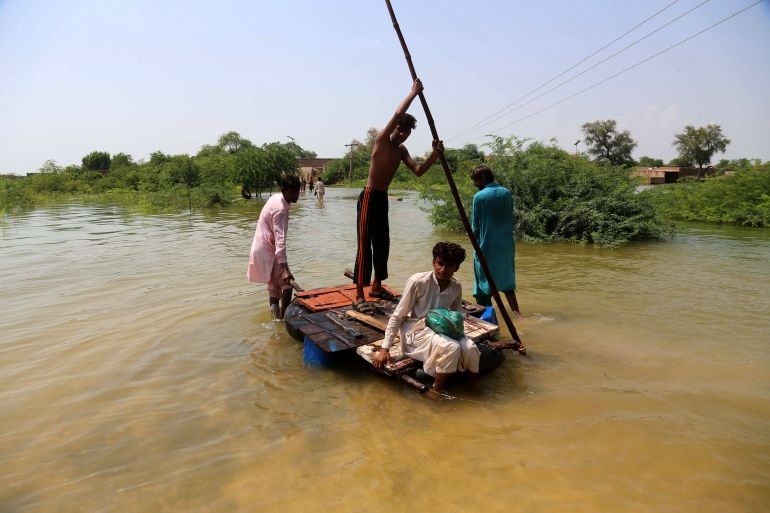

People move to higher grounds after their villages are inundated by flood following a breach in Manchar Lake to reduce overflow, in Jamshoro district, Sindh province, Pakistan, in September 2022

A compromise from the European Union, proposed late Thursday, suggested a fund specifically for the most vulnerable nations saying the money should come from a “broad funder base” – a code for countries including China and Saudi Arabia which have become wealthier since they were listed as developing nations in 1992.

“I have to say this is our final offer,” European Commission Vice President Frans Timmermans told reporters on Friday morning.

Even with new commitments, the world is on track to heat up by about 2.5C by the end of the century – enough, scientists say, to trigger dangerous climate tipping points.



Newsletter

Related Articles

Beautiful Virgin Islands
0:00
0:00
Close
The AI Invoice Shock: Layoffs Didn't Save Managers Money — They Cost Them More
Concern: Sexually Transmitted Bacterium Among Men Develops Antibiotic Resistance
Following Massive Investor Demand: SK Hynix Raises 26.5 Billion Dollars on Nasdaq
Passenger Partially Pulled Out of Ryanair Jet After Cabin Window Fails Mid-Flight
After Four Years, and Under a Heavy Veil of Secrecy: King Charles Meets His Grandchildren, Harry and Meghan's Children
Severe Heatwave Drives Dangerous Ground-Level Ozone Pollution Across Two Thirds of European Union
Westminster in Freefall as Farage's By-Election Gamble Triggers Broader Systemic Crises
Institutional Fractures and Political Volatility Reshape Britain's Domestic Landscape
Deadly Fire, Health Emergencies and Political Upheaval Shape a Volatile Global News Cycle
Flight Instructor Jumped to His Death — Student Landed the Plane: "You Know What You Need to Do"
The Physical and Electronic Barriers Disrupting Domestic Wireless Networks
France and Morocco Open World Cup Quarter-Finals as Collina Defends Refereeing
Prince Harry Suffers Major Court Defeat in Legal Battle Against Daily Mail Publisher
Bonnie Tyler, Welsh Singer Behind Total Eclipse of the Heart, Dies at 75
Tech Pulse: The Future of AI and Screen Culture
Global News Briefing: Escalating Geopolitical Tensions and Corporate Shakeups
Global News Brief: Escalating Conflicts, Public Health Crises, and World Cup Drama
Federal Financial Framework Shifts as Treasury Launches Universal Savings Program for Minors
French Court Allows Le Pen to Run for Presidency, but with an Electronic Tag: "I Will Appeal, and I Will Run"
$1.4 Trillion: The Lawsuit That Could Crush Meta
Europe's Growing Struggle with Extreme Heat and Air Conditioning
UK Daily Briefing: Legal Developments and Social Issues
Political Turmoil and Rising Costs
Anthropic Reengineers Agentic Architecture to Shift Autonomous Workplace Automation to the Cloud
Logic Flaw in Windows 11 Permission Architecture Silently Consumes Hundreds of Gigabytes of Local Storage
Apple Advances Late-Stage Operating Systems with Fourth Beta Deployments
Global Crisis Alert: Escalating Middle East Tensions and UK Political Upheaval
Deep Purple Has Released Its Best Album in Decades
Microsoft Lays Off 4,800 Employees and Xbox Suffers the Hardest Blow
Morocco and France Advance as 2026 FIFA World Cup Enters Quarterfinals.
Historic 2026 Tour de France Opens in Barcelona With Revamped Team Time Trial.
Global Mergers and Acquisitions Approach $4 Trillion Defying Geopolitical Tumult.
Negotiators Advance 20-Point Framework for Gaza Ceasefire and Demilitarization.
OECD Warns Middle East Conflict Will Depress Global Economic Growth.
Ukrainian Drones Strike Major Oil Terminal in St. Petersburg.
World Meteorological Organization Issues Urgent Alert Over Rapidly Intensifying El Niño.
United States Commemorates 250th Anniversary With Diplomatic Summits and Global Flotilla.
Iran Begins Days-Long Funeral for Supreme Leader Khamenei Amid Strait of Hormuz Standoff.
Technology giant reports surging carbon emissions driven by artificial intelligence infrastructure demands.
Artificial intelligence adoption accelerates workforce reductions across the technology and financial sectors.
Global technology and financial conglomerates collaborate to launch a new stablecoin standard.
United States regulators lift export restrictions on a major frontier artificial intelligence model.
Luxury bags take over the World Cup: style, status symbol, or just showing off?
×








