Could a US Policy Shift Under Trump Alter the Falklands Position?
How Washington’s long-standing neutrality on sovereignty limits any abrupt change in stance toward the UK–Argentina dispute
The question of whether a US president could withdraw support for British sovereignty over the Falkland Islands rests on a misunderstanding of how American policy on the territory actually works.
The United States does not formally recognise sovereignty for either the United Kingdom or Argentina.
Instead, it has historically maintained a position of neutrality while recognising the islands are administered by the UK and encouraging a negotiated settlement between the two claimants.
What is confirmed is that the Falkland Islands remain a British overseas territory under UK administration, while Argentina continues to assert a sovereignty claim, referring to the islands as the Islas Malvinas.
The United States has consistently avoided taking a definitive legal position on sovereignty itself, even after the 1982 conflict between the UK and Argentina, and instead supports diplomatic resolution rather than endorsement of either side.
The key issue is that there is no formal US “support for UK sovereignty” that can simply be withdrawn in the way a treaty commitment or alliance pledge might be reversed.
US policy operates through diplomatic language, voting positions in international forums, and bilateral statements, all of which are shaped by the executive branch but constrained by decades of established precedent and broader geopolitical interests.
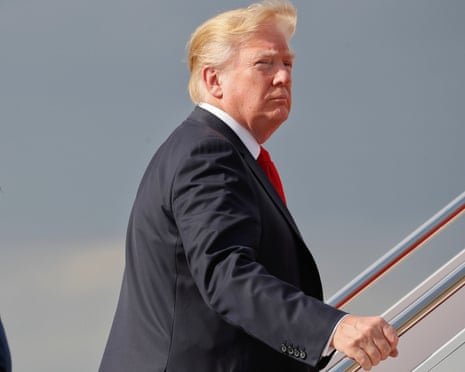
In practical terms, a US president such as Donald Trump could adjust rhetoric, alter how strongly Washington expresses support for UK administration of the islands, or shift how the US engages in multilateral discussions involving Argentina.
However, reversing long-standing neutrality in a way that explicitly endorses Argentine sovereignty or rejects UK administration would represent a major break from established US diplomatic practice and would carry significant diplomatic consequences for relations with both countries.
Any meaningful policy change would also have to be implemented through the State Department and reflected consistently across international engagements.
This includes positions taken at the United Nations and in coordination with allies, where the US has historically avoided inflaming the dispute.
The broader context is that the Falklands issue remains politically sensitive but strategically low priority for the United States compared to other global concerns.
Washington’s primary interests in the region are stability, alliance management with the UK, and maintaining workable relations with Argentina.
As a result, US administrations of both parties have generally avoided taking steps that would be interpreted as shifting sovereignty alignment.
Claims that a US president could simply “withdraw support” therefore overstate the nature of American involvement.
The US does not act as a guarantor of sovereignty in the dispute, but rather as a diplomatic actor managing neutrality within an established framework.
Any shift would be gradual, heavily signaled, and shaped by broader foreign policy priorities rather than a single executive decision.
In that structure, continuity is the default position, and any deviation would immediately affect not only UK–US relations but also Washington’s credibility in managing other territorial disputes globally.
The United States does not formally recognise sovereignty for either the United Kingdom or Argentina.
Instead, it has historically maintained a position of neutrality while recognising the islands are administered by the UK and encouraging a negotiated settlement between the two claimants.
What is confirmed is that the Falkland Islands remain a British overseas territory under UK administration, while Argentina continues to assert a sovereignty claim, referring to the islands as the Islas Malvinas.
The United States has consistently avoided taking a definitive legal position on sovereignty itself, even after the 1982 conflict between the UK and Argentina, and instead supports diplomatic resolution rather than endorsement of either side.
The key issue is that there is no formal US “support for UK sovereignty” that can simply be withdrawn in the way a treaty commitment or alliance pledge might be reversed.
US policy operates through diplomatic language, voting positions in international forums, and bilateral statements, all of which are shaped by the executive branch but constrained by decades of established precedent and broader geopolitical interests.
In practical terms, a US president such as Donald Trump could adjust rhetoric, alter how strongly Washington expresses support for UK administration of the islands, or shift how the US engages in multilateral discussions involving Argentina.
However, reversing long-standing neutrality in a way that explicitly endorses Argentine sovereignty or rejects UK administration would represent a major break from established US diplomatic practice and would carry significant diplomatic consequences for relations with both countries.
Any meaningful policy change would also have to be implemented through the State Department and reflected consistently across international engagements.
This includes positions taken at the United Nations and in coordination with allies, where the US has historically avoided inflaming the dispute.
The broader context is that the Falklands issue remains politically sensitive but strategically low priority for the United States compared to other global concerns.
Washington’s primary interests in the region are stability, alliance management with the UK, and maintaining workable relations with Argentina.
As a result, US administrations of both parties have generally avoided taking steps that would be interpreted as shifting sovereignty alignment.
Claims that a US president could simply “withdraw support” therefore overstate the nature of American involvement.
The US does not act as a guarantor of sovereignty in the dispute, but rather as a diplomatic actor managing neutrality within an established framework.
Any shift would be gradual, heavily signaled, and shaped by broader foreign policy priorities rather than a single executive decision.
In that structure, continuity is the default position, and any deviation would immediately affect not only UK–US relations but also Washington’s credibility in managing other territorial disputes globally.