Meghan Markle’s Australia Tour Fails to Shift Public Perception Despite Tight Message Control
Carefully managed appearances highlight limits of reputation strategy amid entrenched global views
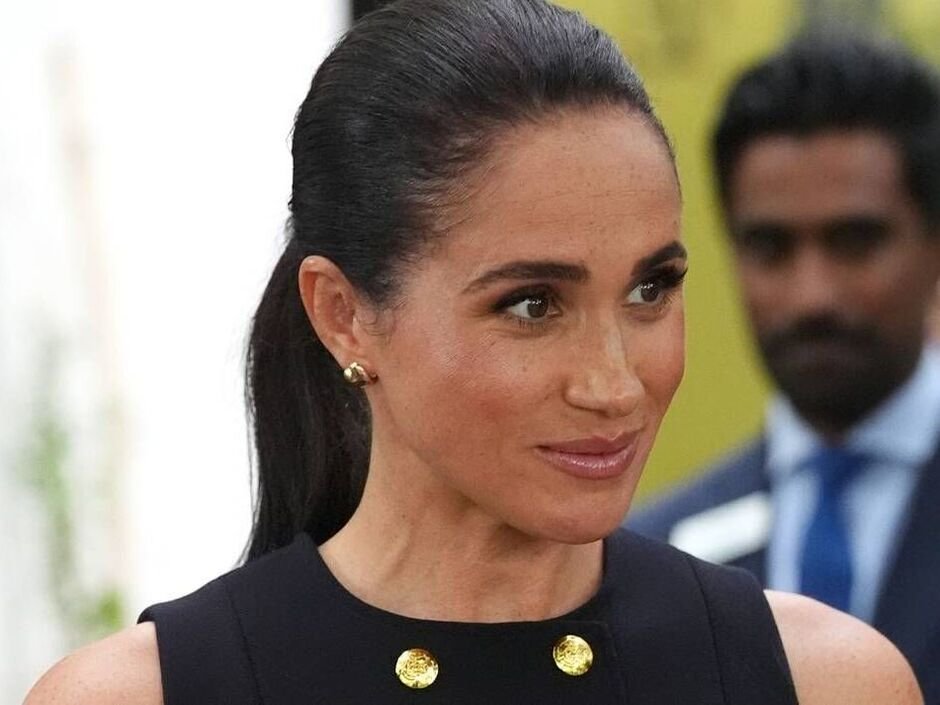
Public image management by Meghan Markle, the Duchess of Sussex, is at the center of renewed scrutiny following her recent visit to Australia, a tour widely interpreted as a controlled effort to recalibrate how she is perceived internationally.
What is confirmed is that the trip was tightly structured, with limited unscripted interaction and a focus on selective engagements designed to reinforce specific themes: philanthropy, professionalism, and personal composure.
The appearances were curated, with messaging aligned to ongoing efforts by Meghan and Prince Harry to position themselves as independent public figures outside the framework of the British royal family.
The key issue is that this strategy appears to have had limited measurable impact on public opinion.
Analysts tracking media tone and audience reaction note that existing perceptions—both supportive and critical—remained largely unchanged.
The tour neither triggered a significant reputational recovery nor caused further deterioration, suggesting that views on Meghan Markle have hardened after years of sustained global coverage.
The mechanism behind this outcome is rooted in saturation and polarization.
Meghan’s public image has been shaped by a prolonged cycle of high-profile interviews, documentaries, and commentary tied to her departure from royal duties in 2020. As a result, audiences now interpret new appearances through pre-existing narratives rather than reassessing her on a case-by-case basis.
In this environment, controlled messaging struggles to break through.
The Australian setting carried symbolic weight.
Earlier in her royal tenure, Meghan’s 2018 tour of Australia with Prince Harry was widely seen as a success, drawing large crowds and positive media attention.
The contrast with the current reception underscores how dramatically the context has shifted.
She is no longer operating within the institutional support and public goodwill associated with the monarchy, but as a self-directed public figure navigating a more fragmented and skeptical media landscape.
There is also a structural constraint.
Without the formal role, ceremonial authority, and consistent exposure that come with royal status, engagements like this tour rely heavily on media framing rather than institutional amplification.
That makes them more vulnerable to selective coverage and audience bias, limiting their ability to reset narratives at scale.
Supporters argue that the tour achieved its internal goals, reinforcing Meghan’s chosen identity and maintaining visibility without generating new controversy.
Critics contend that the controlled nature of the appearances reinforced perceptions of distance and inauthenticity.
Both interpretations point to the same conclusion: the tour functioned more as brand maintenance than transformation.
The broader implication is that reputational shifts for globally recognized figures now require either sustained behavioral change over time or a genuinely disruptive event that forces audiences to reconsider established views.
Incremental, carefully managed appearances—no matter how polished—are increasingly insufficient on their own.
The immediate outcome is that Meghan Markle’s public standing remains stable but polarized, with the Australian tour demonstrating the limits of message control in an environment where audience perception is already deeply fixed.
What is confirmed is that the trip was tightly structured, with limited unscripted interaction and a focus on selective engagements designed to reinforce specific themes: philanthropy, professionalism, and personal composure.
The appearances were curated, with messaging aligned to ongoing efforts by Meghan and Prince Harry to position themselves as independent public figures outside the framework of the British royal family.
The key issue is that this strategy appears to have had limited measurable impact on public opinion.
Analysts tracking media tone and audience reaction note that existing perceptions—both supportive and critical—remained largely unchanged.
The tour neither triggered a significant reputational recovery nor caused further deterioration, suggesting that views on Meghan Markle have hardened after years of sustained global coverage.
The mechanism behind this outcome is rooted in saturation and polarization.
Meghan’s public image has been shaped by a prolonged cycle of high-profile interviews, documentaries, and commentary tied to her departure from royal duties in 2020. As a result, audiences now interpret new appearances through pre-existing narratives rather than reassessing her on a case-by-case basis.
In this environment, controlled messaging struggles to break through.
The Australian setting carried symbolic weight.
Earlier in her royal tenure, Meghan’s 2018 tour of Australia with Prince Harry was widely seen as a success, drawing large crowds and positive media attention.
The contrast with the current reception underscores how dramatically the context has shifted.
She is no longer operating within the institutional support and public goodwill associated with the monarchy, but as a self-directed public figure navigating a more fragmented and skeptical media landscape.
There is also a structural constraint.
Without the formal role, ceremonial authority, and consistent exposure that come with royal status, engagements like this tour rely heavily on media framing rather than institutional amplification.
That makes them more vulnerable to selective coverage and audience bias, limiting their ability to reset narratives at scale.
Supporters argue that the tour achieved its internal goals, reinforcing Meghan’s chosen identity and maintaining visibility without generating new controversy.
Critics contend that the controlled nature of the appearances reinforced perceptions of distance and inauthenticity.
Both interpretations point to the same conclusion: the tour functioned more as brand maintenance than transformation.
The broader implication is that reputational shifts for globally recognized figures now require either sustained behavioral change over time or a genuinely disruptive event that forces audiences to reconsider established views.
Incremental, carefully managed appearances—no matter how polished—are increasingly insufficient on their own.
The immediate outcome is that Meghan Markle’s public standing remains stable but polarized, with the Australian tour demonstrating the limits of message control in an environment where audience perception is already deeply fixed.