

COVID-19: Do face masks work? Here is what scientific studies say
Wearing a face mask is soon set to become a personal choice rather than something required of people inside buildings and on public transport.
Although the government has repeatedly stressed that it would be guided by the science, a rift in approach is showing between groups such as the British Medical Association and health minister Helen Whately.
So - what do peer-reviewed scientific studies say when it comes to how effective face masks are?
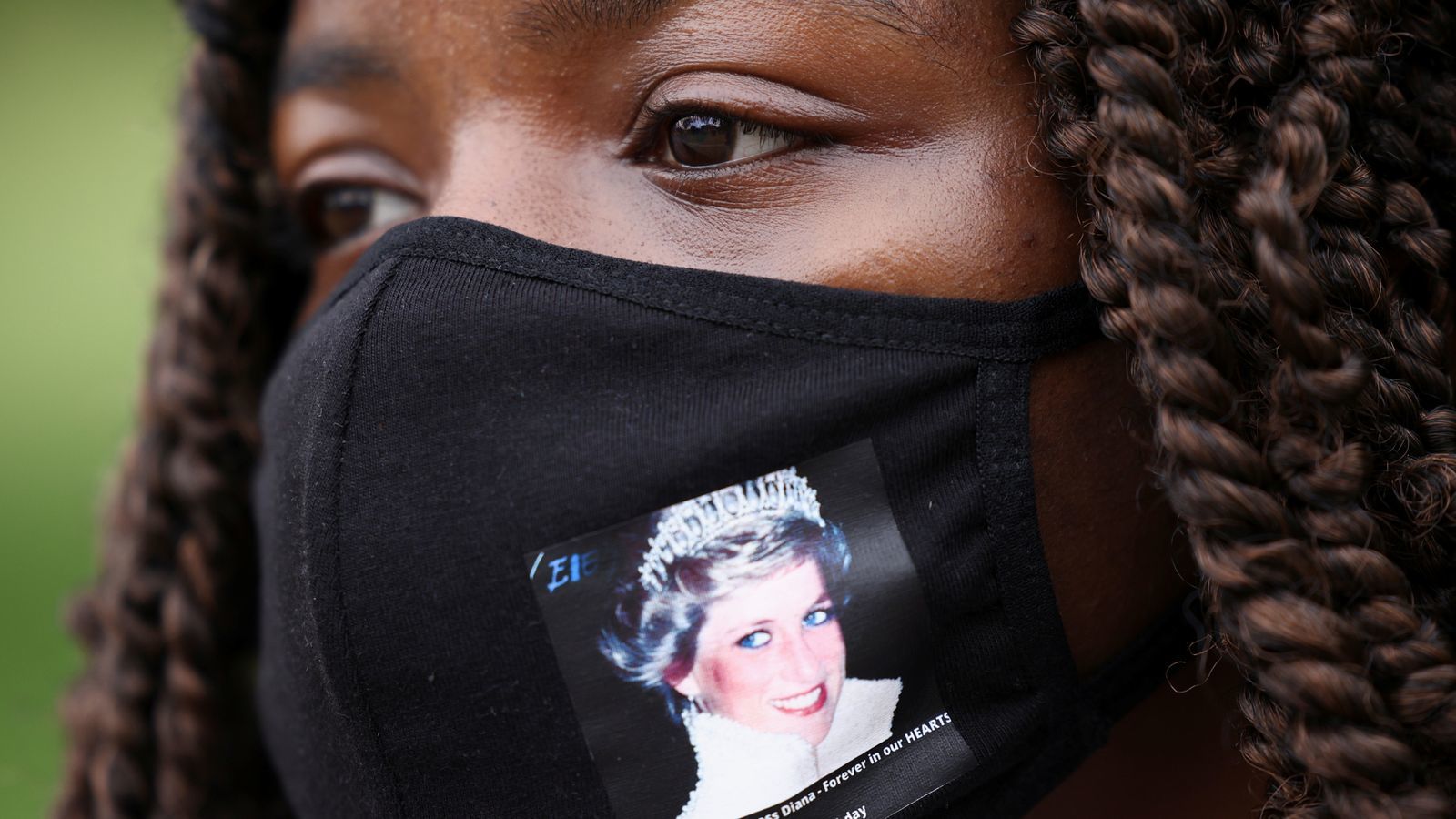 People could wear their masks voluntarily after 19 July
It has been confirmed that the virus that causes COVID-19 is primarily transmitted in the air.
People with the virus, sometimes unaware that they have it, spread it through respiratory droplets that are exhaled when they cough, sneeze, sing, talk or breathe - and these droplets are then inhaled by somebody else.
According to a number of laboratory tests and multiple studies, the main value from wearing face masks is that they block up to 80% of these droplets from escaping into the air. They may also prevent about 50% of droplets from being inhaled too.
Real-world studies are a bit harder to come by, but the US Centers for Disease Control and Prevention (CDC) has highlighted a few.
In one high-exposure event, two hair stylists - who were displaying symptoms - were found to have interacted with 139 clients during an eight-day period.
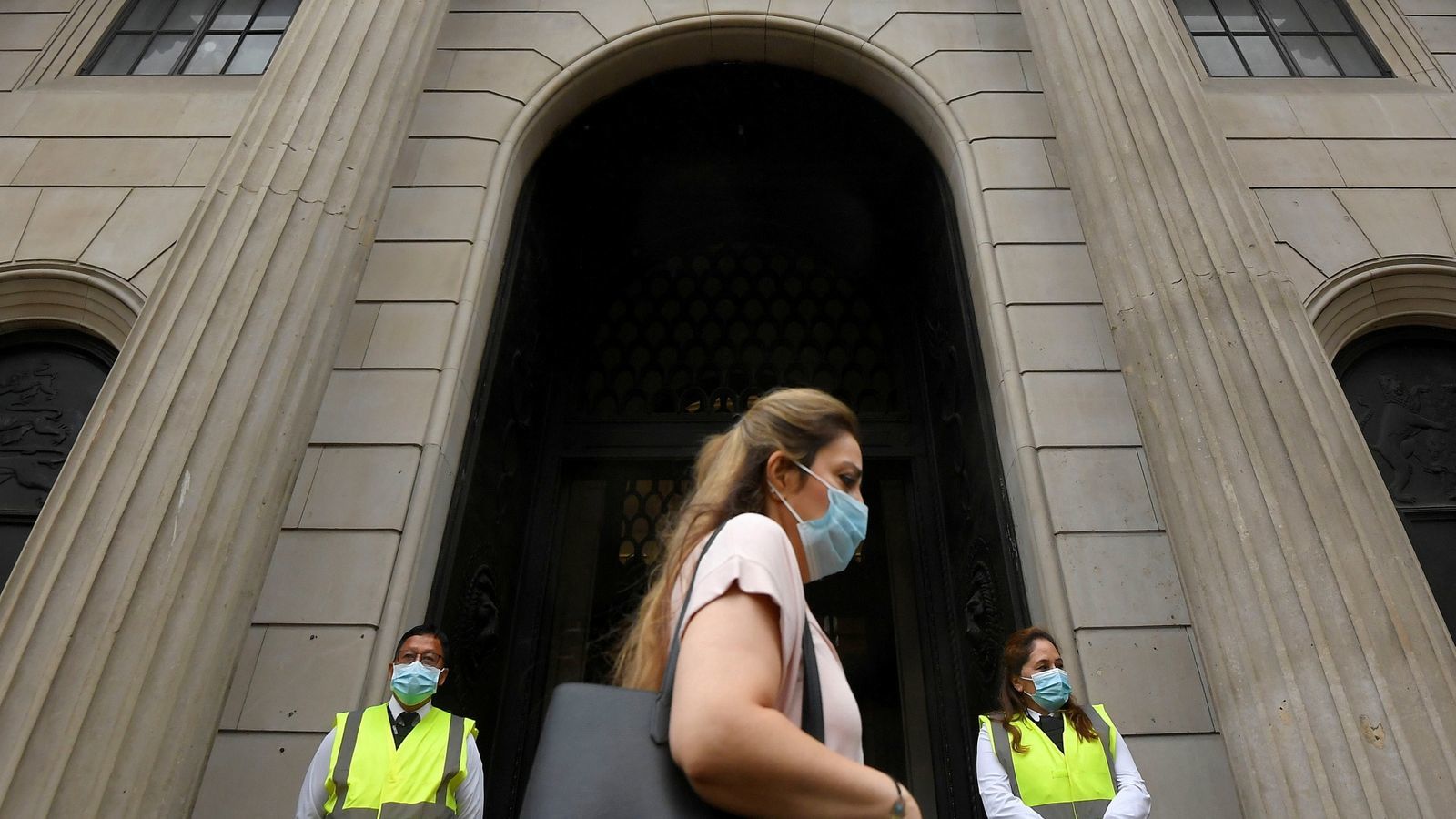 Scientists are overwhelmingly in favour of wearing face masks.
The stylists and the clients all wore masks, and of the 67 clients who subsequently consented to an interview and were tested, not a single one had become infected.
Another study in China found that, in 124 households where there had been a laboratory-confirmed coronavirus case, mask wearing by both the patient and the other inhabitants reduced transmission within the household by 79%.
Aboard the USS Theodore Roosevelt, where living quarters and working environments leave little room for social distancing, a study found there was a 70% reduced risk of infection among those who used a face covering.
In Thailand, a retrospective case-control study found that among 1,000 people interviewed as part of contact tracing investigations, those who reported always having worn a mask during high-risk exposures again experienced a 70% reduced risk of becoming infected compared with others.
An international report published in The Lancet, which analysed data from 172 studies in 16 countries, found that by wearing a face mask there is just a 3% chance of catching COVID-19.
Another study found that homemade face masks can help limit the spread of the coronavirus.
Seven types of face masks were put to the test by the University of Edinburgh, including surgical masks, respirators, lightweight and heavy-duty face shields and handmade masks.
Aside from those with a valve, all of the face coverings were found to reduce the forward distance travelled by an exhaled breath by at least 90%.
The CDC states: "Experimental and epidemiological data support community masking to reduce the spread of SARS-CoV-2. The prevention benefit of masking is derived from the combination of source control and wearer protection for the mask wearer.
"The relationship between source control and wearer protection is likely complementary and possibly synergistic, so that individual benefit increases with increasing community mask use," the agency added.
The World Health Organisation says: "Masks should be used as part of a comprehensive strategy of measures to suppress transmission and save lives; the use of a mask alone is not sufficient to provide an adequate level of protection against COVID-19.
"If COVID-19 is spreading in your community, stay safe by taking some simple precautions, such as physical distancing, wearing a mask, keeping rooms well ventilated, avoiding crowds, cleaning your hands, and coughing into a bent elbow or tissue. Check local advice where you live and work. Do it all!"











