Beautiful Virgin Islands

Wednesday, May 13, 2026

Elon Musk denies Tesla cars are used for spying in China

Elon Musk denies Tesla cars are used for spying in China

Elon Musk, the chief executive of the US electric carmaker Tesla, says his firm would be "shut down" if its vehicles were used for spying on China.

His comments came in response to reports that China's military had banned Tesla cars from its facilities.

The military had raised security concerns about the data collected by cameras installed in the cars.

China is Tesla's largest market after the US, accounting for about a quarter of the firm's global sales in 2020.

On Saturday, Mr Musk said if a business did engage in spying on a foreign government, "the negative effects for that company would be extremely bad".

"There's a very strong incentive for us to be very confidential with any information," Mr Musk told an influential Chinese business forum via video link. "If Tesla used cars to spy in China or anywhere, we will get shut down."
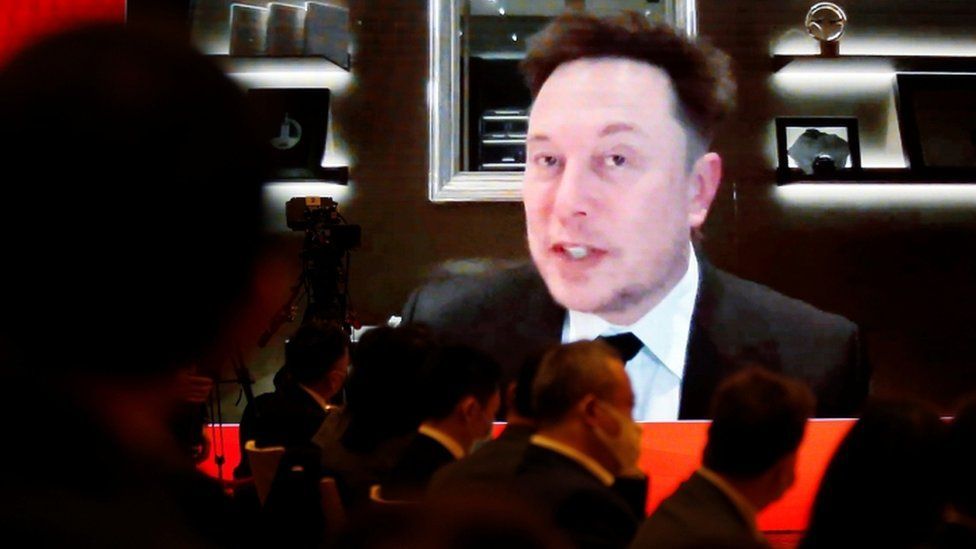
Tesla CEO Elon Musk played down Chinese and American concerns over commercial espionage

There has long been unease about the presence of big American companies operating in China and vice versa.

Relations between China and the US - the world's biggest two economies - are at their most strained for years.

Earlier this week, officials from both countries traded angry words in the first high-level talks between the Chinese government and the administration of US President Joe Biden.

Mr Musk urged greater mutual trust between China and the US, where Tesla is based in California.

He sought to downplay concerns over companies sharing sensitive data with their home governments, referencing the case of the Chinese-owned video platform TikTok.

Last year, former President Donald Trump threatened to ban TikTok in the US over concerns that users' data could be handed over to the Chinese government.

"Even if there was spying, what would the other country learn and would it actually matter?," Mr Musk said.

Elon Musk's car firm won approval for its Shanghai factory in 2018, becoming the first foreign automaker to operate a wholly owned plant in China.

China is the world's largest car market and its government has been heavily promoting the adoption of electric vehicles. This demand helped Tesla make a profit of $721m (£519m) in 2020.


Newsletter

Related Articles

Beautiful Virgin Islands
0:00
0:00
Close
The Great Western Exit: Why Best Citizens Are Fleeing the Rich World [PODCAST]
The New Robber Barons of Intelligence: Are AI Bosses More Powerful Than Rockefeller?
The End of the Old Order [Podcast]
Britain’s Democracy Is Now a Costume
The AI Gold Rush Is Coming for America’s Last Open Spaces [Podcast]
The Pentagon’s AI Squeeze: Eight Tech Giants Get In, Anthropic Gets Shut Out [Podcast]
The War Map: Professor Jiang’s Dark Theory of Iran, Trump, China, Russia, Israel, and the Coming Global Shock [Podcast]
Labour Is No Longer a National Party [Podcast]
AI Isn’t Stealing Your Job. It’s Dismantling It Piece by Piece.
Lawyers vs Engineers: Why China Builds While America Litigates [Podcast]
Churchill’s Glass: The Drunk, the Doctor, and the Myth Britain Refuses to Sober Up From
Apple issues an unusual warning: this is how your iPhone can be hacked without you doing anything
The Met Gala Meets the Age of Billionaire Backlash
Russian Oligarch’s Superyacht Crosses Hormuz via Iran-Controlled Route
Gunfire Disrupts White House Correspondents’ Dinner as Trump Is Evacuated
A Leak, a King, and a Fracturing Alliance
Inside the Gates Foundation Turmoil: Layoffs, Scrutiny, and the Cost of Reputational Risk
UK Biobank Breach Exposes Health Data of 500,000, Listed for Sale on Chinese Platform
KPMG Cuts Around 10% of US Audit Partners After Failed Exit Push
French Police Probe Suspected Weather-Data Tampering After Unusual Polymarket Bets on Paris Temperatures
News Roundup
Microsoft lost 2.5 millions users (French government) to Linux
Privacy Problems in Microsoft Windows OS
News roundup
Péter András Magyar and the Strategic Reset of Hungary
Hungary After the Landslide — A Strategic Reset in Europe
×









