Green Party Surges Past Labour in New UK Poll as Traditional Party Support Crumbles
Fresh YouGov data shows the Greens in second place for the first time, with Sir Keir Starmer’s Labour Party sinking to record lows amid broader political upheaval
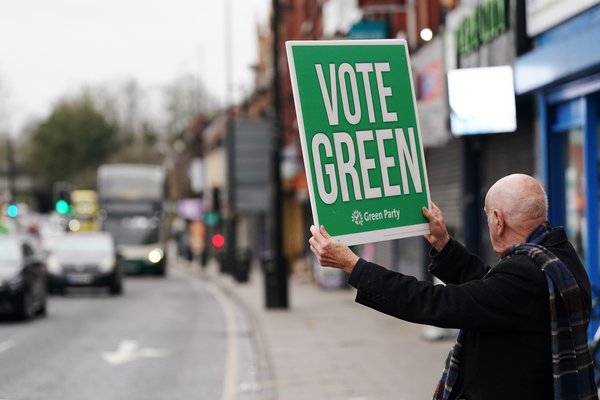
A new polling snapshot of British voting intention reveals an unprecedented surge for the Green Party of England and Wales, which has overtaken Sir Keir Starmer’s governing Labour Party and now stands firmly in second place behind Nigel Farage’s Reform UK. The figures, released this week, mark a deepening shift in voter sentiment as Labour’s support declines to historically low levels and smaller parties capitalise on disillusionment with the traditional political order.
The YouGov survey places the Greens on around twenty-one per cent support nationally, their highest level ever recorded in this pollster’s dataset, with only Reform UK ahead on approximately twenty-three per cent.
By contrast, both Labour and the Conservative Party languish near sixteen per cent each.
The Liberal Democrats are slightly below Labour on around fourteen per cent, underscoring the fragmentation of support for the two main parties.
Political analysts attribute the Greens’ rise to a combination of factors, including their landmark victory in the Gorton and Denton by-election in Greater Manchester, where the party’s candidate secured the seat formerly held by Labour for nearly a century.
That upset result helped raise the Greens’ national profile and signalled an appetite among voters for alternatives to the dominant parties.
Labour’s slide in the polls reflects ongoing dissatisfaction with its performance in government, with some voters citing perceived failures on the economy, public services and handling of key foreign policy issues.
The party’s decline has prompted internal discussion about leadership and strategic direction, though senior figures continue to insist on the strength of Labour’s long-term platform and its capacity to rebuild support.
The Greens’ appeal appears especially strong among younger voters and those disenchanted with both established parties.
Under the leadership of Zack Polanski, the Green Party has broadened its message beyond environmental issues to encompass cost-of-living concerns, social justice and foreign policy stances, resonating with a segment of the electorate that feels underserved by Labour’s centrist approach.
While the polling reflects voter intention rather than guaranteed election outcomes, the dramatic repositioning of the Greens ahead of Labour represents a striking development in British politics.
It underscores the volatile state of public opinion and the potent effect that by-election victories and shifting priorities can have on national political fortunes as the United Kingdom approaches further local and regional elections.
The YouGov survey places the Greens on around twenty-one per cent support nationally, their highest level ever recorded in this pollster’s dataset, with only Reform UK ahead on approximately twenty-three per cent.
By contrast, both Labour and the Conservative Party languish near sixteen per cent each.
The Liberal Democrats are slightly below Labour on around fourteen per cent, underscoring the fragmentation of support for the two main parties.
Political analysts attribute the Greens’ rise to a combination of factors, including their landmark victory in the Gorton and Denton by-election in Greater Manchester, where the party’s candidate secured the seat formerly held by Labour for nearly a century.
That upset result helped raise the Greens’ national profile and signalled an appetite among voters for alternatives to the dominant parties.
Labour’s slide in the polls reflects ongoing dissatisfaction with its performance in government, with some voters citing perceived failures on the economy, public services and handling of key foreign policy issues.
The party’s decline has prompted internal discussion about leadership and strategic direction, though senior figures continue to insist on the strength of Labour’s long-term platform and its capacity to rebuild support.
The Greens’ appeal appears especially strong among younger voters and those disenchanted with both established parties.
Under the leadership of Zack Polanski, the Green Party has broadened its message beyond environmental issues to encompass cost-of-living concerns, social justice and foreign policy stances, resonating with a segment of the electorate that feels underserved by Labour’s centrist approach.
While the polling reflects voter intention rather than guaranteed election outcomes, the dramatic repositioning of the Greens ahead of Labour represents a striking development in British politics.
It underscores the volatile state of public opinion and the potent effect that by-election victories and shifting priorities can have on national political fortunes as the United Kingdom approaches further local and regional elections.