

'Holy cow ... are you kidding me?' Scientists stunned to see plants grow in soil from the moon
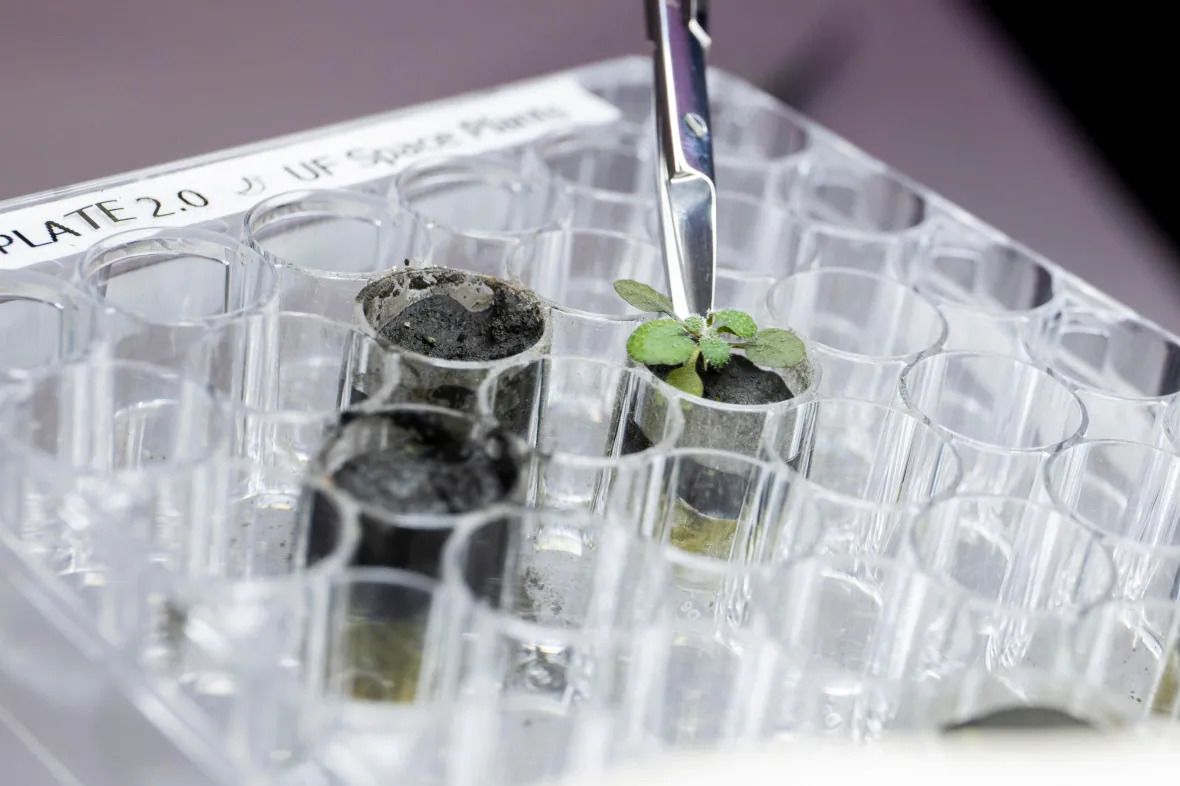
For the first time, scientists have grown plants in soil from the moon collected by NASA's Apollo astronauts.
Researchers had no idea if anything would sprout in the harsh moon dirt and wanted to see if it could be used to grow food by the next generation of lunar explorers. The results stunned them.
"Holy cow. Plants actually grow in lunar stuff. Are you kidding me?" said Robert Ferl of the University of Florida's Institute of Food and Agricultural Sciences.
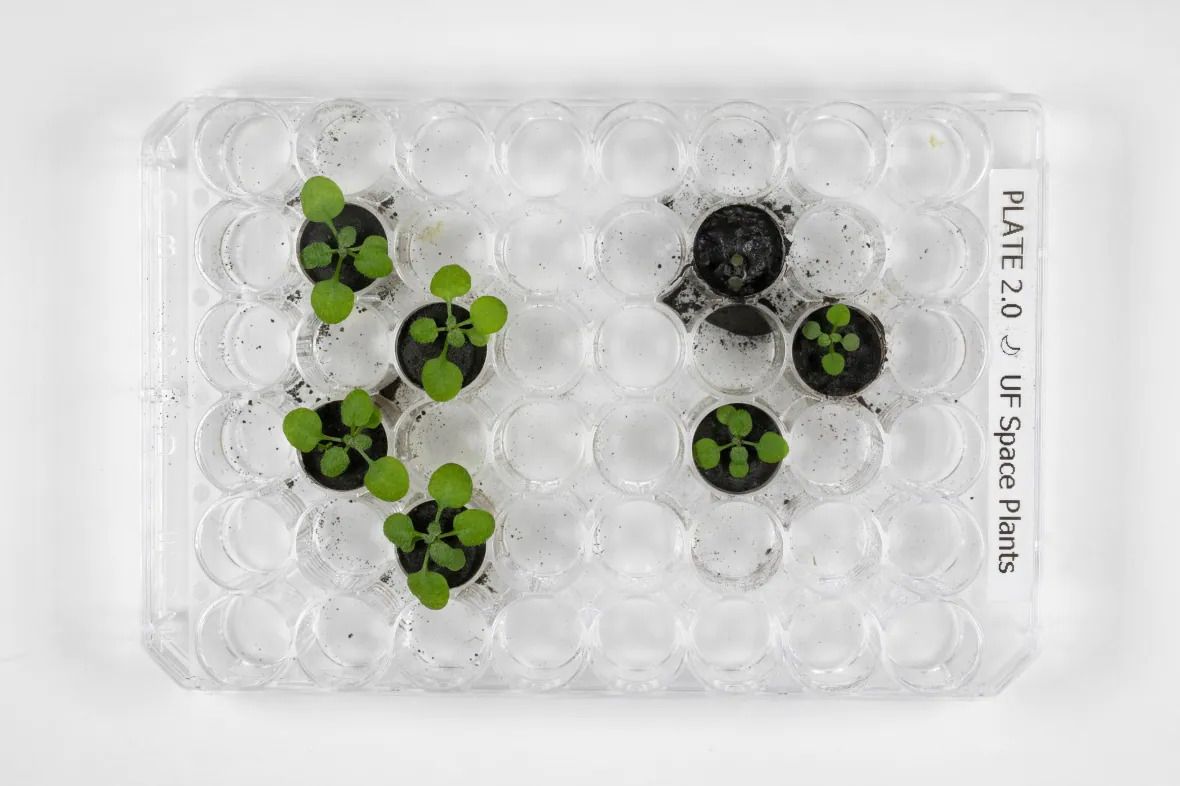
Ferl and his colleagues planted thale cress — a small annual weed related to mustard and cabbage — in moon soil returned by Apollo 11's Neil Armstrong and Buzz Aldrin, and other moonwalkers. The good news: All of the seeds sprouted.
The downside was that after the first week, the coarseness and other properties of the lunar soil stressed the small, flowering weeds so much that they grew more slowly than seedlings planted in fake moon dirt from Earth. Most of the moon plants ended up stunted.
 For the first time, scientists have used lunar soil collected by
long-ago moonwalkers to grow plants, with results promising enough that
NASA and others already are envisioning hothouses on the moon for the
next generation of lunar explorers.
For the first time, scientists have used lunar soil collected by
long-ago moonwalkers to grow plants, with results promising enough that
NASA and others already are envisioning hothouses on the moon for the
next generation of lunar explorers. Results were published Thursday in the journal Communications Biology.
Soil exposed to punishing conditions
The longer the soil was exposed to punishing cosmic radiation and solar wind on the moon, the worse the plants seemed to do. The Apollo 11 samples — exposed a couple billion years longer to the elements because of the Sea of Tranquility's older surface — were the least conducive for growth, according to scientists.
"This is a big step forward to know that you can grow plants," said Simon Gilroy, a space plant biologist at the University of Wisconsin-Madison, who had no role in the study. "The real next step is to go and do it on the surface of the moon."
Moon dirt is full of tiny glass fragments from micrometeorite impacts that got everywhere in the Apollo lunar landers and wore down the moonwalkers' spacesuits.
One solution might be to use younger geologic spots on the moon, like lava flows, for digging up planting soil. The environment also could be tweaked, altering the nutrient mixture or adjusting the artificial lighting.
Only 382 kilograms of moon rocks and soil were brought back by six Apollo crews. Some of the earliest moon dust was sprinkled on plants under quarantine with the Apollo astronauts in Houston after returning from the moon.
 Another 2021 photo provided by the University of Florida Institute of
Food and Agricultural Sciences shows the differences between thale cress
plants grown in volcanic ash from Earth, which had a similar particle
size and mineral composition to lunar soil, left, compared with those
grown in the lunar soil, right, after 16 days.
Another 2021 photo provided by the University of Florida Institute of
Food and Agricultural Sciences shows the differences between thale cress
plants grown in volcanic ash from Earth, which had a similar particle
size and mineral composition to lunar soil, left, compared with those
grown in the lunar soil, right, after 16 days.
Another 2021 photo provided by the University of Florida Institute of Food and Agricultural Sciences shows the differences between thale cress plants grown in volcanic ash from Earth, which had a similar particle size and mineral composition to lunar soil, left, compared with those grown in the lunar soil, right, after 16 days. (Tyler Jones/UF/IFAS/The Associated Press)
Most of the lunar stash remained locked away, forcing researchers to experiment with simulated soil made of volcanic ash on Earth. NASA finally doled out 12 grams to the University of Florida researchers early last year, and the long-awaited planting took place last May in a lab.
NASA said the timing for such an experiment was finally right, with the space agency looking to put astronauts back on the moon in a few years.
The ideal situation would be for future astronauts to tap into the endless supply of available local dirt for indoor planting versus setting up a hydroponic, or all-water, system, scientists said.
"The fact that anything grew means that we have a really good starting point, and now the question is how do we optimize and improve," said Sharmila Bhattacharya, NASA's program scientist for space biology,
The Florida scientists hope to recycle their lunar soil later this year, planting more thale cress before possibly moving on to other vegetation.











