How do I spot the symptoms of coronavirus?
What are the symptoms?
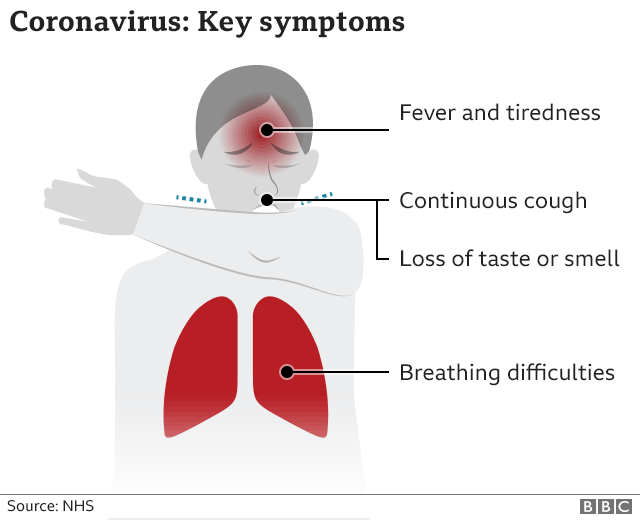
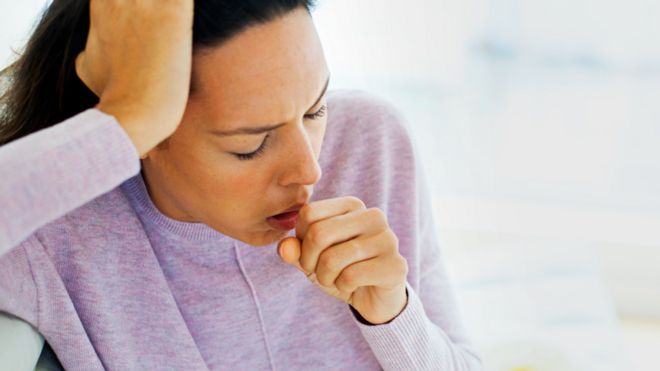
* A new, continuous cough, where you cough a lot for more than an hour, or have three or more coughing episodes in 24 hours
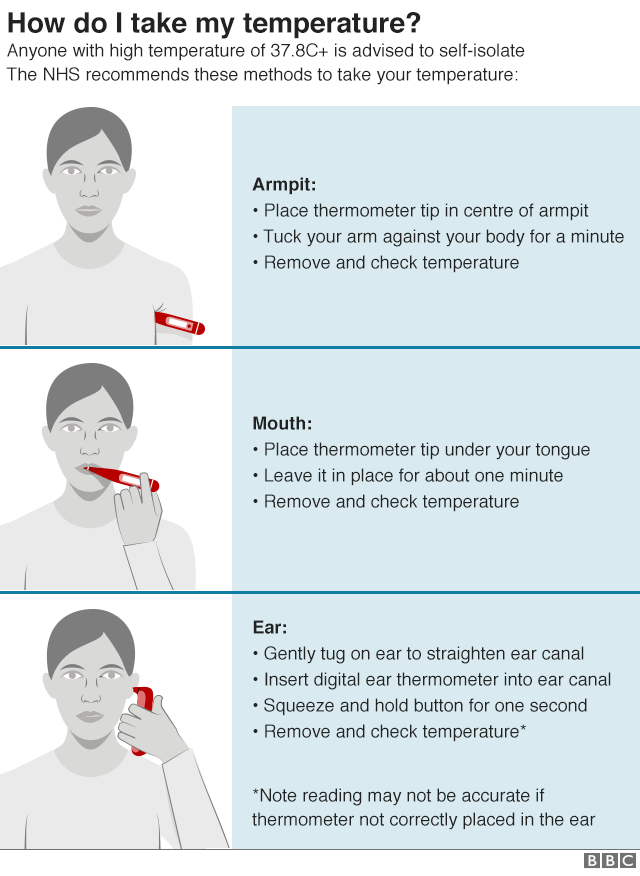
* Fever - where your temperature is above 37.8C
* Loss of smell or taste
If you, or someone you live with, has any of these symptoms the advice is stay at home to stop the risk of giving coronavirus to others.
The US Centers for Disease Control and Prevention's list of symptoms also includes chills, repeated shaking, muscle pain, sore throat, nausea or vomiting and diarrhoea.
And UK researchers think that vomiting, diarrhoea and abdominal cramps could be a sign of coronavirus infection in children.
It takes five days on average to start showing the symptoms, but some people will get them much later. The World Health Organization says it can take up to 14 days.
When do people need to go to hospital?
The majority of people with coronavirus will recover after rest and pain relief (such as paracetamol).
The main reason people need hospital treatment is difficulty breathing.
Doctors may scan the lungs to see how badly they are affected and give support, such as oxygen or ventilation, if needed.
However, people should not go to A&E if they are concerned. In the UK, the NHS 111 website will guide you through what to do.
If you are so breathless that you are unable to speak more than a few words you will be told to call 999, as this is a medical emergency.
If you become so ill that you've stopped doing all of your usual daily activities then it will advise speaking to a nurse by dialling NHS 111.
What happens in intensive care?
Intensive care units are specialist wards for people who are very ill.
Coronavirus patients will get oxygen support, which can involve using a facemask or a tube in the nose.
The most invasive way - for the most seriously ill patients - is ventilation where air, with increased levels of oxygen, is pushed into the lungs via a tube in the mouth, nose or through a small cut in the throat.
What should I do if I have mild symptoms?
Patients with mild symptoms should self-isolate at home for at least 10 days.
People are advised not to ring NHS 111 to report their symptoms unless they are worried. They should also not go to their GP, or A&E.
Details for Scotland are to check NHS inform, then ring your GP in office hours, or 111 out-of-hours. In Wales call NHS 111, and in Northern Ireland, call your GP.
If you have come into contact with somebody who may be infected, you may be told to self-isolate.
The World Health Organization has also issued advice for the public.
Older people, and those with pre-existing medical conditions (such as asthma, diabetes, heart disease, high blood pressure), are more likely to become severely ill. Men are at slightly higher risk of dying from the virus than women.
How do I protect myself?
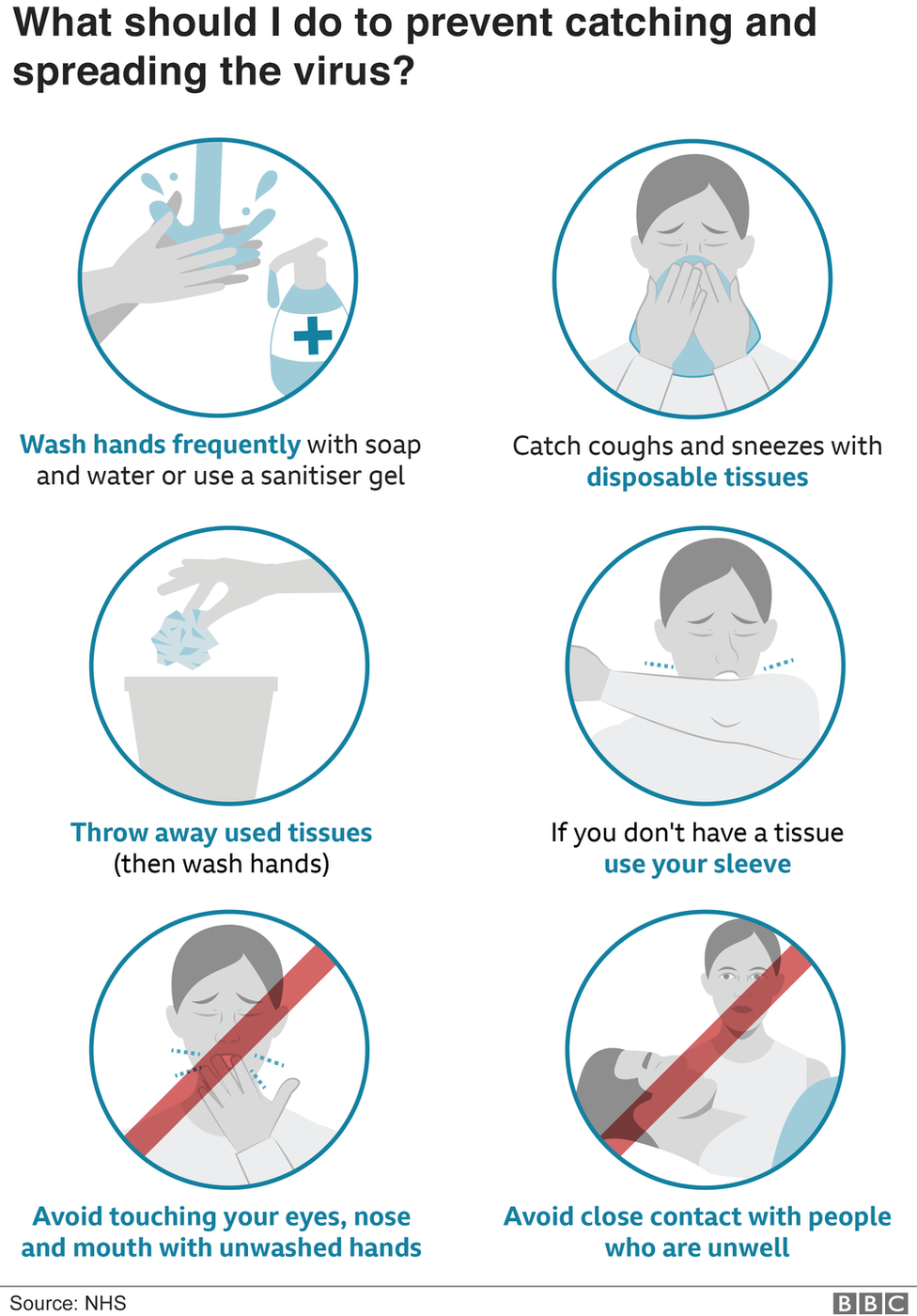
The best thing is regular and thorough hand washing, preferably with soap and water.
Coronavirus spreads when an infected person coughs or sneezes small droplets - packed with the virus - into the air. These can be breathed in, or cause an infection if you touch a surface they have landed on, then your eyes, nose or mouth.
So, coughing and sneezing into tissues, not touching your face with unwashed hands, and avoiding close contact with infected people are important.
People will be most infectious when they have symptoms, but some may spread the virus even before they are sick.
Face coverings are also becoming compulsory in many indoor settings across the UK.