Beautiful Virgin Islands

Friday, Jul 24, 2026

Huawei Mate X2 folding phone unveiled despite chip supply worries

Huawei Mate X2 folding phone unveiled despite chip supply worries

Huawei has unveiled a revamped foldable smartphone, which it says has a much smaller internal gap when closed than that of its main rival Samsung.

The Mate X2 marks a major redesign for the Chinese firm. When shut, the large display is now hidden inside the device rather than exposed over its exterior, as was the case with past generations.

But its price - about £2,000 ($2,800) - is likely to limit demand.

And US trade bans also threaten the firm's ability to produce them.

The company's consumer devices chief acknowledged the challenges it faced in his opening remarks about the new phone.

"US sanctions have posed great difficulties to our business operations and day-to-day work," Richard Yu said in a video recorded at the firm's headquarters near Shenzhen.

"However, thanks to the solid support of our partners, suppliers and in particular consumers around the world, we survived 2020."
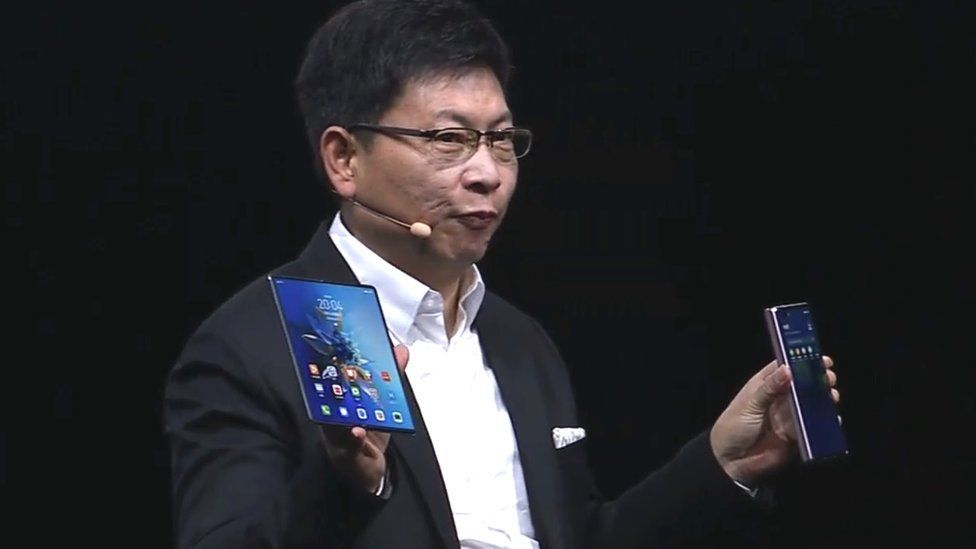
Consumer devices chief Richard Yu hosted the launch event

Unlike many of Huawei's past high-profile launches, this event was hosted in Mandarin Chinese rather than English, reflecting the fact that its sales are still growing in its home market and falling elsewhere.

But the firm has posted a subtitled version on YouTube.

Water drop cavity


Huawei says it developed a new robust hinge mechanism to safeguard its tablet-like display.

When closed, part of the flexible screen folds into a "water drop-shaped" cavity to prevent it coming under strain at the crease.
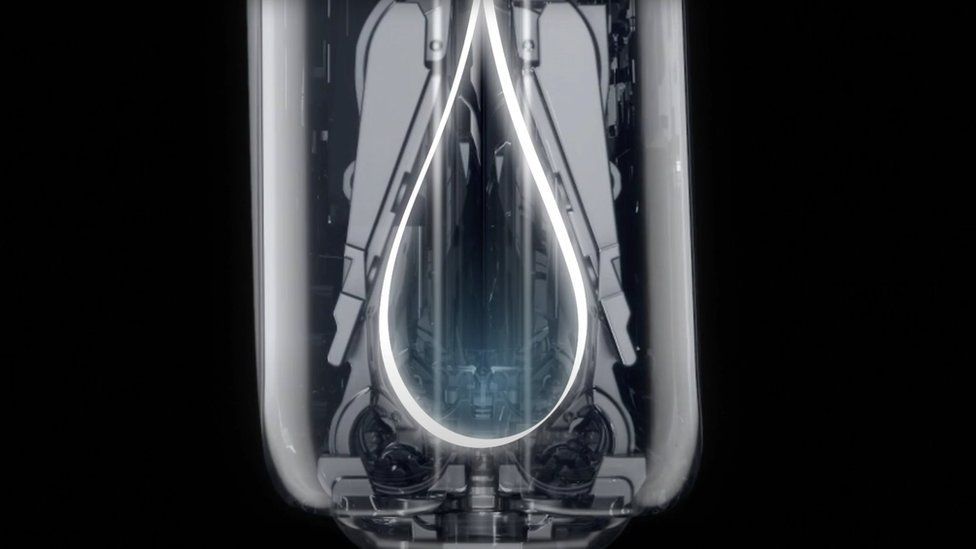
Huawei says its design incorporates high-intensity steel and a carbon fibre support

Mr Yu said an added benefit of the patented innovation was that the crease was also less visible when the screen was opened.

By contrast, the Samsung's Z Fold 2 angles its two halves to create an intentional gap along its spine.

Mr Yu also highlighted that Mate X2's 8-in (20.3cm) main screen was larger than its rival's 7.6-inch (19.3cm) equivalent, and claimed the dimensions of its exterior display - for when the phone is closed - was better suited for apps than its competitor.

In addition, he claimed the use of a new "nano-optical layer" meant the display was much less reflective.

Huawei's design reduces the risk of objects sliding inside the closed flexible screen

But one company watcher said it was an unavoidable fact that Huawei had followed its rival's design lead.

"The original Mate X looked phenomenal with its soft flexible screen wrapped around the outside of the device, but it was instantly apparent that it was going to be extremely vulnerable," commented Ben Wood from CCS Insight.

"And all the ones that I saw failed early in their life."

He added, however, that the high cost of both companies' foldables meant neither would be bestsellers.

"This is more about technology bragging rights, but it signals a real desire to find a new disruptive form factor."

Sales slump


The launch coincides with a report from market research firm Gartner that indicates Huawei sold 41% fewer handsets in final three months of 2020 than the same quarter of the previous year.

This is, in large part, down to it being unable to offer either the Play store or several of Google's other apps - including YouTube, Maps and the Chrome browser - as a result of US trade sanctions.
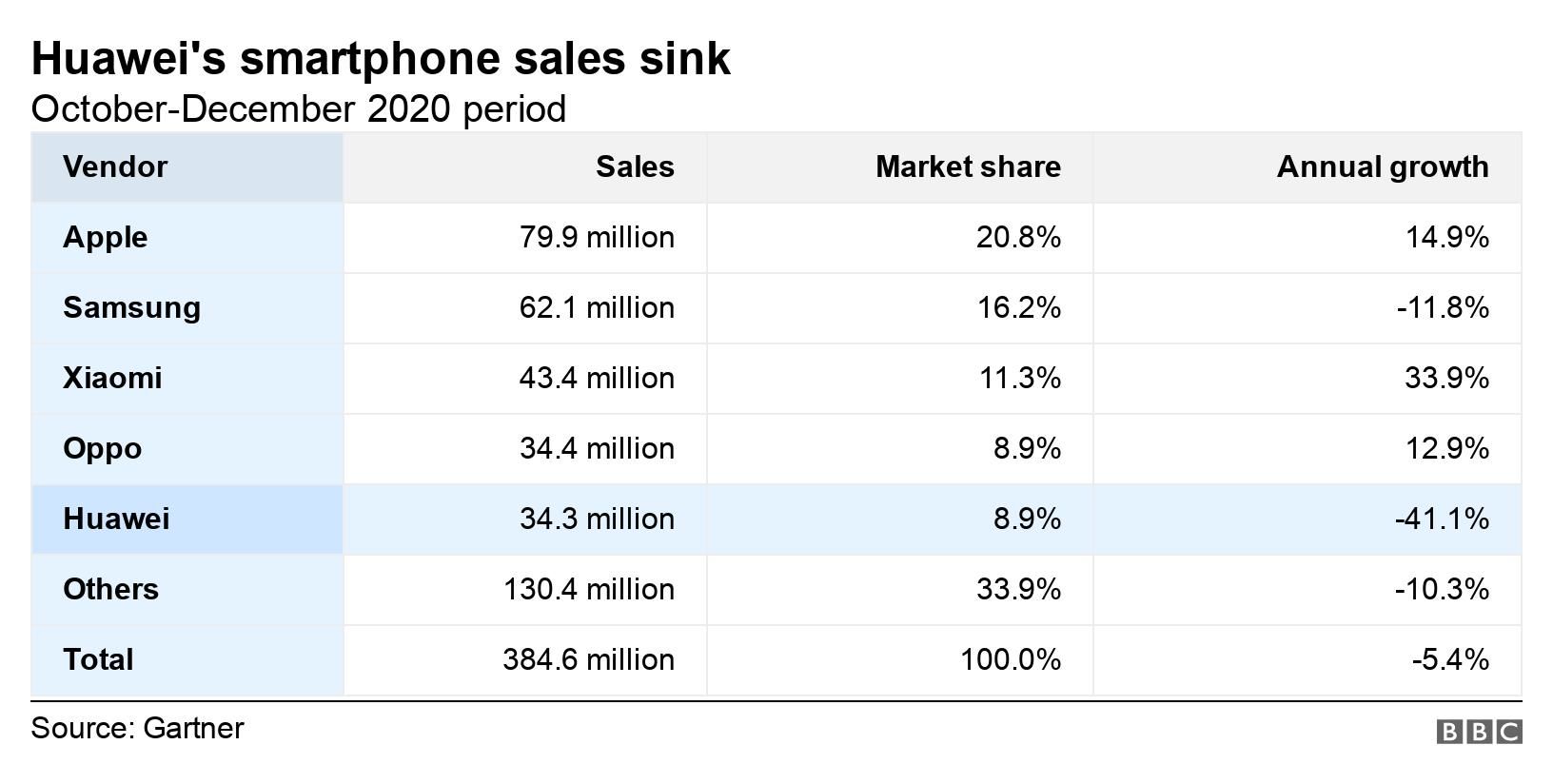

Huawei offers similar software of its own, as well as the means to "side load" third-party products not listed in its App Gallery marketplace.

Even so, it has seen consumers switch to rival Android handsets, including those of Xiaomi.

"Outside of China, Google services are crucial to end users, and offering alternatives is not really going to work," explained Gartner analyst Anshul Gupta.

"But in China, people don't use Google services, and Huawei has a much stronger distribution network and brand there.

"And it's been able to take share from competitors in its home market."
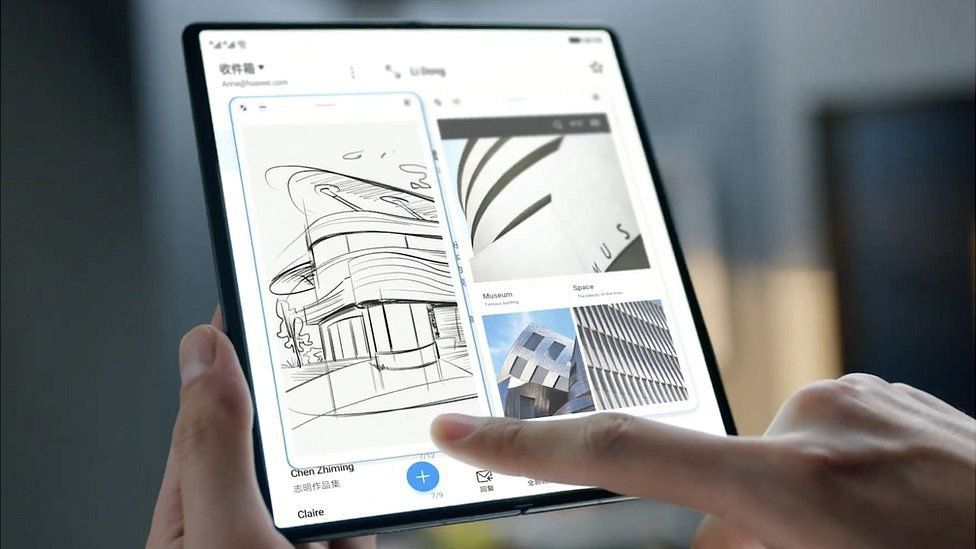
Huawei claims the dimensions of its large and small screens are superior to Samsung's

But even in China, Huawei faces a problem - it only has a dwindling number of its Kirin processors left to power its phones.

Huawei designs its own chips, but had been reliant on a Taiwanese firm, TSMC, to manufacture them.

Only TSMC and Samsung have the expertise and equipment to manufacture the microprocessors involved.

But the US has banned both from doing so on the grounds that Huawei poses a national security risk - something the Chinese firm denies.

Last week, Nikkei Asia reported that Huawei had notified its suppliers that its orders of other smartphone components would be more than 60% lower in 2021 than last year.
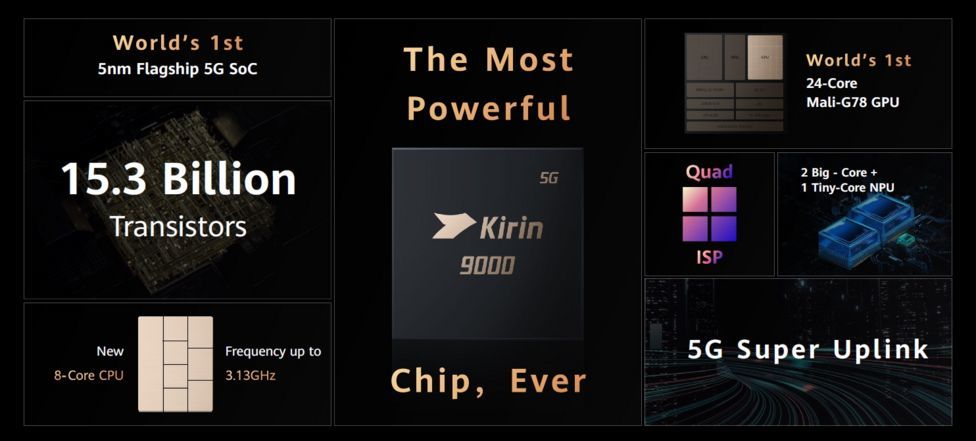
Huawei's press materials boast of its chip's prowess, but it cannot currently produce more of them

Huawei has already sold off its Honor brand.

But the company has denied reports that it is considering a similar move for its flagship brand, with its founder and chief executive Ren Zhengfei telling the press he would "never" sell the division.

"Unless the restrictions are lifted or loosened, or Qualcomm and other chip-makers are given permission to supply Huawei, then I think it will run out of processors in a quarter or two," said Mr Gupta.

Mr Yu said during the launch the firm had enough production capacity to meet demand for the Mate X2.

And when pressed about its wider smartphone business, a spokesman said: "We remain confident about the future."



WATCH: Huawei's earlier folding phones closed "face-out"


Newsletter

Related Articles

Beautiful Virgin Islands
0:00
0:00
Close
Badenoch Rejects Grant Shapps' Bid to Return as Conservative Candidate
BAE Chief Warns Britain Has Underestimated the Risk of War
Burnham Rules Out New Scottish Independence Referendum in First Talks With Swinney
OpenAI Sued After ChatGPT Allegedly Discouraged Emergency Care Before Near-Fatal Embolism
Viral Video Raises Questions Over Twelve-Dollar Croissants at Manhattan Bakery
Miliband Sets Climate and International Law at Centre of UK Diplomacy
US Gasoline Returns to $4 as Renewed Iran Fighting Disrupts Oil Flows
Czech Central Bank Governor Rejects Early Euro Entry and Rate-Cut Pressure
Trump Orders 50% Tariffs on Selected Canadian Imports
Pentagon Discloses Nearly 100 US Troop Injuries During Renewed Iran Fighting
Trump Readies New Tariffs as Temporary Global Levy Nears Expiry
EU Imposes Record €550 Million Digital Services Fine on AliExpress
London’s Housing Starts Collapse as Planning and Building Costs Stall Development
Charlie Sheen’s Daughter: "My Dad Didn’t Buy Me a House, My Breasts Bought It"
Vivienne Westwood Casts Cicciolina, 74, in Its New Autumn Campaign
Dejavu: Germany’s Military Expansion Reshapes Europe’s Strategic Balance With France
Naturally Conceived Identical Quadruplets Born in Rare Brisbane Delivery
Tate Brothers Fight British Extradition Bid After Miami Arrests
Burnham Reshapes Britain’s Government Around Living Costs, Devolution and Security
Jingye Demands Full Compensation After Britain illegally Nationalized British Steel
Just Another Liar or a Robin Hood? Andy Burnham Pledges Cost-of-Living Help in First Speech as UK Prime Minister
Morgan Stanley Builds a Wall Street Lead in AI Infrastructure Finance
High Prices Push Coffee Drinkers Toward Whole Beans and Home Brewing
Trump Draws Boos and Podium Scrutiny at Spain’s World Cup Triumph
Brilliant move: Péter Magyar Moves to Nominate Chess Grandmaster Judit Polgár as Hungary’s President
Spain Defeats Argentina in Extra Time to Win Second World Cup
Police Block Cockroach Janta Party’s March to Parliament as Education Protests Intensify
Current AI Seeks to Build an Open Global AI Infrastructure Outside Big Tech Control
Turkey Explores S-400 Transfer to UAE in Bid to Rejoin F-35 Program
Germany’s Economic Malaise Reopens the Sunday Shopping Debate
Singapore Considers Lower Taxes for Fund Managers as Hong Kong Intensifies Talent Contest
US Retaliates Against Iran After Two American Troops Killed in Jordan
Bank of Asia BVI Enters Court-Supervised Liquidation After Regulators Find It Insolvent
Proposed U.S.-Saudi Nuclear Pact Could Permit Limited Uranium Enrichment Under International Safeguards
Netherlands Declares Water Shortage Emergency After Drought Pushes Rivers to Historic Lows
Why Kentucky Fried Chicken Became KFC—and Why the False Explanations Persist
Iran Claims It Destroyed Bahrain’s Main Artificial Intelligence Center in Missile and Drone Strike
Ukrainian Drones Strike Wildberries Warehouses Deep Inside Russia
Brothers Andrew and Tristan Tate Who Turned "Toxic Masculinity" Into a Brand Arrested in Miami as Britain Seeks Their Extradition
Reported CIA Mission Helped Clear the UAE’s Path to Advanced US AI Chips
Artificial Intelligence Capital Fuels Markets While Governments and Regulators Face Mounting Strategic Tests
China’s Moonshot’s Kimi K3 Narrows the Gap With Anthropic Through Scale, Openness and Lower Cost
Gold and Cash Seizure Puts Indonesia’s Senior Anti-Corruption Prosecutor Under Investigation
The Ledger Will Not Trust on Faith
Trump Administration Pressures Banks to Restrict Financial Access for Undocumented Immigrants
Passenger Bound for Germany Refused to Sit Beside a Woman on a Plane — Then Slapped a Flight Attendant
Ukraine’s Leadership Rift Spills Into the Streets as Protesters Target Army Chief
Ukrainian Drone Barrage Kills Eight and Strikes Russian Logistics Network
The Ten World Cup Finals That Defined Football History
Smartphones Are Getting More Expensive, Sales Are Collapsing, and Even Apple Admits: "Prices Will Rise"
×








