

Instagram influencer received 'hundreds' of obscene photos
Podcaster Jess Davies, from Penarth, Vale of Glamorgan, said she had received hundreds of unsolicited obscene images.
Calls are growing for cyber-flashing to become a crime as part of measures to toughen laws on online safety.
The UK government said its plans would "force social media companies to stamp out online abuse".
Jess, who has 151,000 followers on Instagram, said she has become almost "numb" to the images she is sent, adding: "What's illegal offline should be illegal online."
"I am probably cyber-flashed every month, maybe more, depends really on what I share.
"This has been going on for 10 years. I've probably received literally hundreds of these images. The kind of stuff I get is close-up shots, or of them performing a sex act.
"When I receive the images it makes you feel a bit dirty and you start thinking, 'why me? Why have they sent them to me, is it something I've done'?"
 Jess Davies has joined the calls for cyber-flashing to be added to the UK government's draft Online Safety Bill
She fears it has become "normalised" online, compared to what is tolerated in public.
"If you had thousands of men flashing you in the street, that's illegal, and that would be a huge problem and a huge conversation, so why are we accepting it online?"
Cyber-flashing has become increasingly common during the pandemic as people spend more time online, campaigners have said.
On Tuesday, a joint committee of MPs will publish its report on the UK government's draft Online Safety Bill, aimed at introducing tougher regulations for social media firms.
Cyber-flashing is not included in the bill, but campaigners and MPs backing the change hope it will be added and Prime Minister Boris Johnson has said it should be illegal.
 Fay Jones was flashed on the streets of Cardiff as a teenager and said the incident had stuck with her
The campaign to criminalise the act of cyber-flashing is a personal one for Conservative MP for Brecon and Radnor Fay Jones.
At 17, she was flashed by a man in Cardiff.
"I picked my dad up late at night from in town and as I was walking towards the restaurant where my dad was, this guy walked towards me and exposed himself to me.
"I have never forgotten it. It stayed with me for such a long time. But, every time I tell that story somebody goes 'Oh, yeah, when I was 19 or when I was on a bus this happened. It's all too common."
But there are concerns about the bill making its way through Parliament.
Labour's shadow Welsh Secretary Jo Stevens argues that it "isn't good enough" and needs "a lot of changes".
But the Cardiff Central MP does believe that cyber-flashing will eventually be included in the bill.
"It's a promise from the prime minister," she said. "We will be holding them to account on this because they've made it clear that it should be accepted."
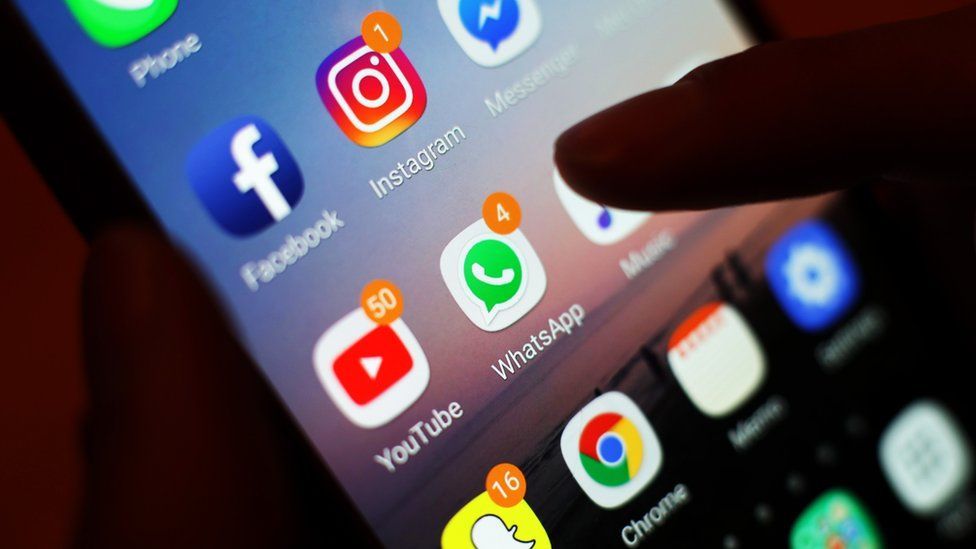 The Online Safety Bill aims to regulate social media firms
The Department for Digital, Culture, Media and Sport said: "Our comprehensive online safety laws will force social media companies to stamp out online abuse alongside other abhorrent behaviour on their platforms.
"Failure to act could mean multi-billion pound fines up to 10% of their global turnover and having their sites blocked."
The UK government hopes the bill will prevent the spread of illegal content and activity such as images of child abuse, terrorist material and hate crimes.
Ministers hope it will protect children from harmful material and protect adults from legal, but harmful, content.
Some critics say the bill harms free speech, while others say it fails to recognise the high levels of online violence toward women - the NSPCC said it must be strengthened and have children at its heart.











