Beautiful Virgin Islands

Wednesday, May 13, 2026

Italy? Spain? Poland? DNA tests probe Christopher Columbus' origins

The voyages of Christopher Columbus helped Europeans discover America, but the famous explorer’s own origins have long been a matter of controversy. But now scientists are hoping to shed light on them thanks to the latest advances in genetic technology.

The voyages of Christopher Columbus helped Europeans discover America, but the famous explorer’s own origins have long been shrouded in mystery.

But now scientists are hoping to shed more light on the great man’s ancestry - thanks to the latest advances in genetic technology.

Tests being carried out on Columbus’s bones the University of Granada will seek to determine whether he was indeed born in Genoa, as most historians think, or whether, as some others believe, he had Spanish, Portuguese, Croatian or even Polish origins.

José Antonio Lorente, professor of legal and forensic medicine at the University of Granada, is one of the scientists leading the project.

He told Euronews' Good Morning Europe show: “What we have now is next-generation sequencing, which is a much more robust and sensitive technology and besides that, we have a lot more forensics to compare: there have been many papers published that give us information about the ethnic and geographical origins of people, so this together means that hopefully, we’ll get positive results.”

Professor Lorente says that though the theory of Genoan origins is the one most favoured by historians, other outcomes cannot be ruled out.

“It is clear that there are some other theories, some of them very consistent, with very logical reasoning, and a lot of data, what we try to do is to offer scientific data that can be interpreted by historians,” he added.
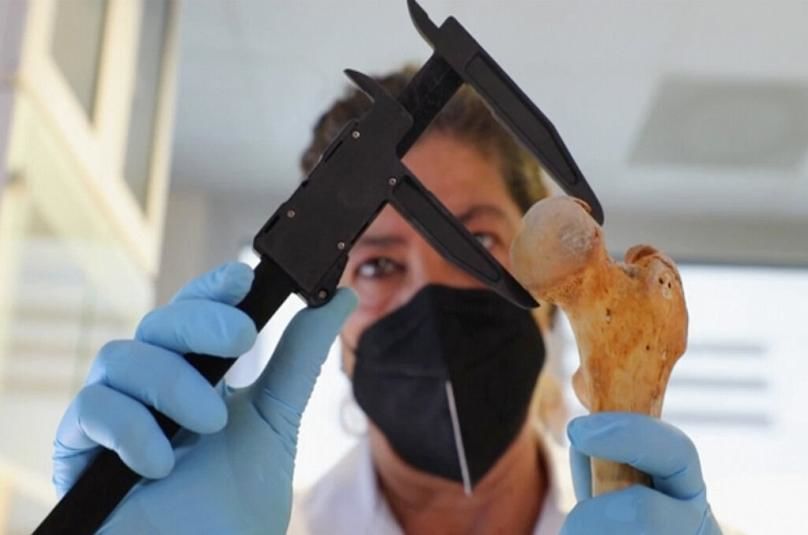
In this grab taken from video, Inmaculada Aleman, Professor of Physical Anthropology measures a bone from the alleged remains of Christopher Columbus and family members


Genetic comparisons with identified individuals will be able to determine whether they have a family connection. Even without direct individual matches, it is also possible to draw more tentative conclusions based on regional comparisons.

“We are just starting,” says Professor Lorente. “There will be great progress in the next ten to fifteen years.”

Watch the full interview with Professor Lorente in the video player, above.

Newsletter

Related Articles

Beautiful Virgin Islands
0:00
0:00
Close
The Great Western Exit: Why Best Citizens Are Fleeing the Rich World [PODCAST]
The New Robber Barons of Intelligence: Are AI Bosses More Powerful Than Rockefeller?
The End of the Old Order [Podcast]
Britain’s Democracy Is Now a Costume
The AI Gold Rush Is Coming for America’s Last Open Spaces [Podcast]
The Pentagon’s AI Squeeze: Eight Tech Giants Get In, Anthropic Gets Shut Out [Podcast]
The War Map: Professor Jiang’s Dark Theory of Iran, Trump, China, Russia, Israel, and the Coming Global Shock [Podcast]
Labour Is No Longer a National Party [Podcast]
AI Isn’t Stealing Your Job. It’s Dismantling It Piece by Piece.
Lawyers vs Engineers: Why China Builds While America Litigates [Podcast]
Churchill’s Glass: The Drunk, the Doctor, and the Myth Britain Refuses to Sober Up From
Apple issues an unusual warning: this is how your iPhone can be hacked without you doing anything
The Met Gala Meets the Age of Billionaire Backlash
Russian Oligarch’s Superyacht Crosses Hormuz via Iran-Controlled Route
Gunfire Disrupts White House Correspondents’ Dinner as Trump Is Evacuated
A Leak, a King, and a Fracturing Alliance
Inside the Gates Foundation Turmoil: Layoffs, Scrutiny, and the Cost of Reputational Risk
UK Biobank Breach Exposes Health Data of 500,000, Listed for Sale on Chinese Platform
KPMG Cuts Around 10% of US Audit Partners After Failed Exit Push
French Police Probe Suspected Weather-Data Tampering After Unusual Polymarket Bets on Paris Temperatures
News Roundup
Microsoft lost 2.5 millions users (French government) to Linux
Privacy Problems in Microsoft Windows OS
News roundup
Péter András Magyar and the Strategic Reset of Hungary
Hungary After the Landslide — A Strategic Reset in Europe
×










