
Miami GP 2026: Race Time, UK Broadcast Schedule and Why the Start Has Shifted
F1’s Miami Grand Prix moves earlier due to thunderstorm risk, with Sky Sports confirming a 6pm UK start and a compressed live broadcast window
The structure of Formula One’s 2026 Miami Grand Prix weekend has been reshaped by weather risk management, with organisers, the FIA, and Formula One jointly moving the race start forward in response to forecasts of severe thunderstorms in Florida.
The decision directly affects global broadcast timing, particularly in Europe, where evening viewing slots have been significantly altered.
What is confirmed is that the race at the Miami International Autodrome will now begin earlier than originally scheduled.
The start time has been brought forward by three hours, shifting the race to 1pm local time in Miami, which corresponds to 6pm in the United Kingdom.
The change was made after meteorological forecasts indicated that storm activity could intensify later in the afternoon and evening, increasing the risk of lightning-related interruptions under Florida’s strict safety regulations.
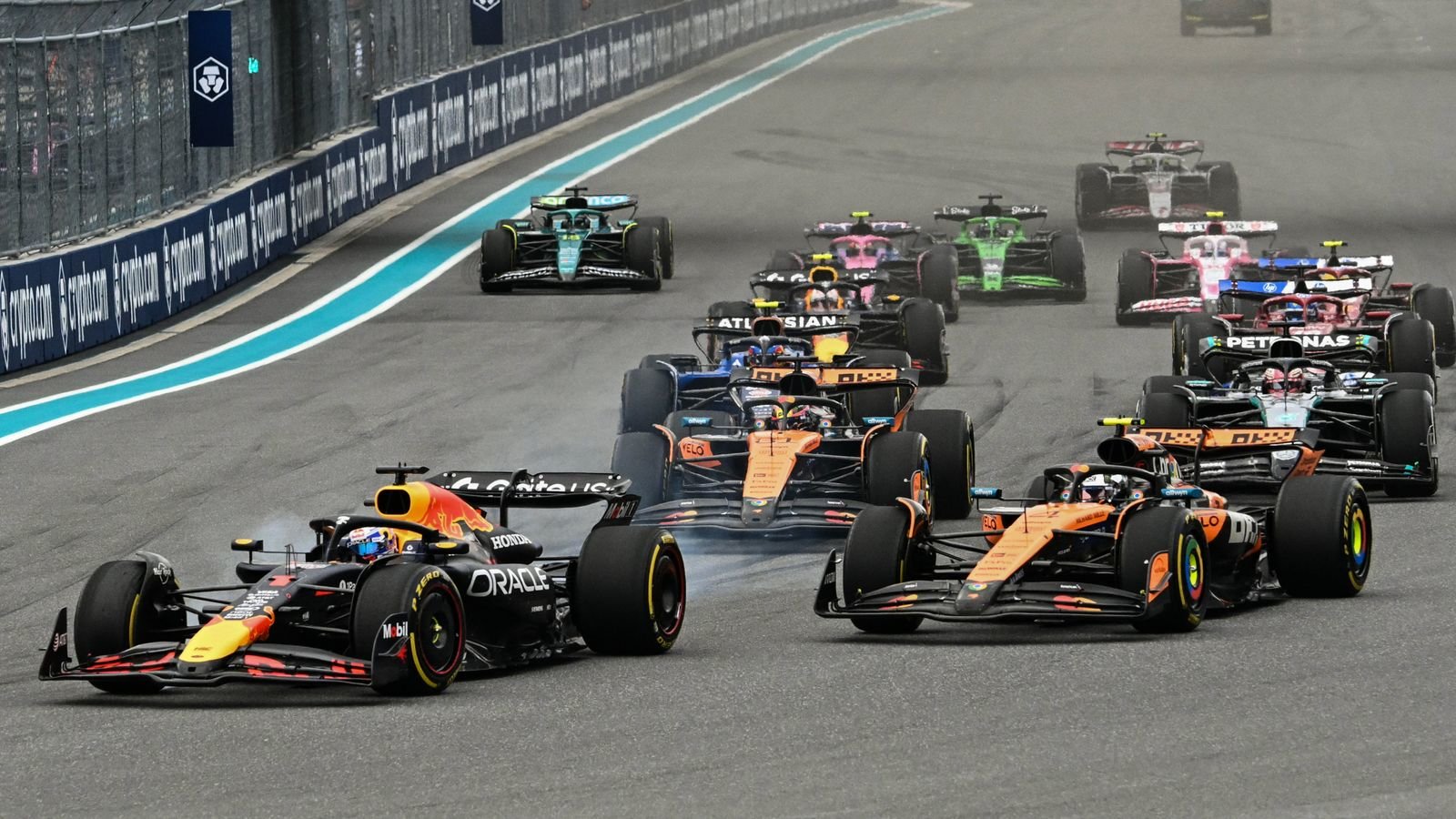
The Miami Grand Prix is a 57-lap race held at a temporary street circuit built around the Hard Rock Stadium complex in Miami Gardens.
The circuit is 5.412 kilometres long and combines high-speed straights with tight technical sections, making it both strategically complex and sensitive to weather disruptions.
Rain or lightning in the region can trigger mandatory suspensions, which is a key reason why organisers chose to advance the start rather than risk extended delays or an incomplete race.
The revised schedule also reshapes broadcast coverage.
In the United Kingdom, Sky Sports F1 is airing live coverage from the early evening, with pre-race build-up beginning ahead of the 6pm start.
The main race window is followed by post-race analysis and highlight programming across Sky’s F1 coverage.
This shift compresses the traditional primetime viewing slot, reflecting how global sporting events increasingly adapt to both weather constraints and international broadcasting demands.
Beyond timing, the race weekend itself remains structured around a sprint format, meaning the grid was already influenced by earlier sessions across practice, sprint qualifying, sprint race, and traditional qualifying.
The sprint format intensifies competitive variability before the main race, but it also increases the importance of clean execution across multiple sessions in a short timeframe.
The broader implication of the scheduling change is operational rather than competitive.
Formula One increasingly runs into climate-driven disruptions in certain venues, particularly in regions prone to rapid storm development.
Miami is one of the clearest examples of a modern F1 circuit where infrastructure, safety rules, and broadcast economics must all adjust dynamically to weather systems that cannot be controlled but must be anticipated.
For teams, the earlier start reduces uncertainty about tyre strategy and race length interruptions, since avoiding peak storm hours lowers the probability of red flags or race suspensions.
For broadcasters, it reinforces the need for flexible live scheduling across global markets, where a single weather decision in one city can reshape prime-time programming on multiple continents.
The Miami Grand Prix therefore operates not just as a sporting event, but as a coordinated logistical system linking safety regulation, meteorology, and global media distribution.
The earlier start ensures the race can be completed under safer conditions while maintaining full points allocation, keeping championship continuity intact under changing environmental constraints.
The decision directly affects global broadcast timing, particularly in Europe, where evening viewing slots have been significantly altered.
What is confirmed is that the race at the Miami International Autodrome will now begin earlier than originally scheduled.
The start time has been brought forward by three hours, shifting the race to 1pm local time in Miami, which corresponds to 6pm in the United Kingdom.
The change was made after meteorological forecasts indicated that storm activity could intensify later in the afternoon and evening, increasing the risk of lightning-related interruptions under Florida’s strict safety regulations.
The Miami Grand Prix is a 57-lap race held at a temporary street circuit built around the Hard Rock Stadium complex in Miami Gardens.
The circuit is 5.412 kilometres long and combines high-speed straights with tight technical sections, making it both strategically complex and sensitive to weather disruptions.
Rain or lightning in the region can trigger mandatory suspensions, which is a key reason why organisers chose to advance the start rather than risk extended delays or an incomplete race.
The revised schedule also reshapes broadcast coverage.
In the United Kingdom, Sky Sports F1 is airing live coverage from the early evening, with pre-race build-up beginning ahead of the 6pm start.
The main race window is followed by post-race analysis and highlight programming across Sky’s F1 coverage.
This shift compresses the traditional primetime viewing slot, reflecting how global sporting events increasingly adapt to both weather constraints and international broadcasting demands.
Beyond timing, the race weekend itself remains structured around a sprint format, meaning the grid was already influenced by earlier sessions across practice, sprint qualifying, sprint race, and traditional qualifying.
The sprint format intensifies competitive variability before the main race, but it also increases the importance of clean execution across multiple sessions in a short timeframe.
The broader implication of the scheduling change is operational rather than competitive.
Formula One increasingly runs into climate-driven disruptions in certain venues, particularly in regions prone to rapid storm development.
Miami is one of the clearest examples of a modern F1 circuit where infrastructure, safety rules, and broadcast economics must all adjust dynamically to weather systems that cannot be controlled but must be anticipated.
For teams, the earlier start reduces uncertainty about tyre strategy and race length interruptions, since avoiding peak storm hours lowers the probability of red flags or race suspensions.
For broadcasters, it reinforces the need for flexible live scheduling across global markets, where a single weather decision in one city can reshape prime-time programming on multiple continents.
The Miami Grand Prix therefore operates not just as a sporting event, but as a coordinated logistical system linking safety regulation, meteorology, and global media distribution.
The earlier start ensures the race can be completed under safer conditions while maintaining full points allocation, keeping championship continuity intact under changing environmental constraints.