Reform UK Pledges to Retain Britain’s Budget Watchdog as It Seeks Broader Economic Credibility
Reform UK signals it will uphold the Office for Budget Responsibility and Bank of England independence, a shift designed to reassure markets ahead of a general election.
Reform UK has announced that it will retain the United Kingdom’s independent fiscal watchdog, the Office for Budget Responsibility, and maintain the operational independence of the Bank of England if the party wins power at a future general election.
The commitment represents a notable shift from earlier remarks by party leader Nigel Farage, who publicly questioned the value of the watchdog and suggested it could be scrapped, describing it as a body that “dictates” to elected politicians.
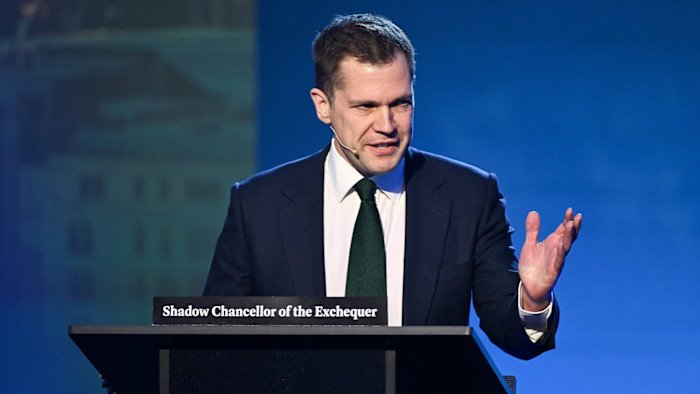
Under the new position outlined by Reform’s appointed “shadow chancellor,” Robert Jenrick, the party will preserve the Office for Budget Responsibility’s statutory role in producing economic and public finance forecasts while advocating reforms to improve its forecasting accuracy and bring in a broader range of expert perspectives.
Jenrick’s intervention is intended to reassure investors and business leaders worried that uncertainty over the role of independent fiscal institutions could unsettle financial markets.
He acknowledged imperfections in the Office for Budget Responsibility’s work, including past forecasting errors, but emphasised its importance for fiscal discipline and transparency in public spending.
Alongside the pledge on the fiscal watchdog, Reform UK reiterated its support for the Bank of England’s independence in setting monetary policy, a cornerstone of the United Kingdom’s financial framework.
The moves come as Reform unveils a larger frontbench team, positioning the party as a credible alternative in national politics, and aligns its economic platform with expectations of fiscal prudence.
Farage’s earlier critique of the Office for Budget Responsibility — which he described as a “Blairite-style quango” — had raised concerns among some Conservative and financial circles.
By contrast, Jenrick’s assurances and proposed reforms signal a recalibration aimed at balancing skepticism of unelected bodies with market-friendly credibility.
The Office for Budget Responsibility, established in 2010 to provide independent forecasts of the economy and public finances, remains central to the United Kingdom’s fiscal framework, offering five-year projections that inform government budgets and financial planning.
Reform’s policy announcement underscores ongoing debates in British politics about the role of independent institutions in shaping economic policy and highlights the party’s efforts to appeal to a broader electorate while maintaining its distinct policy identity.
The commitment represents a notable shift from earlier remarks by party leader Nigel Farage, who publicly questioned the value of the watchdog and suggested it could be scrapped, describing it as a body that “dictates” to elected politicians.
Under the new position outlined by Reform’s appointed “shadow chancellor,” Robert Jenrick, the party will preserve the Office for Budget Responsibility’s statutory role in producing economic and public finance forecasts while advocating reforms to improve its forecasting accuracy and bring in a broader range of expert perspectives.
Jenrick’s intervention is intended to reassure investors and business leaders worried that uncertainty over the role of independent fiscal institutions could unsettle financial markets.
He acknowledged imperfections in the Office for Budget Responsibility’s work, including past forecasting errors, but emphasised its importance for fiscal discipline and transparency in public spending.
Alongside the pledge on the fiscal watchdog, Reform UK reiterated its support for the Bank of England’s independence in setting monetary policy, a cornerstone of the United Kingdom’s financial framework.
The moves come as Reform unveils a larger frontbench team, positioning the party as a credible alternative in national politics, and aligns its economic platform with expectations of fiscal prudence.
Farage’s earlier critique of the Office for Budget Responsibility — which he described as a “Blairite-style quango” — had raised concerns among some Conservative and financial circles.
By contrast, Jenrick’s assurances and proposed reforms signal a recalibration aimed at balancing skepticism of unelected bodies with market-friendly credibility.
The Office for Budget Responsibility, established in 2010 to provide independent forecasts of the economy and public finances, remains central to the United Kingdom’s fiscal framework, offering five-year projections that inform government budgets and financial planning.
Reform’s policy announcement underscores ongoing debates in British politics about the role of independent institutions in shaping economic policy and highlights the party’s efforts to appeal to a broader electorate while maintaining its distinct policy identity.