

Rishi Sunak says scientists should never have been 'empowered' during pandemic
In an article in the Spectator, the Conservative MP claimed his concerns over the economic risks of lockdowns were not listened to.
The former chancellor, who faced criticism himself over several decisions made during the pandemic, also said that the Scientific Advisory Group for Emergencies (Sage) edited minutes to obscure dissenting opinions.
Mr Sunak was quoted in the Spectator interview as saying ‘we shouldn’t have empowered the scientists in the way we did’.
He added he had been left ‘furious’ during a meeting where others allegedly refused to acknowledge the wider impact lockdown was having.
‘We didn’t talk at all about missed (doctors’) appointments, or the backlog building in the NHS in a massive way. That was never part of it,’ the Tory hopeful said.
The meetings were ‘literally me around that table, just fighting’, which ‘was incredibly uncomfortable every single time’.
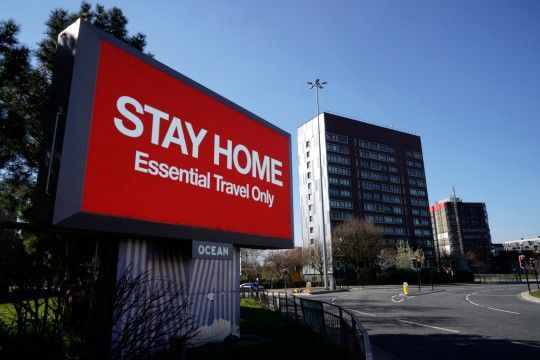 Mr Sunak claimed lockdown ‘trade-offs’ weren’t discussed
He said different decisions could have been reached on keeping schools open and the lockdown could have been shorter.
‘We shouldn’t have empowered the scientists in the way we did,’ Mr Sunak said.
‘And you have to acknowledge trade-offs from the beginning. If we’d done all of that, we could be in a very different place.’
His comments have since been criticised by medical professionals.
Sage member Professor Graham Medley said it was the Government that made the decisions during the pandemic, not the scientists.
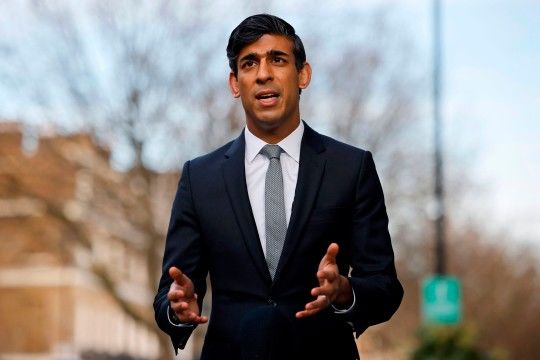 Mr Sunak claims he was banned from discussing the negative side-effects of lockdown (
But Prof Medley said: ‘Government have the power, so if one member of cabinet thinks that scientific advice was too ’empowered’ then it is a criticism of their colleagues rather than the scientists.
‘The Sage meetings were about the science, not the policy options, and the minutes reflect the scientific consensus at the time.
‘The disagreement comes out in the uncertainty. There is a balance between the consensus and the uncertainty – for example, we can either all agree that closing schools will reduce transmission with absolute certainty, or that closing schools will have a relatively small effect with lots of uncertainty.’
Rishi Sunak's own Covid scandals:
The Tory hopeful faced his own share of backlash following decisions made during the pandemic.
* Rishi Sunak was forced to defend his Eat Out to Help Out scheme which offered 50% off food and drink on certain days in August 2020. He was criticised in September that year as coronavirus cases began to rise again in the UK.
* The following year, people claimed they had been ‘thrown to the wolves’ by the then-Chancellor’s economic support during the third lockdown. Musicians, freelancers and the self-employed were among those who saw no benefit from attempts made to fend off a tsunami of job losses.
* Fast forward to this year, when a damning report in February found that at least £15,000,000,000 was lost to Covid fraud and government mistakes. At least £15billion was handed to fraudsters or paid out in error, including through the the Eat Out to Help Out scheme, after No.10 ‘relaxed’ normal public spending rules at the start of the pandemic.
* Then in April, Boris Johnson and Rishi Sunak were fined for attending parties in Downing Street during lockdown. The Met’s investigation into alleged breaches of Covid regulations found the country’s two most senior politicians broke the very laws they set at the height of the pandemic.
Prof Ian Boyd, who was also on Sage, said the panel gave advice ‘based on the information available at the time’.
‘Especially in the early stages of the pandemic an immense amount was not known, and this meant that risks were high, and therefore precaution was called for.
‘Sage did not make decisions, it tried to reflect its uncertainties in its advice and it worked by consensus.
‘Members were acutely aware of the trade-offs associated with implementing specific actions. To the extent that it was possible with the information available at the time, these trade-offs were included within the uncertainty expressed in the advice.’
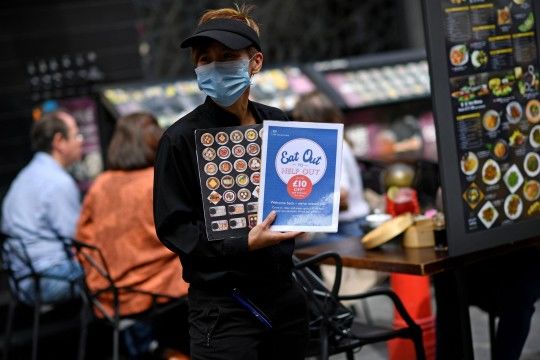 The former chancellor has been slammed in response to his own decisions –
such as the Eat Out to Help Out scheme which led to a wave of
infections
The former chancellor has been slammed in response to his own decisions –
such as the Eat Out to Help Out scheme which led to a wave of
infections
Others such as Boris Johnson’s former communications chief, Lee Cain, and Dominic Cummings, former senior advisor, have come out to slam the ‘dangerous rubbish’ in the interview.
Following this morning’s backlash, Mr Sunak has since claimed he did not suggest a lockdown could have been avoided during the Covid-19 pandemic.
The former chancellor was asked to clarify whether, in the recent interview with The Spectator, he suggested the Government should have not locked down the country.
Mr Sunak told the BBC Radio 4’s World At One programme: ‘No, that’s not the point I was making. The point I was making was that looking back on it, it is right that we learned the lessons from it.
‘Obviously at the time, everyone was doing the best job they could in incredibly difficult circumstances, dealing with something that we’d never faced before.
 The Tory hopeful has since said lessons were ‘learned’ during the decision process
‘There’s no point in trying to second guess those decisions, but it’s right that we learned the lessons from it.
‘And looking back, one of my reflections was that, you know, when things like that happen, I think we need to have all the facts and involve the trade-offs involved in those decisions very openly and honestly.’
A No 10 spokesman said today: ‘Throughout the pandemic, public health, education and the economy were central to the difficult decisions made on Covid restrictions to protect the British public from an unprecedented novel virus.
‘At every point, ministers made collective decisions which considered a wide range of expert advice available at the time in order to protect public health.’
Rishi Sunak’s office has been contacted by Metro.co.uk for additional comment.











