

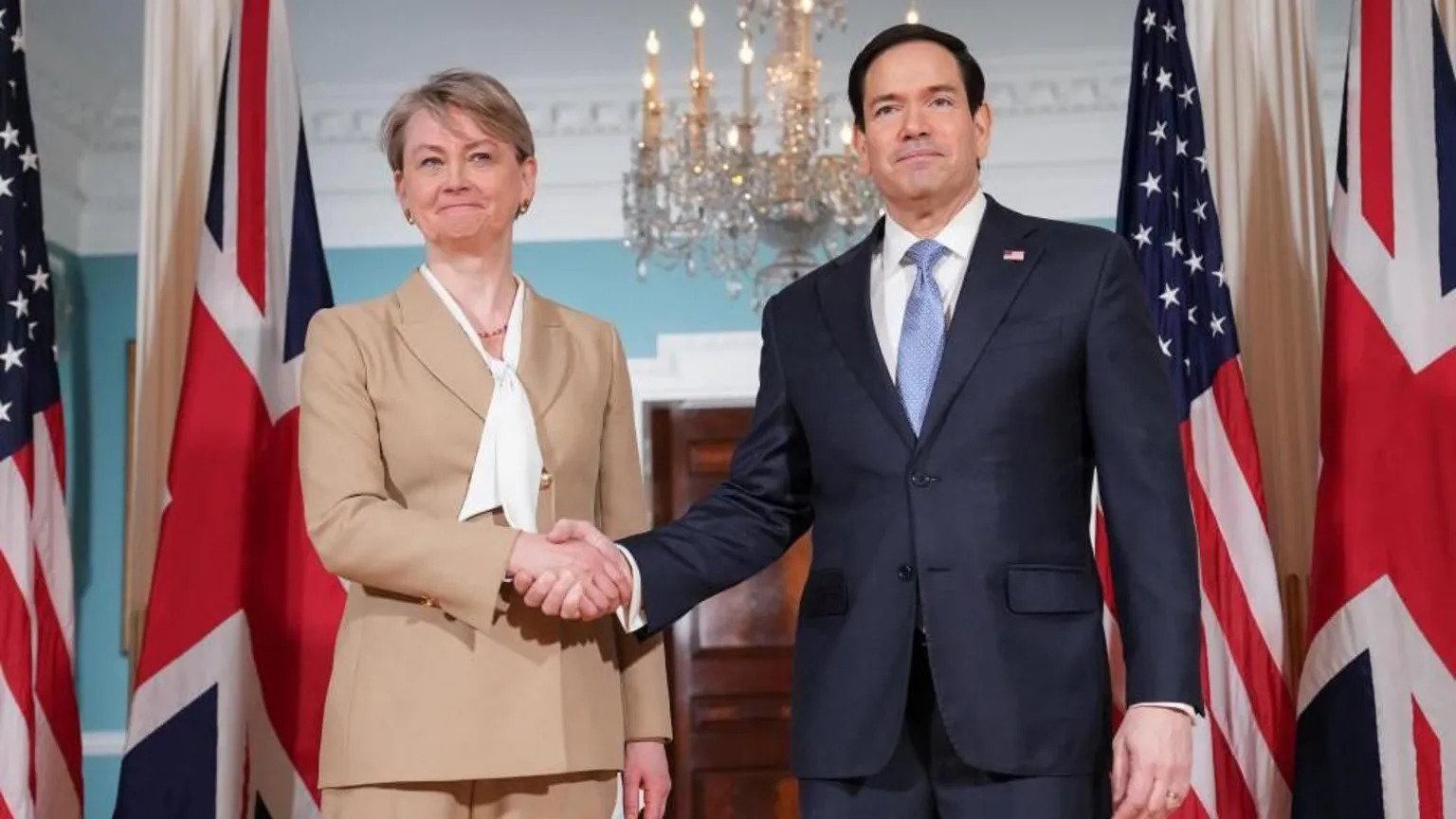
Rubio Downplays Claims US May Reassess UK Position on Falklands Sovereignty
US signals no policy shift after reports suggested a potential review of Britain’s long-standing control of the Falkland Islands amid renewed diplomatic sensitivity with Argentina
The foreign policy communication system between the United States, the United Kingdom, and Argentina has come under scrutiny following reports suggesting that Washington might reconsider aspects of the UK’s sovereignty claim over the Falkland Islands, a British overseas territory in the South Atlantic that Argentina continues to dispute.
What is confirmed is that US Senator Marco Rubio publicly rejected the idea that the United States is preparing to reassess or challenge Britain’s position on the Falklands.
His comments were aimed at containing diplomatic speculation that had circulated following interpretations of broader US engagement with Latin American territorial disputes and strategic alignment considerations in the Western Hemisphere.
The Falkland Islands, known in Argentina as Islas Malvinas, have been under British control since 1833, with the exception of a brief occupation by Argentina in 1982 that led to a ten-week war between the two countries.
The United Kingdom maintains that the islands’ political status is determined by the principle of self-determination, citing repeated referendums in which island residents have overwhelmingly voted to remain a British territory.
Argentina continues to assert a sovereignty claim based on historical succession arguments and geography.
The mechanism behind the current controversy is not an official policy shift but rather the amplification of interpretive reporting around US diplomatic language.
The United States has historically taken a neutral stance on sovereignty, while maintaining close security and economic ties with both the United Kingdom and key partners in South America.
Any perceived deviation from this neutrality carries immediate diplomatic sensitivity due to the legacy of the 1982 conflict and ongoing regional tensions.
Rubio’s comments function as a political stabilizer within this context, signalling continuity rather than change.
By explicitly downplaying the idea of a policy review, he reinforced the long-standing US position of avoiding formal endorsement of either sovereignty claim.
This is particularly relevant given the strategic importance of US-UK relations within NATO and broader Western security coordination, which would be strained by any perceived shift on such a symbolic territorial issue.
The broader stakes extend beyond bilateral diplomacy.
The Falklands are located in a resource-rich and strategically significant maritime zone, with fisheries and potential offshore energy reserves contributing to the geopolitical sensitivity of the dispute.
Any suggestion of external reassessment of sovereignty claims tends to trigger rapid political reactions in both London and Buenos Aires, even when no formal policy change is underway.
At present, there is no confirmed evidence of a US policy review regarding the Falklands.
The episode instead highlights how quickly interpretations of diplomatic language can escalate into perceived shifts in international alignment, particularly in long-standing territorial disputes where historical grievances remain politically active.
The immediate consequence of Rubio’s statement is the reinforcement of the status quo in US messaging, maintaining neutrality while dampening speculation that the United States might alter its position on one of the Western Hemisphere’s most enduring sovereignty disputes.
What is confirmed is that US Senator Marco Rubio publicly rejected the idea that the United States is preparing to reassess or challenge Britain’s position on the Falklands.
His comments were aimed at containing diplomatic speculation that had circulated following interpretations of broader US engagement with Latin American territorial disputes and strategic alignment considerations in the Western Hemisphere.
The Falkland Islands, known in Argentina as Islas Malvinas, have been under British control since 1833, with the exception of a brief occupation by Argentina in 1982 that led to a ten-week war between the two countries.
The United Kingdom maintains that the islands’ political status is determined by the principle of self-determination, citing repeated referendums in which island residents have overwhelmingly voted to remain a British territory.
Argentina continues to assert a sovereignty claim based on historical succession arguments and geography.
The mechanism behind the current controversy is not an official policy shift but rather the amplification of interpretive reporting around US diplomatic language.
The United States has historically taken a neutral stance on sovereignty, while maintaining close security and economic ties with both the United Kingdom and key partners in South America.
Any perceived deviation from this neutrality carries immediate diplomatic sensitivity due to the legacy of the 1982 conflict and ongoing regional tensions.
Rubio’s comments function as a political stabilizer within this context, signalling continuity rather than change.
By explicitly downplaying the idea of a policy review, he reinforced the long-standing US position of avoiding formal endorsement of either sovereignty claim.
This is particularly relevant given the strategic importance of US-UK relations within NATO and broader Western security coordination, which would be strained by any perceived shift on such a symbolic territorial issue.
The broader stakes extend beyond bilateral diplomacy.
The Falklands are located in a resource-rich and strategically significant maritime zone, with fisheries and potential offshore energy reserves contributing to the geopolitical sensitivity of the dispute.
Any suggestion of external reassessment of sovereignty claims tends to trigger rapid political reactions in both London and Buenos Aires, even when no formal policy change is underway.
At present, there is no confirmed evidence of a US policy review regarding the Falklands.
The episode instead highlights how quickly interpretations of diplomatic language can escalate into perceived shifts in international alignment, particularly in long-standing territorial disputes where historical grievances remain politically active.
The immediate consequence of Rubio’s statement is the reinforcement of the status quo in US messaging, maintaining neutrality while dampening speculation that the United States might alter its position on one of the Western Hemisphere’s most enduring sovereignty disputes.