
Signal Jamming Incident on UK Defence Flight Highlights Rising Electronic Warfare Risks Near Russian Border
Reports of navigation interference affecting a UK defence minister’s aircraft underscore growing disruption of GPS and communications systems in contested European airspace
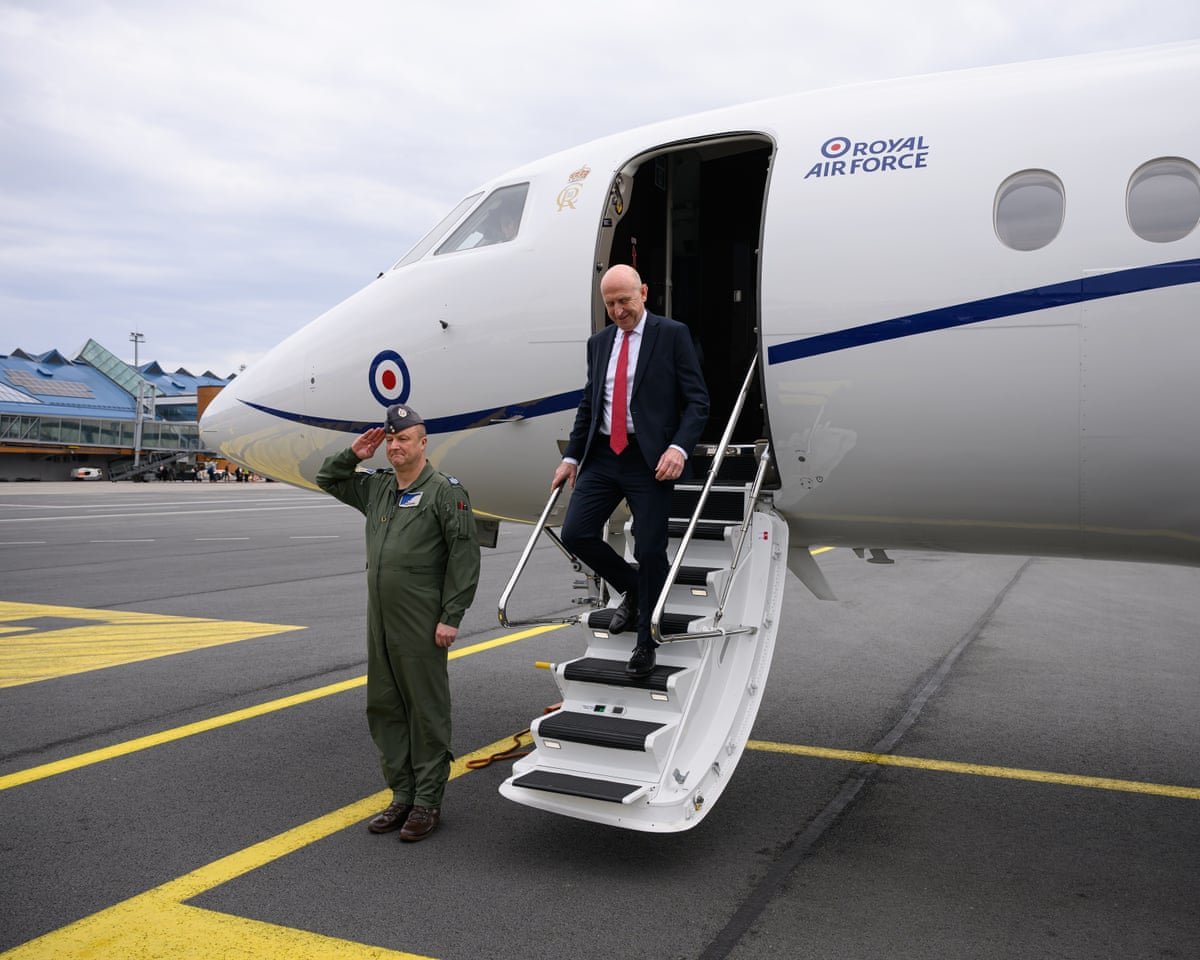
An electronic interference incident affecting a UK defence minister’s flight near the Russian border has drawn renewed attention to the expanding use of signal jamming and spoofing in and around Eastern European airspace.
The episode is understood to have involved disruption to satellite-based navigation systems during transit, a method increasingly associated with military electronic warfare activity in regions bordering Russia.
What is confirmed is that aircraft operating in parts of Northern and Eastern Europe have experienced rising levels of interference affecting GPS and related navigation tools in recent years.
These disruptions are typically linked to jamming or spoofing technologies designed to block or distort satellite signals, and they can force aircraft and pilots to rely on backup navigation systems and alternative procedures.
The reported incident involving a UK defence minister highlights the operational sensitivity of flights carrying senior government and military officials through areas where electronic warfare capabilities are actively deployed.
Even when modern aircraft are equipped with redundant navigation systems, sustained or targeted interference can increase workload for flight crews and require adjustments to routing, communications, or operational protocols.
Electronic interference of this kind is widely understood to be part of a broader pattern of hybrid conflict techniques, in which states and state-aligned actors use non-kinetic tools such as signal disruption, cyber operations, and information manipulation to exert pressure without direct military engagement.
The airspace near the Russian border has been repeatedly identified by aviation authorities and defence analysts as one of the most affected regions for GPS anomalies.
The key issue is not only the immediate safety implications for individual flights but also the cumulative effect on regional aviation reliability and military mobility.
Frequent interference can complicate flight planning, increase reliance on inertial navigation systems, and create uncertainty in densely trafficked air corridors used by both civilian and state aircraft.
In response to growing incidents across Europe, governments and aviation regulators have been reinforcing contingency procedures, investing in alternative navigation infrastructure, and coordinating with defence agencies to monitor and attribute sources of interference.
These measures reflect a broader recognition that electronic disruption has become a persistent feature of the security environment rather than isolated technical faults.
The latest incident involving a high-level UK government flight underscores how closely intertwined aviation security and geopolitical tensions have become in regions adjacent to Russia.
It reinforces the likelihood that electronic interference will remain a recurring operational risk for both military and civilian aviation moving through contested airspace.
The episode is understood to have involved disruption to satellite-based navigation systems during transit, a method increasingly associated with military electronic warfare activity in regions bordering Russia.
What is confirmed is that aircraft operating in parts of Northern and Eastern Europe have experienced rising levels of interference affecting GPS and related navigation tools in recent years.
These disruptions are typically linked to jamming or spoofing technologies designed to block or distort satellite signals, and they can force aircraft and pilots to rely on backup navigation systems and alternative procedures.
The reported incident involving a UK defence minister highlights the operational sensitivity of flights carrying senior government and military officials through areas where electronic warfare capabilities are actively deployed.
Even when modern aircraft are equipped with redundant navigation systems, sustained or targeted interference can increase workload for flight crews and require adjustments to routing, communications, or operational protocols.
Electronic interference of this kind is widely understood to be part of a broader pattern of hybrid conflict techniques, in which states and state-aligned actors use non-kinetic tools such as signal disruption, cyber operations, and information manipulation to exert pressure without direct military engagement.
The airspace near the Russian border has been repeatedly identified by aviation authorities and defence analysts as one of the most affected regions for GPS anomalies.
The key issue is not only the immediate safety implications for individual flights but also the cumulative effect on regional aviation reliability and military mobility.
Frequent interference can complicate flight planning, increase reliance on inertial navigation systems, and create uncertainty in densely trafficked air corridors used by both civilian and state aircraft.
In response to growing incidents across Europe, governments and aviation regulators have been reinforcing contingency procedures, investing in alternative navigation infrastructure, and coordinating with defence agencies to monitor and attribute sources of interference.
These measures reflect a broader recognition that electronic disruption has become a persistent feature of the security environment rather than isolated technical faults.
The latest incident involving a high-level UK government flight underscores how closely intertwined aviation security and geopolitical tensions have become in regions adjacent to Russia.
It reinforces the likelihood that electronic interference will remain a recurring operational risk for both military and civilian aviation moving through contested airspace.