
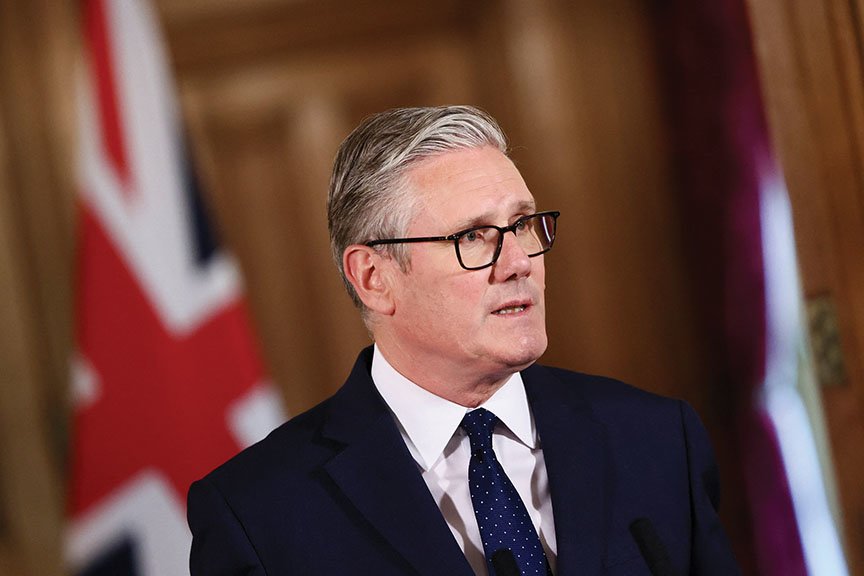
Starmer under pressure to use UK counter-terror powers as antisemitic violence fuels political warning over state response
UK Prime Minister Keir Starmer faces escalating debate over how far domestic security and counter-terrorism tools should go amid a wave of attacks on Jewish targets and claims that government action is still too limited
The debate over Britain’s counter-terrorism and public security response has intensified after a series of antisemitic attacks in London and surrounding areas, with Prime Minister Keir Starmer urging stronger enforcement and critics arguing that existing tools are not being used decisively enough to deter further violence.
The immediate policy question is not whether attacks constitute terrorism in legal terms, but whether the state is deploying its full security, policing, and prosecutorial capacity to prevent repetition.
In recent weeks, UK authorities have investigated multiple incidents targeting Jewish individuals and institutions, including stabbings in London’s Golders Green area and attempted arson attacks against synagogues and community facilities.
Police have treated at least one of the stabbing incidents as terrorism-related, and national threat assessments have been raised in response to what security officials describe as an elevated risk environment linked to extremist violence and potential foreign-linked influence operations.
Starmer has responded by pledging expanded policing, faster legal measures, and increased funding for community security, alongside tougher rhetoric toward individuals who incite or glorify violence.
He has also linked some forms of extremist language and protest behaviour to the normalization of antisemitic violence, arguing that legal boundaries around hate speech and incitement must be enforced more consistently.
Government officials have indicated that additional legislative tools are being considered, including measures aimed at state-linked extremist activity and its domestic networks.
The political pressure surrounding these statements has not come only from within government.
Advocacy voices and commentators have argued that the scale and coordination of recent incidents suggest a pattern of domestic terrorism that should trigger more aggressive use of existing counter-terror powers.
These include surveillance, disruption of suspected networks, prosecution under terrorism legislation, and expanded protective measures around vulnerable sites such as synagogues, schools, and volunteer emergency services.
Opposing arguments within the public debate focus on civil liberties, warning that expanding counter-terror enforcement risks overreach, particularly in relation to protest activity and political speech connected to Middle East conflicts.
Some legal and political critics have questioned whether the threshold for terrorism classification is being applied consistently, while others argue that policy responses risk conflating protest movements with violent extremism.
What is confirmed is that UK security agencies are treating the current wave of incidents as part of a broader escalation in antisemitic threats, with intelligence and policing units increasing protective measures and investigations.
Government funding for community protection has been expanded, and public order policing around Jewish institutions has been strengthened in affected areas.
The key issue now is whether the UK’s existing legal framework—already among the most extensive counter-terror systems in Europe—will be used more aggressively in practice, or whether further legislative changes will be introduced to address what ministers describe as evolving forms of domestic extremism.
The outcome will shape not only immediate security conditions for Jewish communities, but also the broader balance between security enforcement, protest rights, and political expression in Britain’s domestic security policy going forward.
The immediate policy question is not whether attacks constitute terrorism in legal terms, but whether the state is deploying its full security, policing, and prosecutorial capacity to prevent repetition.
In recent weeks, UK authorities have investigated multiple incidents targeting Jewish individuals and institutions, including stabbings in London’s Golders Green area and attempted arson attacks against synagogues and community facilities.
Police have treated at least one of the stabbing incidents as terrorism-related, and national threat assessments have been raised in response to what security officials describe as an elevated risk environment linked to extremist violence and potential foreign-linked influence operations.
Starmer has responded by pledging expanded policing, faster legal measures, and increased funding for community security, alongside tougher rhetoric toward individuals who incite or glorify violence.
He has also linked some forms of extremist language and protest behaviour to the normalization of antisemitic violence, arguing that legal boundaries around hate speech and incitement must be enforced more consistently.
Government officials have indicated that additional legislative tools are being considered, including measures aimed at state-linked extremist activity and its domestic networks.
The political pressure surrounding these statements has not come only from within government.
Advocacy voices and commentators have argued that the scale and coordination of recent incidents suggest a pattern of domestic terrorism that should trigger more aggressive use of existing counter-terror powers.
These include surveillance, disruption of suspected networks, prosecution under terrorism legislation, and expanded protective measures around vulnerable sites such as synagogues, schools, and volunteer emergency services.
Opposing arguments within the public debate focus on civil liberties, warning that expanding counter-terror enforcement risks overreach, particularly in relation to protest activity and political speech connected to Middle East conflicts.
Some legal and political critics have questioned whether the threshold for terrorism classification is being applied consistently, while others argue that policy responses risk conflating protest movements with violent extremism.
What is confirmed is that UK security agencies are treating the current wave of incidents as part of a broader escalation in antisemitic threats, with intelligence and policing units increasing protective measures and investigations.
Government funding for community protection has been expanded, and public order policing around Jewish institutions has been strengthened in affected areas.
The key issue now is whether the UK’s existing legal framework—already among the most extensive counter-terror systems in Europe—will be used more aggressively in practice, or whether further legislative changes will be introduced to address what ministers describe as evolving forms of domestic extremism.
The outcome will shape not only immediate security conditions for Jewish communities, but also the broader balance between security enforcement, protest rights, and political expression in Britain’s domestic security policy going forward.











