
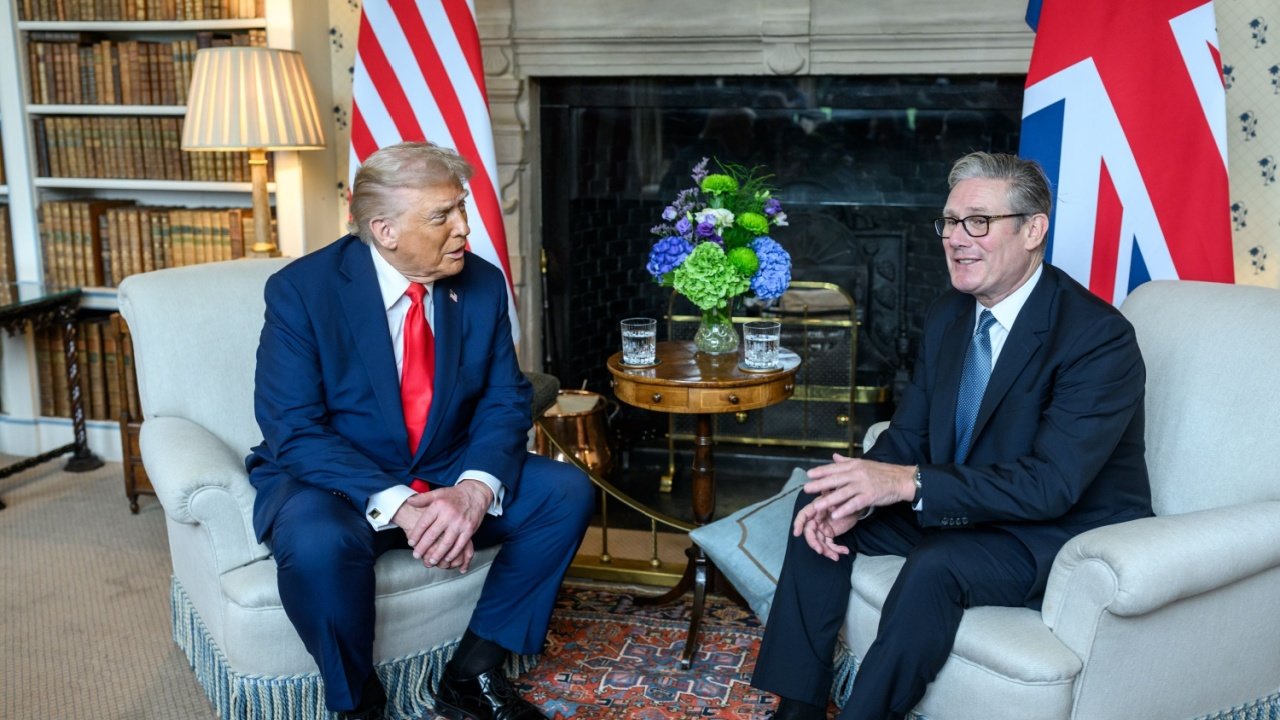
Strains Emerge in the US–UK ‘Special Relationship’ as Strategic and Economic Divergences Grow
Rising policy gaps on trade, technology, and global security are testing the long-standing alliance between Washington and London, even as both governments publicly reaffirm close ties.
The so-called ‘special relationship’ between the United States and the United Kingdom is increasingly defined by structural policy divergence rather than automatic alignment, as both countries adjust their economic and strategic priorities in a fragmented global order.
While officials in Washington and London continue to emphasise the strength of their alliance, the underlying mechanisms of cooperation are under strain from differing approaches to trade, industrial policy, technology regulation, and geopolitical risk management.
What is confirmed is that the US–UK relationship remains anchored in deep security cooperation through intelligence sharing, defence interoperability, and NATO commitments.
These institutional ties remain among the most integrated in the world, particularly in areas such as nuclear deterrence coordination, signals intelligence collaboration, and joint military operations.
However, beyond defence and intelligence, policy alignment has become more selective and increasingly transactional.
The key issue is not a breakdown of the alliance, but a shift in its functional scope.
The United States has adopted a more explicitly protectionist and industrial policy-driven economic strategy in recent years, focusing on domestic manufacturing incentives, supply chain reshoring, and targeted subsidies for strategic sectors such as semiconductors and clean energy technologies.
The United Kingdom, by contrast, has pursued a post-Brexit model centred on free trade agreements, regulatory flexibility, and sector-specific cooperation with multiple global partners rather than alignment with a single economic bloc.
This divergence has created friction in areas where economic policy and security policy overlap.
Technology governance is one example.
The United States has tightened export controls and investment screening in sensitive technologies, particularly those linked to artificial intelligence, advanced computing, and semiconductor manufacturing.
The United Kingdom has adopted a more incremental regulatory approach, balancing innovation competitiveness with security considerations, but without fully mirroring US restrictions in all cases.
Trade policy is another pressure point.
The absence of a comprehensive US–UK free trade agreement remains a structural limitation in the relationship, despite repeated political signalling of intent in past years.
Instead, cooperation has shifted toward narrower agreements and frameworks focused on critical supply chains, digital trade principles, and selective sectoral coordination.
This reflects a broader reality: both countries are prioritising flexibility over binding economic integration.
Geopolitical alignment remains strong on major security challenges, including support for Ukraine and coordination within NATO.
However, even in these areas, operational differences have emerged over burden-sharing, long-term funding commitments, and industrial base readiness.
European security policy, in which the UK plays a hybrid role as both a European and transatlantic actor, increasingly intersects with US strategic priorities in ways that require continuous negotiation rather than automatic consensus.
The United Kingdom’s post-Brexit positioning adds an additional layer of complexity.
London seeks to maintain privileged access to US markets and technology ecosystems while simultaneously rebuilding structured economic relationships with the European Union and Indo-Pacific partners.
This multi-vector strategy creates opportunities for diversification but also reduces the simplicity of bilateral alignment with Washington.
For the United States, the UK remains a key partner but no longer occupies the uniquely central economic role it once held in a more globalised trade environment.
Washington’s focus has shifted toward managing competition with China, restructuring domestic industrial capacity, and strengthening supply chain resilience across multiple allied networks rather than relying on a single primary partner.
Despite these pressures, the relationship retains significant strategic depth.
Intelligence cooperation through longstanding frameworks remains unmatched globally, and defence collaboration continues to operate at a high level of integration.
Both governments also continue to coordinate closely on sanctions policy, arms transfers, and crisis response mechanisms in major conflicts.
The emerging reality is not the erosion of the US–UK relationship, but its recalibration.
It is moving from a broadly assumed alignment across economic and strategic domains to a more segmented partnership in which cooperation is strong in security architecture but increasingly conditional and negotiated in trade, technology, and industrial policy.
This shift reflects wider changes in the international system, where even the closest alliances are being reshaped by competing domestic priorities and fragmented global supply chains.
While officials in Washington and London continue to emphasise the strength of their alliance, the underlying mechanisms of cooperation are under strain from differing approaches to trade, industrial policy, technology regulation, and geopolitical risk management.
What is confirmed is that the US–UK relationship remains anchored in deep security cooperation through intelligence sharing, defence interoperability, and NATO commitments.
These institutional ties remain among the most integrated in the world, particularly in areas such as nuclear deterrence coordination, signals intelligence collaboration, and joint military operations.
However, beyond defence and intelligence, policy alignment has become more selective and increasingly transactional.
The key issue is not a breakdown of the alliance, but a shift in its functional scope.
The United States has adopted a more explicitly protectionist and industrial policy-driven economic strategy in recent years, focusing on domestic manufacturing incentives, supply chain reshoring, and targeted subsidies for strategic sectors such as semiconductors and clean energy technologies.
The United Kingdom, by contrast, has pursued a post-Brexit model centred on free trade agreements, regulatory flexibility, and sector-specific cooperation with multiple global partners rather than alignment with a single economic bloc.
This divergence has created friction in areas where economic policy and security policy overlap.
Technology governance is one example.
The United States has tightened export controls and investment screening in sensitive technologies, particularly those linked to artificial intelligence, advanced computing, and semiconductor manufacturing.
The United Kingdom has adopted a more incremental regulatory approach, balancing innovation competitiveness with security considerations, but without fully mirroring US restrictions in all cases.
Trade policy is another pressure point.
The absence of a comprehensive US–UK free trade agreement remains a structural limitation in the relationship, despite repeated political signalling of intent in past years.
Instead, cooperation has shifted toward narrower agreements and frameworks focused on critical supply chains, digital trade principles, and selective sectoral coordination.
This reflects a broader reality: both countries are prioritising flexibility over binding economic integration.
Geopolitical alignment remains strong on major security challenges, including support for Ukraine and coordination within NATO.
However, even in these areas, operational differences have emerged over burden-sharing, long-term funding commitments, and industrial base readiness.
European security policy, in which the UK plays a hybrid role as both a European and transatlantic actor, increasingly intersects with US strategic priorities in ways that require continuous negotiation rather than automatic consensus.
The United Kingdom’s post-Brexit positioning adds an additional layer of complexity.
London seeks to maintain privileged access to US markets and technology ecosystems while simultaneously rebuilding structured economic relationships with the European Union and Indo-Pacific partners.
This multi-vector strategy creates opportunities for diversification but also reduces the simplicity of bilateral alignment with Washington.
For the United States, the UK remains a key partner but no longer occupies the uniquely central economic role it once held in a more globalised trade environment.
Washington’s focus has shifted toward managing competition with China, restructuring domestic industrial capacity, and strengthening supply chain resilience across multiple allied networks rather than relying on a single primary partner.
Despite these pressures, the relationship retains significant strategic depth.
Intelligence cooperation through longstanding frameworks remains unmatched globally, and defence collaboration continues to operate at a high level of integration.
Both governments also continue to coordinate closely on sanctions policy, arms transfers, and crisis response mechanisms in major conflicts.
The emerging reality is not the erosion of the US–UK relationship, but its recalibration.
It is moving from a broadly assumed alignment across economic and strategic domains to a more segmented partnership in which cooperation is strong in security architecture but increasingly conditional and negotiated in trade, technology, and industrial policy.
This shift reflects wider changes in the international system, where even the closest alliances are being reshaped by competing domestic priorities and fragmented global supply chains.