

Tech Tent - what next for Wikipedia?
Now, just as a new chief executive takes over, a bitter dispute has erupted between volunteer editors of the online encyclopedia's Chinese language edition over how events in Hong Kong are portrayed.
This week's Tech Tent asks whether Wikipedia can continue to prosper in the era of misinformation.
The dispute over Hong Kong centres on a key principle of Wikipedia, as Selina Cheng, of the Hong Kong Free Press, explains to the programme: "Wikipedia does not allow original reporting. So whoever wants to add or edit content on Wikipedia articles has to cite existing sources, for example, government releases or press reporting."
But those sources have to be designated as reliable - and here there was violent disagreement between one group of volunteer editors who saw the Chinese government as a reliable source and another, mainly based in Hong Kong, which preferred to rely on the accounts of protesters.
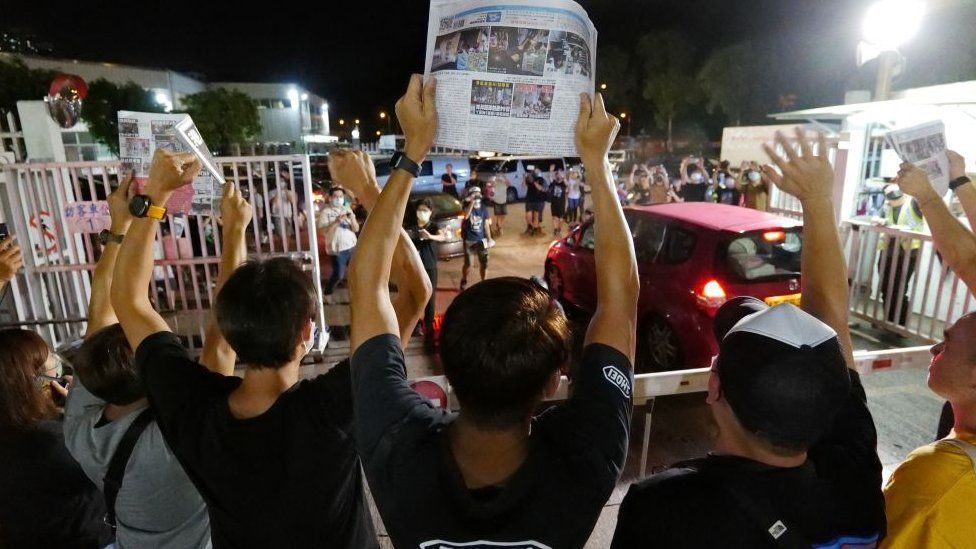
Selina Cheng says there was a lot at stake because some editors had access to sensitive personal information which could be of interest to the Chinese authorities: "There were fears that, because there was this increasing tension among editors from these different geographical locations, some administrators might abuse their access to use that personal information against certain editors."
This week, the Wikimedia Foundation banned seven editors linked to a mainland China group, which it accused of trying to advance the interests of the Chinese state by infiltrating the encyclopedia.
The move came as the foundation, which oversees the non-profit encyclopedia project, announced the appointment of its new chief executive.
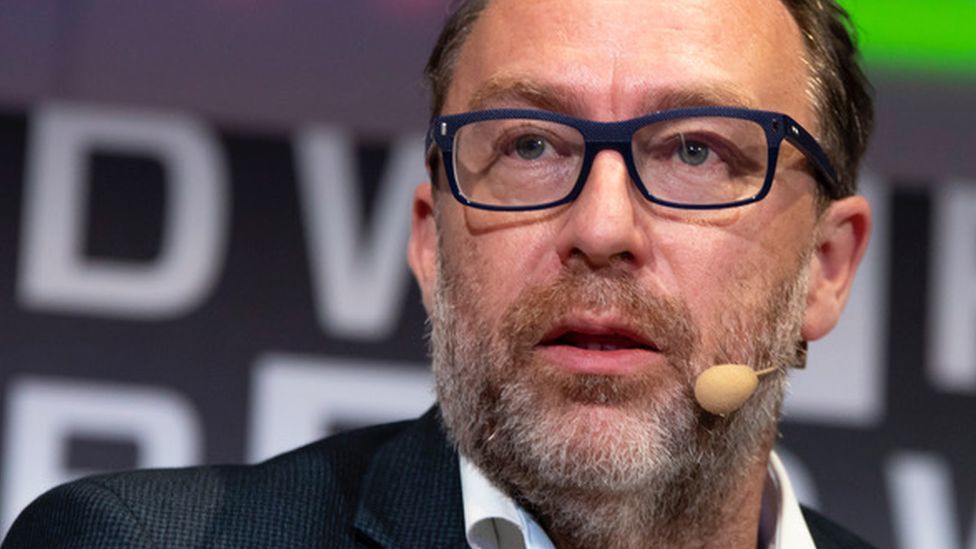
Maryana Iskander, according to her Wikipedia entry, is an Egyptian-born American social entrepreneur and lawyer who currently leads the Harambee Youth Employment Accelerator in South Africa.
When we asked her how she might approach challenges like the one in China, she was careful to stress that the Wikipedia community is largely self-governing: "One of the very early things that I've learned in this process is that certainly the Wikimedia Foundation does not play a role in setting editorial policy and that these are the debates that happen in communities."
But she said the foundation's first job was to protect the safety of its volunteers and the other key principle was transparency about how Wikipedia was run. She pointed to the way Wikipedia had handled the 2020 US elections as an example of its content being "transparent, verifiable and accurate".
After coming under fire for inaccuracy in its early years, it seemed that Wikipedia's self-correcting system where volunteers constantly monitored articles, and discussed and implemented changes when new information arrived, could provide an example for the less reliable social media platforms.
The polarisation of debate and the determination of certain governments to see the encyclopedia reflect their view of the truth have put the system under strain, with increasingly bitter edit wars over entries on everything from climate change to Donald Trump..
But Maryana Iskander still believes in Wikipedians, as the volunteers like to call themselves: "What's been really interesting for me is to see how this is a community of humans that are organising and getting interested in these exact big debates, whether it's women's rights, whether it's climate change."
The mission, she says, is to provide accurate and verifiable knowledge on some of the most contentious questions of our time. Now let's see whether in the era of alternative facts that mission is still achievable.











