
UK Advances ‘Cooper Connector’ Plan to Transform Kroger Field Area into Year-Round Entertainment District
University of Kentucky moves forward with a mixed-use development proposal that could reshape South Campus, displace existing buildings, and create a commercial hub around Kroger Field
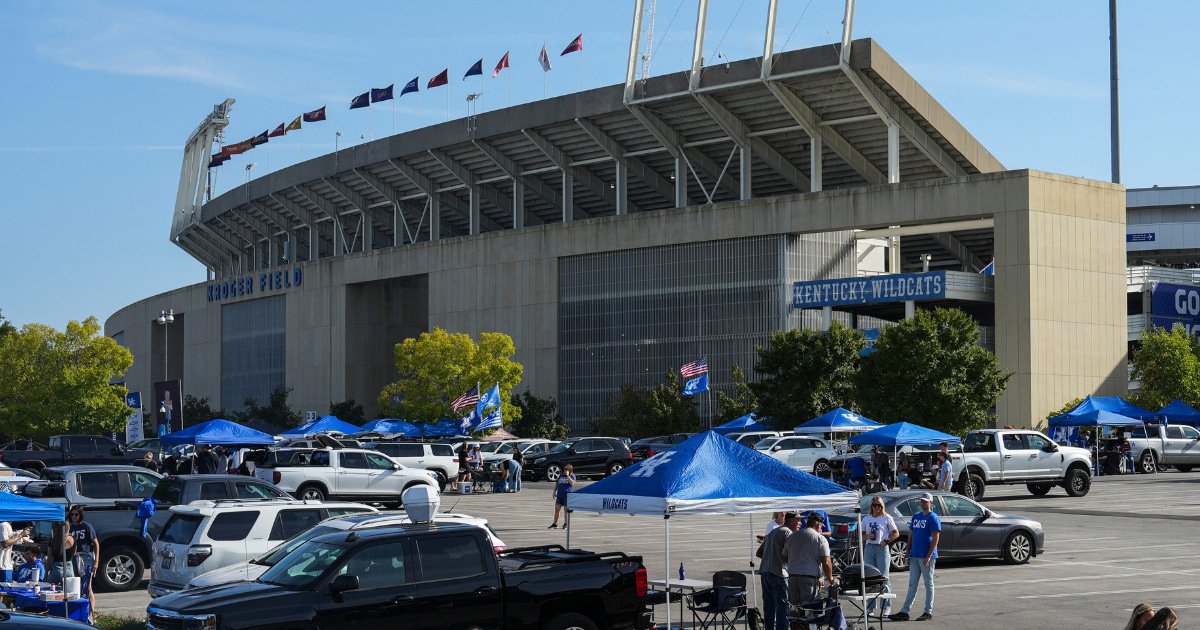
The University of Kentucky is advancing a campus development system that aims to convert the area around Kroger Field in Lexington into a year-round commercial and entertainment district, with the ‘Cooper Connector’ proposal emerging as the most transformative and disruptive option under consideration.
The plan is part of a broader university strategy to monetize and activate South Campus spaces beyond football game days.
It is being developed through UK’s athletics-linked operating structure and planning teams, which have been evaluating multiple design concepts for a mixed-use district featuring retail, dining, hospitality, and public gathering spaces.
The Cooper Connector proposal specifically targets the north side of Kroger Field along Cooper Drive, directly integrating stadium-adjacent land into a continuous entertainment corridor.
What is confirmed is that the Cooper Connector concept would require substantial physical redevelopment of the current footprint.
The design envisions new construction on both sides of Cooper Drive, alongside the introduction of green space, pedestrian zones, and structured parking.
It also includes the potential addition of a hotel and conference facilities intended to attract non-game-day traffic and create steady revenue streams throughout the year.
The goal is to connect the stadium more directly with the main campus while shifting the area from a primarily parking and institutional zone into a commercial destination.
A central and immediate consequence of the Cooper Connector option is the planned removal of the Bluegrass Community and Technical College facilities currently located on Cooper Drive.
Under the proposal, those buildings would be replaced as part of the redevelopment footprint, with the college expected to fully vacate the site by the end of 2026 as part of the transition process.
The land has been under UK control since a broader institutional land swap agreement completed in the late 2000s, which positioned the university for long-term expansion in this corridor.
The Cooper Connector is one of four competing concepts, but it is widely considered the most invasive because it reshapes the existing street grid and removes key current structures.
Alternative designs under review would concentrate development on the stadium’s west side or preserve more of the existing Cooper Drive configuration, but all versions share a common objective: turning Kroger Field into the anchor of a multi-use district with daily economic activity rather than an event-only venue.
The rationale behind the project reflects a wider shift in U.S. college athletics economics, where universities are increasingly building real estate assets around stadiums to generate stable revenue in response to rising operational costs and athlete compensation systems.
At Kentucky, officials have described the Cooper Drive corridor as underutilized despite its proximity to central campus and high traffic volumes, making it a target for retail activation and private investment.
Key design decisions remain in progress, including the placement of major facilities such as a proposed hotel and whether additional athletic infrastructure, such as a basketball practice facility, will be incorporated into this district or a separate nearby development zone.
Parking capacity, pedestrian access, and the impact on existing tailgating traditions are also unresolved structural issues that will shape the final layout.
If approved and funded, the Cooper Connector would represent a long-term restructuring of South Campus, replacing institutional and surface parking land with a dense mixed-use corridor.
The next phase of planning will determine final design selection, cost estimation, and sequencing for construction, setting the framework for how Kroger Field integrates into a year-round urban district rather than a seasonal sports venue.
The plan is part of a broader university strategy to monetize and activate South Campus spaces beyond football game days.
It is being developed through UK’s athletics-linked operating structure and planning teams, which have been evaluating multiple design concepts for a mixed-use district featuring retail, dining, hospitality, and public gathering spaces.
The Cooper Connector proposal specifically targets the north side of Kroger Field along Cooper Drive, directly integrating stadium-adjacent land into a continuous entertainment corridor.
What is confirmed is that the Cooper Connector concept would require substantial physical redevelopment of the current footprint.
The design envisions new construction on both sides of Cooper Drive, alongside the introduction of green space, pedestrian zones, and structured parking.
It also includes the potential addition of a hotel and conference facilities intended to attract non-game-day traffic and create steady revenue streams throughout the year.
The goal is to connect the stadium more directly with the main campus while shifting the area from a primarily parking and institutional zone into a commercial destination.
A central and immediate consequence of the Cooper Connector option is the planned removal of the Bluegrass Community and Technical College facilities currently located on Cooper Drive.
Under the proposal, those buildings would be replaced as part of the redevelopment footprint, with the college expected to fully vacate the site by the end of 2026 as part of the transition process.
The land has been under UK control since a broader institutional land swap agreement completed in the late 2000s, which positioned the university for long-term expansion in this corridor.
The Cooper Connector is one of four competing concepts, but it is widely considered the most invasive because it reshapes the existing street grid and removes key current structures.
Alternative designs under review would concentrate development on the stadium’s west side or preserve more of the existing Cooper Drive configuration, but all versions share a common objective: turning Kroger Field into the anchor of a multi-use district with daily economic activity rather than an event-only venue.
The rationale behind the project reflects a wider shift in U.S. college athletics economics, where universities are increasingly building real estate assets around stadiums to generate stable revenue in response to rising operational costs and athlete compensation systems.
At Kentucky, officials have described the Cooper Drive corridor as underutilized despite its proximity to central campus and high traffic volumes, making it a target for retail activation and private investment.
Key design decisions remain in progress, including the placement of major facilities such as a proposed hotel and whether additional athletic infrastructure, such as a basketball practice facility, will be incorporated into this district or a separate nearby development zone.
Parking capacity, pedestrian access, and the impact on existing tailgating traditions are also unresolved structural issues that will shape the final layout.
If approved and funded, the Cooper Connector would represent a long-term restructuring of South Campus, replacing institutional and surface parking land with a dense mixed-use corridor.
The next phase of planning will determine final design selection, cost estimation, and sequencing for construction, setting the framework for how Kroger Field integrates into a year-round urban district rather than a seasonal sports venue.