
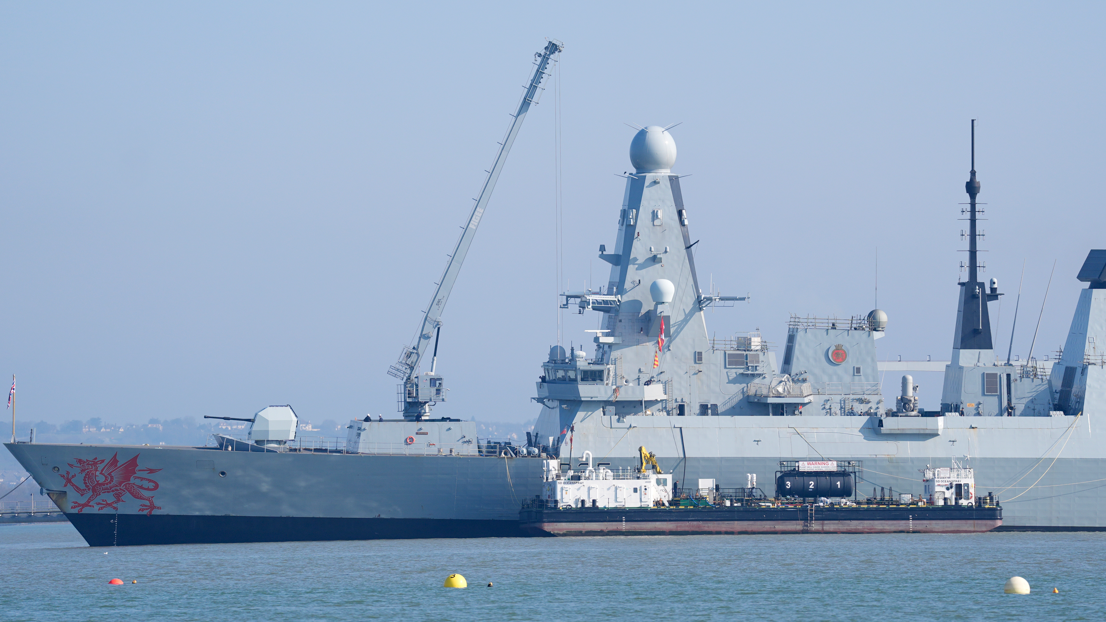

UK Deploys Jets, Warship and Drones to Protect Strait of Hormuz Shipping Route
London joins a multinational maritime security mission as tensions in the Gulf threaten global energy flows through one of the world’s most critical waterways.
The security of global maritime trade in the Strait of Hormuz is being shaped by a system-level defensive military coordination effort involving the United Kingdom and more than forty allied nations, as governments respond to sustained instability in one of the world’s most strategically sensitive shipping corridors.
What is confirmed is that the UK government has committed military assets including fighter jets, drones, and a warship to a multinational mission designed to protect commercial shipping through the Strait of Hormuz.
The announcement was made by the UK Defence Secretary John Healey at a virtual meeting of defence ministers, marking an expansion of Britain’s military posture in the Gulf region.
The Strait of Hormuz is a narrow maritime passage linking the Persian Gulf with the Arabian Sea and is widely recognised as one of the most important energy transit chokepoints in the world.
A significant share of global oil and liquefied natural gas shipments passes through it, making stability in the region a matter of direct economic consequence for importing and exporting states alike.
The UK contribution includes Typhoon fighter jets for air patrol operations, autonomous systems designed to detect and neutralise naval mines, and unmanned surface vessels intended for surveillance and maritime threat monitoring.
These systems are intended to reduce risks to commercial shipping and enhance early warning and defensive response capabilities.
In addition, the Royal Navy destroyer HMS Dragon, already deployed toward the Middle East, has been designated as part of the operational framework for the mission.
Another vessel, RFA Lyme Bay, is also being prepared with upgraded equipment that could be used if required for operations in the region.
The Ministry of Defence has also confirmed the deployment of additional funding, amounting to £115 million, to support mine-hunting drones and counter-drone systems.
The mission is described by UK officials as strictly defensive in nature, focused on safeguarding maritime trade routes rather than engaging in offensive operations.
The stated objective is to increase confidence among commercial shipping operators and reduce the risk of disruption in the waterway.
The broader regional context is defined by sustained tensions involving Iran, the United States, and allied states, which have contributed to periodic instability in Gulf shipping lanes.
The Strait of Hormuz has repeatedly been a focal point of geopolitical confrontation due to its strategic importance and the concentration of energy exports passing through it.
In recent months, maritime security in the region has been affected by competing military and diplomatic pressures, including incidents involving commercial vessels and heightened naval activity.
While various actors have accused each other of aggressive actions in the area, independent verification of specific incidents is often limited due to the complexity of maritime operations and contested narratives.
The UK government states that more than one thousand British personnel are already deployed in the wider Middle East region as part of existing defence commitments, including counter-drone operations and fast jet squadrons.
The new mission builds on this footprint by integrating additional allied capabilities into a coordinated multinational framework.
Politically, the announcement comes at a sensitive time domestically, with pressure on the UK government over internal party dynamics and broader questions of leadership stability.
However, officials have framed the deployment as part of long-standing commitments to international maritime security rather than a response to domestic political considerations.
The participation of more than forty countries reflects a growing trend toward collective security arrangements for critical maritime infrastructure, particularly in regions where energy supply chains intersect with geopolitical conflict.
These arrangements are increasingly dependent on technology-driven surveillance, rapid response systems, and shared intelligence networks.
For global markets, the stakes are immediate.
Any disruption in the Strait of Hormuz has the potential to affect energy prices, insurance costs for shipping, and broader supply chain stability.
Even the perception of elevated risk can lead to volatility in oil and gas markets.
The deployment therefore represents both a military posture and an economic stabilisation effort, aimed at ensuring continuity of global energy flows while deterring interference with commercial shipping.
Its effectiveness will depend on coordination among participating states and the ability to maintain deterrence without escalating existing regional tensions.
What is confirmed is that the UK government has committed military assets including fighter jets, drones, and a warship to a multinational mission designed to protect commercial shipping through the Strait of Hormuz.
The announcement was made by the UK Defence Secretary John Healey at a virtual meeting of defence ministers, marking an expansion of Britain’s military posture in the Gulf region.
The Strait of Hormuz is a narrow maritime passage linking the Persian Gulf with the Arabian Sea and is widely recognised as one of the most important energy transit chokepoints in the world.
A significant share of global oil and liquefied natural gas shipments passes through it, making stability in the region a matter of direct economic consequence for importing and exporting states alike.
The UK contribution includes Typhoon fighter jets for air patrol operations, autonomous systems designed to detect and neutralise naval mines, and unmanned surface vessels intended for surveillance and maritime threat monitoring.
These systems are intended to reduce risks to commercial shipping and enhance early warning and defensive response capabilities.
In addition, the Royal Navy destroyer HMS Dragon, already deployed toward the Middle East, has been designated as part of the operational framework for the mission.
Another vessel, RFA Lyme Bay, is also being prepared with upgraded equipment that could be used if required for operations in the region.
The Ministry of Defence has also confirmed the deployment of additional funding, amounting to £115 million, to support mine-hunting drones and counter-drone systems.
The mission is described by UK officials as strictly defensive in nature, focused on safeguarding maritime trade routes rather than engaging in offensive operations.
The stated objective is to increase confidence among commercial shipping operators and reduce the risk of disruption in the waterway.
The broader regional context is defined by sustained tensions involving Iran, the United States, and allied states, which have contributed to periodic instability in Gulf shipping lanes.
The Strait of Hormuz has repeatedly been a focal point of geopolitical confrontation due to its strategic importance and the concentration of energy exports passing through it.
In recent months, maritime security in the region has been affected by competing military and diplomatic pressures, including incidents involving commercial vessels and heightened naval activity.
While various actors have accused each other of aggressive actions in the area, independent verification of specific incidents is often limited due to the complexity of maritime operations and contested narratives.
The UK government states that more than one thousand British personnel are already deployed in the wider Middle East region as part of existing defence commitments, including counter-drone operations and fast jet squadrons.
The new mission builds on this footprint by integrating additional allied capabilities into a coordinated multinational framework.
Politically, the announcement comes at a sensitive time domestically, with pressure on the UK government over internal party dynamics and broader questions of leadership stability.
However, officials have framed the deployment as part of long-standing commitments to international maritime security rather than a response to domestic political considerations.
The participation of more than forty countries reflects a growing trend toward collective security arrangements for critical maritime infrastructure, particularly in regions where energy supply chains intersect with geopolitical conflict.
These arrangements are increasingly dependent on technology-driven surveillance, rapid response systems, and shared intelligence networks.
For global markets, the stakes are immediate.
Any disruption in the Strait of Hormuz has the potential to affect energy prices, insurance costs for shipping, and broader supply chain stability.
Even the perception of elevated risk can lead to volatility in oil and gas markets.
The deployment therefore represents both a military posture and an economic stabilisation effort, aimed at ensuring continuity of global energy flows while deterring interference with commercial shipping.
Its effectiveness will depend on coordination among participating states and the ability to maintain deterrence without escalating existing regional tensions.