
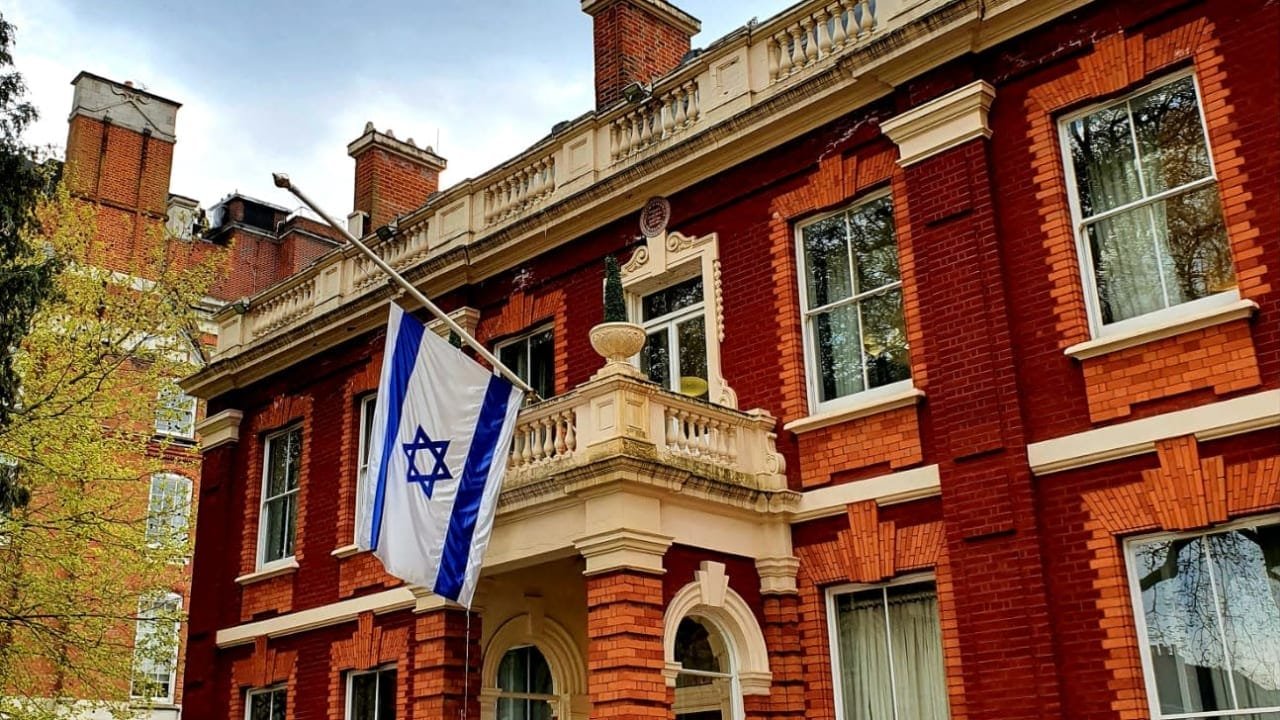
UK Man Charged Over Alleged Threats to Israeli Embassy, Muslim Organisations and MP’s Office
Police say messages targeted diplomatic, community and political institutions, raising renewed concerns over politically motivated harassment and security threats in Britain
A man in the United Kingdom has been charged in connection with alleged threatening communications sent to multiple high-profile targets, including the Israeli embassy, Muslim organisations, and the constituency office of a Member of Parliament.
The case has drawn attention because it spans diplomatic, community, and political institutions, all of which are considered sensitive under UK public safety and counter-extremism frameworks.
What is confirmed is that law enforcement authorities have brought charges related to the sending of threatening messages.
The alleged communications reportedly targeted at least three categories of institutions: a foreign diplomatic mission, religious or community organisations representing Muslim groups, and the local office of a sitting UK parliamentarian.
The legal process is now underway, and the individual concerned is subject to judicial proceedings.
The mechanism of the case fits a broader category of offences involving malicious communications and threats transmitted via digital or written channels.
In the UK, such offences are typically prosecuted when messages are deemed to cause fear or distress, or when they are considered credible enough to warrant protective action by law enforcement or security services.
The involvement of multiple types of targets is significant.
Diplomatic missions such as the Israeli embassy are protected under international law and are typically under heightened security due to their symbolic and geopolitical importance.
Muslim organisations, depending on their profile, may represent religious communities that have also faced documented threats and harassment in recent years.
Parliamentary constituency offices are similarly treated as protected political infrastructure due to their role in democratic representation.
The case sits within a wider context of increasing concern in the UK over politically and religiously motivated threats.
Law enforcement agencies have reported rising workloads related to hate-related incidents, particularly during periods of international conflict or domestic political tension.
However, the present case is distinct in that it spans multiple categories of target rather than focusing on a single ideological or institutional group.
At this stage, the charges represent allegations that must be tested in court.
The legal standard requires the prosecution to demonstrate that the communications were threatening in nature and met the threshold for criminal liability under relevant statutes governing malicious communications and public order offences.
Security implications extend beyond the individual case.
Incidents involving threats to diplomatic missions can trigger enhanced coordination between domestic police units and foreign security services.
Similarly, threats directed at elected representatives and community organisations can lead to increased protective measures, including surveillance, security assessments, and in some cases temporary restrictions on access to premises.
The broader policy environment in the UK has increasingly focused on the regulation of online and offline harassment, particularly where threats intersect with political expression or religious identity.
Authorities face the challenge of distinguishing between protected speech and criminal communication while maintaining proportional enforcement.
The outcome of the case will depend on judicial proceedings, which will determine both the factual basis of the allegations and whether the legal threshold for conviction is met.
Regardless of outcome, the case contributes to an ongoing pattern of heightened sensitivity around threats directed at institutions linked to politics, diplomacy, and community representation in the UK.
The case has drawn attention because it spans diplomatic, community, and political institutions, all of which are considered sensitive under UK public safety and counter-extremism frameworks.
What is confirmed is that law enforcement authorities have brought charges related to the sending of threatening messages.
The alleged communications reportedly targeted at least three categories of institutions: a foreign diplomatic mission, religious or community organisations representing Muslim groups, and the local office of a sitting UK parliamentarian.
The legal process is now underway, and the individual concerned is subject to judicial proceedings.
The mechanism of the case fits a broader category of offences involving malicious communications and threats transmitted via digital or written channels.
In the UK, such offences are typically prosecuted when messages are deemed to cause fear or distress, or when they are considered credible enough to warrant protective action by law enforcement or security services.
The involvement of multiple types of targets is significant.
Diplomatic missions such as the Israeli embassy are protected under international law and are typically under heightened security due to their symbolic and geopolitical importance.
Muslim organisations, depending on their profile, may represent religious communities that have also faced documented threats and harassment in recent years.
Parliamentary constituency offices are similarly treated as protected political infrastructure due to their role in democratic representation.
The case sits within a wider context of increasing concern in the UK over politically and religiously motivated threats.
Law enforcement agencies have reported rising workloads related to hate-related incidents, particularly during periods of international conflict or domestic political tension.
However, the present case is distinct in that it spans multiple categories of target rather than focusing on a single ideological or institutional group.
At this stage, the charges represent allegations that must be tested in court.
The legal standard requires the prosecution to demonstrate that the communications were threatening in nature and met the threshold for criminal liability under relevant statutes governing malicious communications and public order offences.
Security implications extend beyond the individual case.
Incidents involving threats to diplomatic missions can trigger enhanced coordination between domestic police units and foreign security services.
Similarly, threats directed at elected representatives and community organisations can lead to increased protective measures, including surveillance, security assessments, and in some cases temporary restrictions on access to premises.
The broader policy environment in the UK has increasingly focused on the regulation of online and offline harassment, particularly where threats intersect with political expression or religious identity.
Authorities face the challenge of distinguishing between protected speech and criminal communication while maintaining proportional enforcement.
The outcome of the case will depend on judicial proceedings, which will determine both the factual basis of the allegations and whether the legal threshold for conviction is met.
Regardless of outcome, the case contributes to an ongoing pattern of heightened sensitivity around threats directed at institutions linked to politics, diplomacy, and community representation in the UK.