
UK Surveillance Aircraft ‘Dangerously Intercepted’ by Russian Jets Over Black Sea
Defense ministry reports close encounter during reconnaissance mission, highlighting rising airspace tensions near NATO’s eastern frontier
An event-driven military encounter over the Black Sea involving a United Kingdom surveillance aircraft and Russian fighter jets has intensified concerns over aerial safety and escalation risks near NATO’s eastern perimeter.
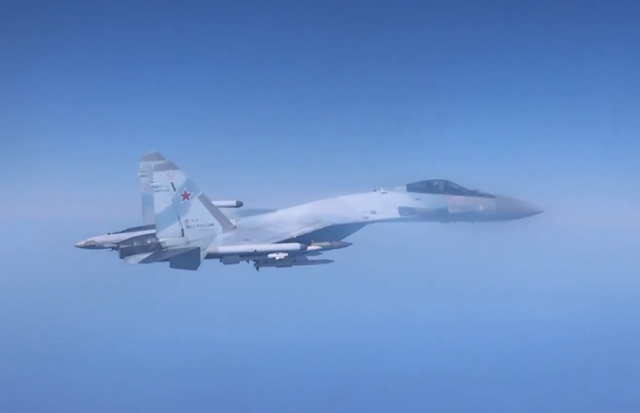
What is confirmed is that a UK Royal Air Force reconnaissance aircraft operating in international airspace over the Black Sea was intercepted by Russian military jets in what the UK defense ministry described as a “dangerously close” encounter.
The interception occurred during a routine intelligence-gathering mission in a region that has become increasingly militarized since Russia’s full-scale invasion of Ukraine.
The Black Sea has emerged as one of the most sensitive operational theatres in Europe’s security landscape.
It borders Ukraine, Russia, Turkey, Romania, Bulgaria and Georgia, making it a critical corridor for both commercial shipping and military surveillance activity.
NATO member states, including the United Kingdom, regularly conduct reconnaissance flights in international airspace to monitor Russian naval and air activity.
In this incident, the UK aircraft was reportedly flying in international airspace when Russian fighter jets approached at close range.
The term “interception” in military aviation refers to the practice of one aircraft approaching another to identify, monitor or deter it.
While interceptions are common in contested or high-surveillance zones, the risk level is determined by proximity, speed, communication and maneuvering behavior.
The UK defense ministry characterized the encounter as unsafe due to the closeness of the approach, suggesting that the Russian jets conducted maneuvers that increased the risk of mid-air collision.
Such incidents are typically assessed against established international protocols designed to prevent escalation between military aircraft operating near each other outside sovereign airspace.
Russia has frequently contested NATO reconnaissance activity near its borders and over adjacent international waters, arguing that such missions increase regional tension and risk miscalculation.
Western militaries, in turn, maintain that these flights occur legally in international airspace and are essential for monitoring military developments, especially during active conflict involving Ukraine.
The Black Sea region has seen a steady rise in military encounters since 2022, including drone activity, naval incidents, and repeated aerial intercepts.
Air forces on both sides operate under heightened alert conditions, increasing the probability of close-range encounters even when no hostile intent is declared.
For NATO members, surveillance missions in this area provide real-time intelligence on Russian naval deployments, air defense systems, and missile activity.
These missions also serve a deterrence function by demonstrating persistent allied presence near contested zones.
For Russia, intercepting foreign military aircraft is a way to assert control over its perceived security perimeter and signal opposition to Western surveillance operations near its strategic approaches, particularly those linked to Crimea and southern naval bases.
While no physical contact or damage was reported in the incident, such encounters are closely monitored because even minor deviations in altitude, speed or trajectory can lead to accidental escalation.
Military aviation authorities typically review these events to assess compliance with international safety norms and to adjust future operational procedures.
The latest encounter underscores how routine intelligence flights in peacetime airspace boundaries have become embedded in a broader pattern of military signaling between NATO and Russia.
Each interception adds to a cumulative environment of tension in which miscalculation remains a persistent operational risk.
What is confirmed is that a UK Royal Air Force reconnaissance aircraft operating in international airspace over the Black Sea was intercepted by Russian military jets in what the UK defense ministry described as a “dangerously close” encounter.
The interception occurred during a routine intelligence-gathering mission in a region that has become increasingly militarized since Russia’s full-scale invasion of Ukraine.
The Black Sea has emerged as one of the most sensitive operational theatres in Europe’s security landscape.
It borders Ukraine, Russia, Turkey, Romania, Bulgaria and Georgia, making it a critical corridor for both commercial shipping and military surveillance activity.
NATO member states, including the United Kingdom, regularly conduct reconnaissance flights in international airspace to monitor Russian naval and air activity.
In this incident, the UK aircraft was reportedly flying in international airspace when Russian fighter jets approached at close range.
The term “interception” in military aviation refers to the practice of one aircraft approaching another to identify, monitor or deter it.
While interceptions are common in contested or high-surveillance zones, the risk level is determined by proximity, speed, communication and maneuvering behavior.
The UK defense ministry characterized the encounter as unsafe due to the closeness of the approach, suggesting that the Russian jets conducted maneuvers that increased the risk of mid-air collision.
Such incidents are typically assessed against established international protocols designed to prevent escalation between military aircraft operating near each other outside sovereign airspace.
Russia has frequently contested NATO reconnaissance activity near its borders and over adjacent international waters, arguing that such missions increase regional tension and risk miscalculation.
Western militaries, in turn, maintain that these flights occur legally in international airspace and are essential for monitoring military developments, especially during active conflict involving Ukraine.
The Black Sea region has seen a steady rise in military encounters since 2022, including drone activity, naval incidents, and repeated aerial intercepts.
Air forces on both sides operate under heightened alert conditions, increasing the probability of close-range encounters even when no hostile intent is declared.
For NATO members, surveillance missions in this area provide real-time intelligence on Russian naval deployments, air defense systems, and missile activity.
These missions also serve a deterrence function by demonstrating persistent allied presence near contested zones.
For Russia, intercepting foreign military aircraft is a way to assert control over its perceived security perimeter and signal opposition to Western surveillance operations near its strategic approaches, particularly those linked to Crimea and southern naval bases.
While no physical contact or damage was reported in the incident, such encounters are closely monitored because even minor deviations in altitude, speed or trajectory can lead to accidental escalation.
Military aviation authorities typically review these events to assess compliance with international safety norms and to adjust future operational procedures.
The latest encounter underscores how routine intelligence flights in peacetime airspace boundaries have become embedded in a broader pattern of military signaling between NATO and Russia.
Each interception adds to a cumulative environment of tension in which miscalculation remains a persistent operational risk.