

What data Apple and Google collect on you
Your iPhone and Android device are constantly collecting data about your activity. Some of it is obvious, such as your location data if you opt to use Google Maps or Apple Apps.
Some of it is unclear, such as the telemetry data – that often can’t be turned off – sent by iOS and Android.
So, though you can opt out of some things, it’s not always straightforward. And what is shared and how it is shared is not always obvious.
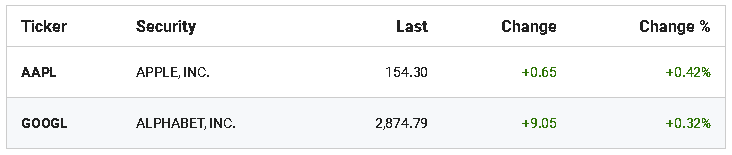
A study by Douglas J. Leith, School of Computer Science & Statistics, Trinity College Dublin, Ireland, claims that "Google collects around 20 times more handset data than Apple."
When an iPhone and Google Pixel phone are idle, a Pixel sends about 1MB of data to Google every 12 hours versus the iPhone that sends 52KB to Apple, the study said.
"Both iOS and Google Android transmit telemetry, despite the user explicitly opting out of this," according to the study.
"The big question for me is what information is contained in the large volume of telemetry that Google collects," Leith told FOX Business in an email.
"That telemetry aside, based on my measurements Google and Apple collect much the same sorts of data. I found that surprising since I expected Apple would collect less data," Leith said.
FOX Business has reached out to Google and Apple about the study.
One of the most important lessons for users is to be on constant guard about how companies use your data.
Though Google is planning to phase out third-party cookies on Chrome and Apple introduced enhanced consent and transparency requirements on iOS, that’s not the whole story, Shane McNamee, chief privacy officer at computer security company Avast, told FOX Business.
"So, [while] it's good that the amount of excessive data sharing is being reined in, this is only part of the battle towards moving away from excessive data collection and problematic targeted advertising models," McNamee said.
How to control what data Apple and Google are collecting
The best way to get a handle on what Apple and Google are doing with your data is to dive into settings on your Google and Apple accounts and devices.
Once inside, it doesn’t take long to see what data is being collected and how to turn it off if that option is available.
Google:
 Apple and Google both collect data about you – including some that you’re probably not aware of.
Go to your Google Account (https://myaccount.google.com/).
Click or tap on Privacy & Personalization (or Data & Privacy, depending on the device).
Then go to "Things you can create and do" and click on "Go to Google Dashboard."
The dashboard has a plethora of data, settings and help with your services.
You can also download a copy of your data there.
Another option is to go to Google Privacy Checkup. This shows key privacy settings that have been turned on. You have the option to turn them off.
Google provides this common example of enabling or disabling a data sharing feature in Google user settings:
"If you have enabled Location History and regularly frequent ski resorts, you might later see an ad for ski equipment when watching a video on YouTube. Google also uses Location History in an anonymized and aggregated manner, for users who have chosen to opt-in to it, to help advertisers measure how often an online ad campaign helps drive traffic to physical stores or properties. We do not share Location History or any other identifying information with advertisers."
Android phones such as the Google Pixel also allow the user to tweak settings under "Privacy." There you can opt out of services such as "Ads Personalization" and "Web and App Activity" and "Location History."
Apple:
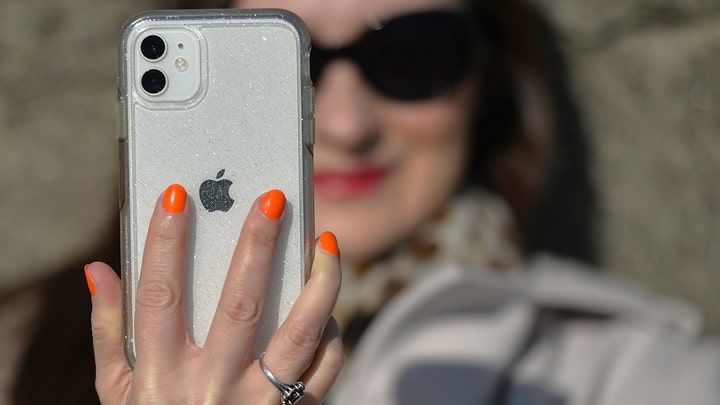 Your iPhone and Android device are constantly collecting data about your activity.
Go to your Apple account (appleid.apple.com) and scroll to Data & Privacy. Then tap or click on Manage Your Data and Privacy.
There you will see options such as "Request a copy of your data" and "Correct your data."
But be warned. If you request a copy of your data, it will be a dense document and not easy to wade through.
One of the best ways to control what data Apple uses is to go into the "Privacy" setting on your iPhone or other Apple device.
There you can turn off "Location Services" and "Tracking" for apps.
Or, under "Settings," you can tap on the app directly and turn off tracking. For example, for the Safari browser you have the option to turn off tracking and to block cookies.
The guidelines spelled out above are just a start but steps that every consumer should take.
"Whilst it's true that Google is often portrayed as the boogeyman of data collection, and Apple as the privacy knight in shining armor, it's probably worth throwing a more critical eye over both of their data collection practices," Avast’s McNamee said.











