

What’s really going on with Covid deaths data?
That's because some people die with Covid rather than from it.
The Omicron wave is driving rising infections, which means more people will catch it and some will get sick.
Deaths will inevitably increase too, but not all will be "true" Covid ones. Others will be people who happened to test positive.
There are a number of ways we monitor the number of deaths connected to Covid. The most prominent is the daily count of anyone who has died within 28 days of testing positive.
For the vast majority of those people, Covid has been the primary cause of their death.
But there has always been a minority who died from another cause. And with Omicron infecting so many people, there is a higher likelihood of people dying from an unrelated reason in the month after testing positive than there has been in the past.
Doctors registering a death record what may have contributed to it, and what most likely caused it.
If Covid contributed in some way, that's a death "involving Covid". The number of these deaths has tracked the daily death count closely throughout most of the pandemic.
During autumn and the run-up to Christmas, only about 15% of deaths involving Covid in England and Wales did not list Covid as the cause.
In the week after Christmas, that rose to 22%.
And in the coming weeks "we might expect that to rise further" says Cambridge statistician Prof Sir David Spiegelhalter "reflecting the very high levels of people with coronavirus".
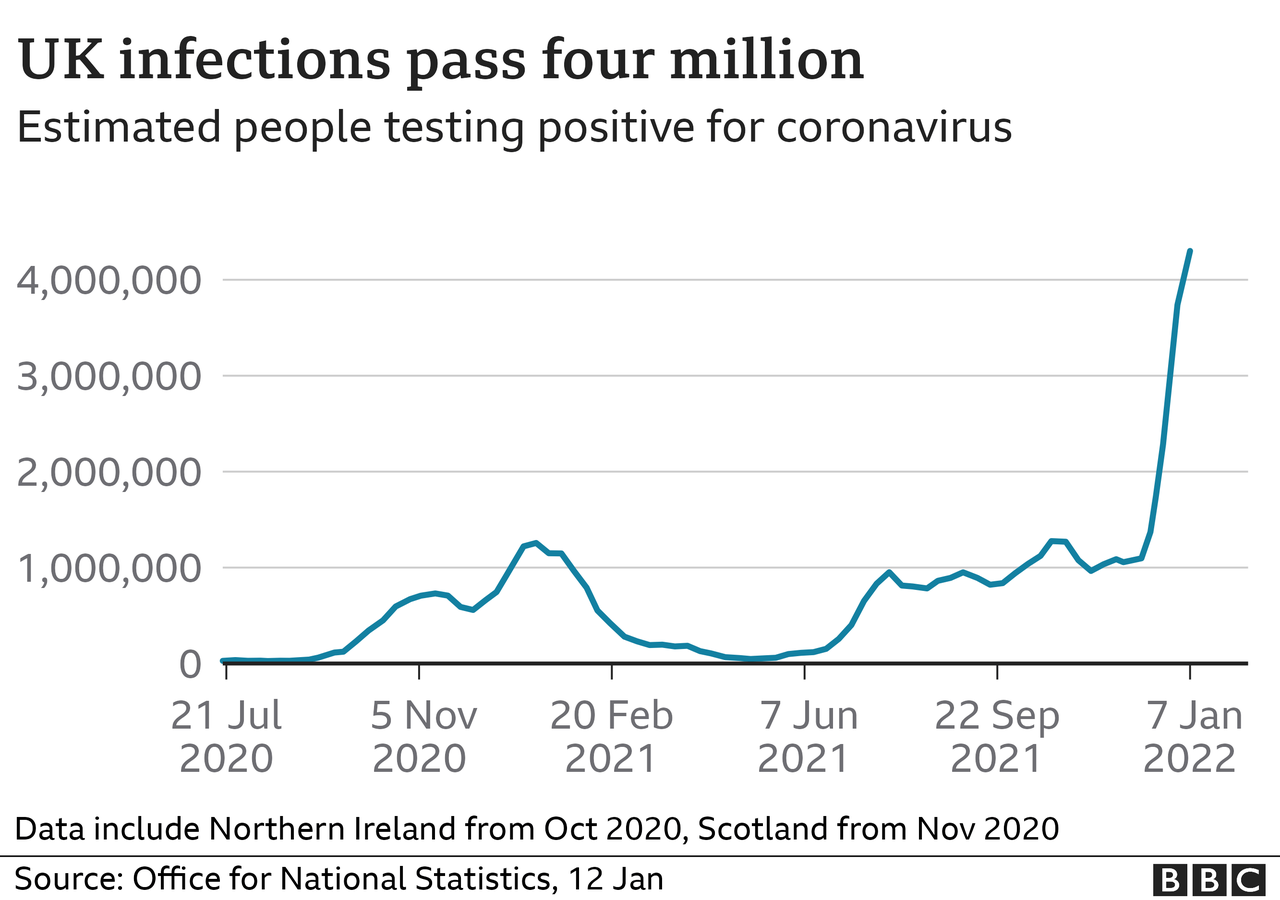
About 4.3 million people in the UK have coronavirus at the moment - a historically high level - and four times more than at the start of December.
So the number of people who might happen to test positive for coronavirus in the month before their death is likely to be on the rise too.
This wasn't as much of an issue when fewer people had coronavirus.
But at the moment you might expect to see, very roughly, about 55 of these "coincidental" Covid deaths a day, based on the roughly 2,000 people who die each day in the winter months - and the nearly 6% of people in the UK who have tested positive in the past four weeks (mostly young people at lower risk of dying).
Current figures show, on average, nearly 210 people are dying each day within 28 days of a positive test, up from 110 just before Christmas.
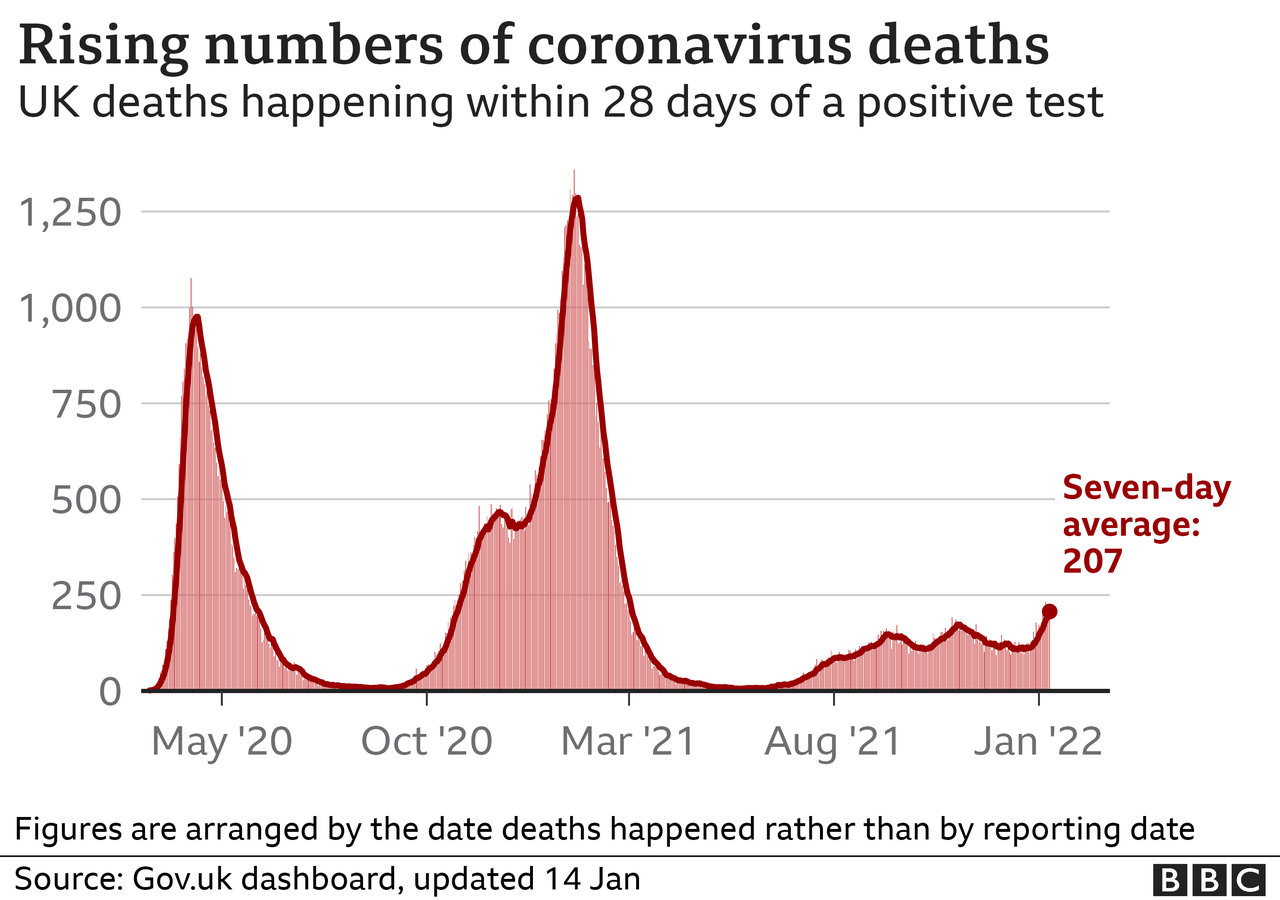
So a small portion of the daily Covid deaths would be "coincidental", but the rise in this type of death would account for nearly half of the rise we've seen in Covid deaths since Christmas.
The daily death figure will be a tricky measure to follow in the coming weeks says Prof Sylvia Richardson, president of the Royal Statistical Society, since it can be so influenced by how many people have tested positive recently.
She thinks the number of deaths caused by coronavirus, based on death registrations, is the "best number to watch".
That requires patience. Deaths that happen this week may not be registered until next week, and not reported for another week or two after that. So they take longer to arrive.
But they will increasingly become our best picture of Covid's sad death toll.











