

WHO says Covid still 'very dangerous virus' and we're only at 'halfway mark'
The World Health Organisation has hit back at suggestions that Britain should learn to live with Covid-19 “like it does flu”.
Dr David Nabarro, the WHO’s special envoy for Covid-19, suggested we may be “just passing the halfway mark” of the pandemic, with a number of dangerous new variants still to emerge.
He told Sky News: “I keep wondering what the people who make these amazing predictions know that I and my colleagues in the World Health Organisation don’t know.
“You see, what people are seeing from around the world and reporting to the WHO is this is still a very, very dangerous virus, especially for people who have not been vaccinated and who’ve not been exposed to it before.
“It can also mutate and form variants and we’ve seen several but we know there are more not far away.
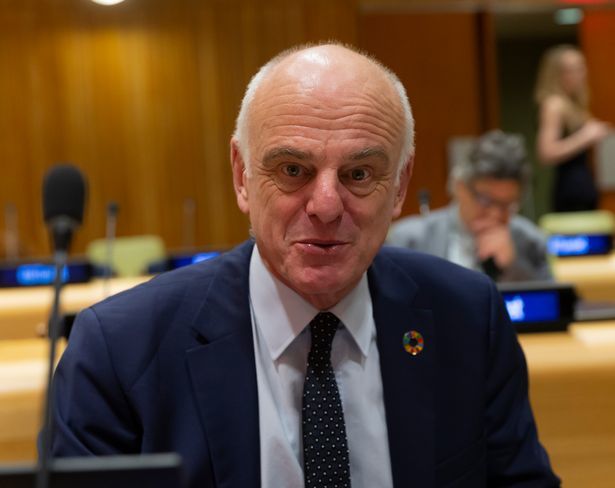 Dr. David Nabarro
“So quite honestly, we are not saying that this should be considered to be like flu or indeed like anything else.
“It’s a new virus, and we must go on treating it as though it is full of surprises, very nasty and rather cunning.”
The Government has removed the legal requirement to wear masks and has declared the UK has passed the Omicron peak.
Tory backbenchers are pressuring the Government to do away with remaining Covid-19 rules such as the requirement to self-isolate.
Asked whether the end of the pandemic is in sight for the countries in Europe, Dr Nabarro said: “The end is in sight, but how long is it going to take to get there? What sort of difficulties will we face on the way?
“Those are the questions that none of us can answer because this virus continues to give us challenges and surprises.”
He added: “It’s as though we’re just passing the halfway mark in a marathon and we can see that yes, there is an end and fast runners are getting through ahead of us.
“But we’ve still got a long, long way to trudge and it’s going to be tough.”
Yesterday(Mon) the UK reported 88,447 more confirmed Covid-19 cases and 56 deaths within 28 days of a positive test.
Last week PM Boris Johnson told MPs: “There will soon come a time when we can remove the legal requirement to self-isolate altogether, just as we don’t place legal obligations on people to isolate if they have flu.”
Health Secretary Sajid Javid said: “Sadly, people die of flu as well. In a bad flu year, you can sadly lose about 20,000 lives, but we don’t shut down our entire country and put in place lots of restrictions to deal with it.
“We need to continue with our lives with sensible, appropriate and proportionate measures.”
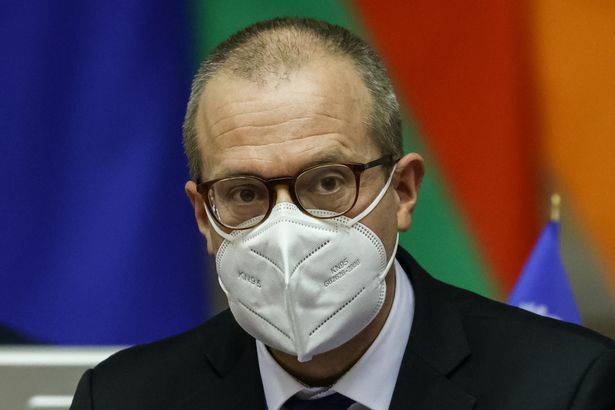 World Health Organisation Regional Director for Europe Hans Henri P. Kluge
At a press conference in Germany yesterday(Mon), WHO head Tedros Adhanom Ghebreyesus said: “The COVID-19 pandemic is now entering its third year and we are at a critical juncture.
“We must work together to bring the acute phase of this pandemic to an end. We cannot let it continue to drag on, lurching between panic and neglect.”
Dr Hans Henri Kluge, WHO regional director for Europe, said: “The pandemic is far from over, but I am hopeful we can end the emergency phase in 2022.”
A Government adviser said it is not certain the viruses become less severe over time.
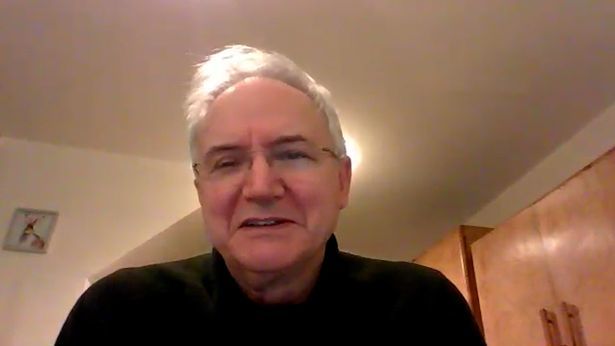 Professor Peter Openshaw who has been made a CBE for services to medicine and immunology in the New Year Honours
Prof Peter Openshaw, a member of the New and Emerging Respiratory Virus Threats Advisory Group (Nervtag), said: “We have no way of concluding that viruses have to become less severe over time.
“It could be the next variant - and there will be another - could be more severe for all we know.
“There’s no rule about this.”
He said reinfections - where somebody tests positive again after a previous bout of Covid - are increasing.
“Omicron and sub-lineages of them are able to escape previous immunity so they are going to increase in number over time,” he added.
Scientists are concerned that a new variant, dubbed Stealth Omicron, could spread faster than the original version.
The strain, named Omicron BA.2, has been identified more than 420 times in the UK since November, with cases multiplying in some parts of Europe and India.
BA.2 was last week classified as a “variant under investigation” by the UK Health Security Agency (UKHSA).
Data suggests that Denmark is currently the epicentre of the new variant, with more than 6,400 confirmed cases.
Virologist Dr Tom Peacock, from Imperial College London, said: “Even with slightly higher transmissibility this absolutely is not a Delta to Omicron change, and instead is likely to be slower and more subtle.
“That said, I would not be surprised if BA.2 slowly replaces [Omicron] over the coming months with a slightly more “optimised” mutations.’”











