Algeria’s Parliament Passes Law Declaring French Colonisation a Crime
It is unclear why a law is needed to define what should be self-evident: that any form of colonialism, whether French or British, is a crime against humanity — one that existed in the past and continues to persist in far too many countries even today.
Algeria’s parliament has unanimously passed a landmark law declaring France’s colonisation of the country from 1830 until 1962 a crime, and formally demanding an apology and reparations from Paris.
The move underscores deepening tensions between the two nations as diplomatic relations remain strained.
During the vote at the National People’s Assembly in Algiers, lawmakers wearing scarves in the colours of the Algerian flag chanted “Long live Algeria” before adopting the legislation.
Parliament Speaker Brahim Boughali said the law sends a “clear message, both internally and externally, that Algeria’s national memory is neither erasable nor negotiable”.
The bill holds that France bears “legal responsibility for its colonial past in Algeria and the tragedies it caused”.
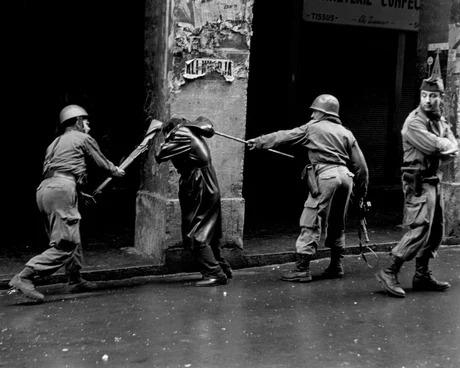
The law catalogues what it calls the “crimes of French colonialism,” including nuclear tests in the Algerian Sahara, extrajudicial killings, physical and psychological torture, and the systematic plunder of Algeria’s resources.
It asserts that “full and fair compensation for all material and moral damages caused by French colonisation is an inalienable right of the Algerian state and people”.
Although largely symbolic and without enforceable international legal force over France, the legislation is politically significant, reflecting a long-standing desire in Algeria to frame colonialism not just as historical wrongdoing but as a state crime requiring legal and moral redress.
Analysts note that the law could further strain already fraught relations, with France’s government indicating that it will not apologise for the colonial period and has stressed that it will not comment on internal political debates in other countries.
Some provisions in the broader bill — reported by multiple outlets — also seek to criminalise the “glorification” or justification of colonialism in media and public discourse, introducing prison sentences and fines for those convicted of promoting colonial nostalgia.
While these aspects reinforce the symbolic nature of the legislation, legal experts say they are unlikely to compel direct action by France without bilateral agreements or new international mechanisms.
The adoption of this law comes amid broader diplomatic friction, including disagreements over regional geopolitical issues such as Western Sahara, and ongoing debates about migration and historical memory.
President Abdelmadjid Tebboune’s government has framed the measure as part of Algeria’s sovereign right to protect its national narrative and seek historical justice, even as critics argue it may complicate efforts to normalise relations with Paris.
The move underscores deepening tensions between the two nations as diplomatic relations remain strained.
During the vote at the National People’s Assembly in Algiers, lawmakers wearing scarves in the colours of the Algerian flag chanted “Long live Algeria” before adopting the legislation.
Parliament Speaker Brahim Boughali said the law sends a “clear message, both internally and externally, that Algeria’s national memory is neither erasable nor negotiable”.
The bill holds that France bears “legal responsibility for its colonial past in Algeria and the tragedies it caused”.
The law catalogues what it calls the “crimes of French colonialism,” including nuclear tests in the Algerian Sahara, extrajudicial killings, physical and psychological torture, and the systematic plunder of Algeria’s resources.
It asserts that “full and fair compensation for all material and moral damages caused by French colonisation is an inalienable right of the Algerian state and people”.
Although largely symbolic and without enforceable international legal force over France, the legislation is politically significant, reflecting a long-standing desire in Algeria to frame colonialism not just as historical wrongdoing but as a state crime requiring legal and moral redress.
Analysts note that the law could further strain already fraught relations, with France’s government indicating that it will not apologise for the colonial period and has stressed that it will not comment on internal political debates in other countries.
Some provisions in the broader bill — reported by multiple outlets — also seek to criminalise the “glorification” or justification of colonialism in media and public discourse, introducing prison sentences and fines for those convicted of promoting colonial nostalgia.
While these aspects reinforce the symbolic nature of the legislation, legal experts say they are unlikely to compel direct action by France without bilateral agreements or new international mechanisms.
The adoption of this law comes amid broader diplomatic friction, including disagreements over regional geopolitical issues such as Western Sahara, and ongoing debates about migration and historical memory.
President Abdelmadjid Tebboune’s government has framed the measure as part of Algeria’s sovereign right to protect its national narrative and seek historical justice, even as critics argue it may complicate efforts to normalise relations with Paris.