British Cruise Passengers Isolated After Suspected Hantavirus Exposure Raises Public Health Concerns
Health authorities have placed returning travellers under hospital isolation following suspected exposure to a rare rodent-borne virus during a cruise voyage, triggering monitoring and containment measures.
Public health authorities have placed a group of British passengers under hospital isolation after suspected exposure to hantavirus during a cruise voyage, in an incident that has prompted precautionary monitoring measures and renewed scrutiny of infection control on international passenger ships.
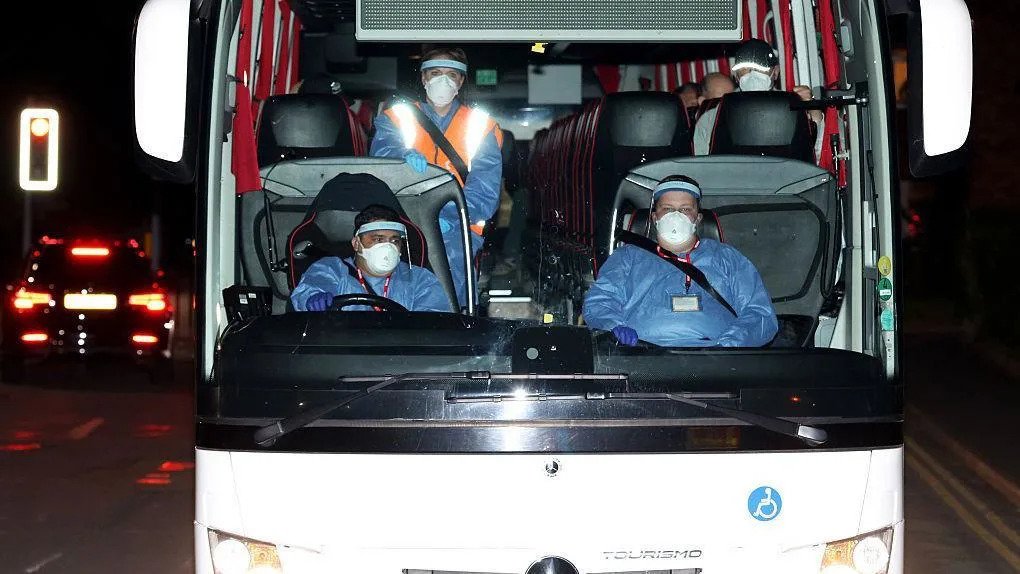
What is confirmed is that the passengers, recently returned from a cruise, have been admitted to hospital isolation facilities while medical assessments and infectious disease screening are carried out.
The action reflects standard containment protocols used when a potentially serious zoonotic virus exposure is identified in a confined travel environment.
Hantavirus is a group of viruses primarily transmitted to humans through contact with infected rodents or their droppings.
In rare cases, infection can lead to severe respiratory or renal complications.
Human-to-human transmission is generally not considered common for most hantavirus strains, which makes exposure events typically linked to environmental contamination rather than direct person-to-person spread.
The suspected link to a cruise ship raises operational questions about sanitation controls in enclosed travel environments, where large numbers of passengers share air systems, dining areas, and accommodation spaces.
Even when risk remains low, such environments are treated cautiously because infectious disease events can escalate quickly if undetected.
Medical teams are conducting diagnostic testing to confirm whether any of the passengers have contracted the virus.
At the same time, contact tracing protocols are being applied to identify individuals who may require observation.
Cruise operators typically cooperate with health authorities in these scenarios by providing passenger manifests, cabin records, and movement data from onboard systems.
The immediate public health priority is containment rather than treatment escalation, reflecting the precautionary principle used in suspected exposure events.
Isolation in controlled medical settings allows clinicians to monitor symptoms during the incubation window while preventing any potential secondary spread in community settings.
The broader implication is heightened sensitivity around infectious disease risks in global travel networks.
Cruise ships, in particular, remain a focal point for regulators because they combine extended close-contact environments with international passenger movement, requiring coordinated response protocols across jurisdictions.
The passengers remain under hospital supervision as testing and monitoring procedures continue, with health authorities maintaining isolation measures until clinical assessments are completed and exposure risk is formally assessed.
What is confirmed is that the passengers, recently returned from a cruise, have been admitted to hospital isolation facilities while medical assessments and infectious disease screening are carried out.
The action reflects standard containment protocols used when a potentially serious zoonotic virus exposure is identified in a confined travel environment.
Hantavirus is a group of viruses primarily transmitted to humans through contact with infected rodents or their droppings.
In rare cases, infection can lead to severe respiratory or renal complications.
Human-to-human transmission is generally not considered common for most hantavirus strains, which makes exposure events typically linked to environmental contamination rather than direct person-to-person spread.
The suspected link to a cruise ship raises operational questions about sanitation controls in enclosed travel environments, where large numbers of passengers share air systems, dining areas, and accommodation spaces.
Even when risk remains low, such environments are treated cautiously because infectious disease events can escalate quickly if undetected.
Medical teams are conducting diagnostic testing to confirm whether any of the passengers have contracted the virus.
At the same time, contact tracing protocols are being applied to identify individuals who may require observation.
Cruise operators typically cooperate with health authorities in these scenarios by providing passenger manifests, cabin records, and movement data from onboard systems.
The immediate public health priority is containment rather than treatment escalation, reflecting the precautionary principle used in suspected exposure events.
Isolation in controlled medical settings allows clinicians to monitor symptoms during the incubation window while preventing any potential secondary spread in community settings.
The broader implication is heightened sensitivity around infectious disease risks in global travel networks.
Cruise ships, in particular, remain a focal point for regulators because they combine extended close-contact environments with international passenger movement, requiring coordinated response protocols across jurisdictions.
The passengers remain under hospital supervision as testing and monitoring procedures continue, with health authorities maintaining isolation measures until clinical assessments are completed and exposure risk is formally assessed.