Starmer Faces Internal Revolt as Labour Shifts Left in Bid to Stabilise Leadership
UK Prime Minister Keir Starmer is under intense pressure after election losses and party unrest, prompting a policy pivot leftward and renewed debate over Labour’s direction.
The driver of the current political crisis in the United Kingdom is an actor-driven struggle inside the governing Labour Party over the leadership and direction of Prime Minister Keir Starmer, triggered by electoral setbacks and accelerating internal dissent.
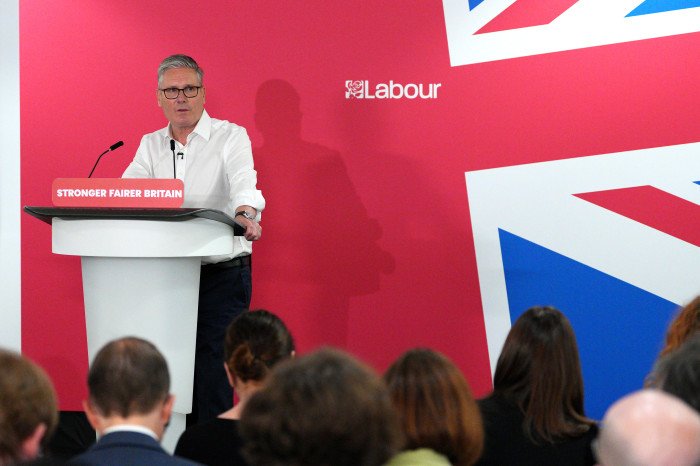
Starmer is facing one of the most serious internal challenges since taking office after Labour’s landslide victory in 2024. A wave of poor local election results across England, Scotland, and Wales has weakened his authority and triggered open revolt among members of his own party.
In response, Starmer has begun shifting his policy stance leftward in an attempt to contain growing dissatisfaction and prevent a formal leadership challenge.
The political pressure is now multi-layered.
More than 60 Labour MPs have publicly or privately called for him to set a timeline for departure, while others have gone further by demanding an immediate change in leadership direction.
Senior party figures and ministers have also been drawn into the dispute, with some signalling openness to a future transition if the party’s polling and internal cohesion do not recover.
The internal rebellion is being driven by both ideological and electoral concerns.
Labour’s losses in local elections have been accompanied by gains for rival parties on both the right and left, including Reform UK and the Greens, suggesting fragmentation of its voter base.
This has intensified fears among Labour MPs that the party could struggle to retain its governing majority at the next general election unless its strategy changes.
In response, Starmer has begun repositioning Labour’s agenda.
Public messaging and policy signals have included stronger emphasis on state intervention in industry, including proposals linked to the steel sector, as well as a renewed focus on public services and cost-of-living pressures.
The government has also indicated a more explicitly pro-European stance in foreign and economic policy, though without reopening formal debate on rejoining the European Union.
The internal dispute is complicated by structural constraints within Labour’s leadership system.
While discontent is widespread, triggering a formal leadership contest requires the backing of a significant portion of the parliamentary party, making immediate removal difficult.
As a result, the current crisis is unfolding as a prolonged internal pressure campaign rather than a rapid leadership change.
Financial and political analysts have warned that the instability carries broader risks for governance.
Policy reversals, leadership uncertainty, and visible party division could affect investor confidence and complicate the government’s ability to pass long-term economic reforms.
At the same time, Starmer’s defenders argue that sudden leadership change would deepen instability and risk electoral punishment in the future.
The outcome of the current struggle will shape not only the future of Starmer’s leadership but also the ideological identity of the Labour Party.
Whether the shift leftward stabilises the party or accelerates internal fragmentation will determine its competitiveness heading into the next national election cycle, currently expected in 2029.
Starmer is facing one of the most serious internal challenges since taking office after Labour’s landslide victory in 2024. A wave of poor local election results across England, Scotland, and Wales has weakened his authority and triggered open revolt among members of his own party.
In response, Starmer has begun shifting his policy stance leftward in an attempt to contain growing dissatisfaction and prevent a formal leadership challenge.
The political pressure is now multi-layered.
More than 60 Labour MPs have publicly or privately called for him to set a timeline for departure, while others have gone further by demanding an immediate change in leadership direction.
Senior party figures and ministers have also been drawn into the dispute, with some signalling openness to a future transition if the party’s polling and internal cohesion do not recover.
The internal rebellion is being driven by both ideological and electoral concerns.
Labour’s losses in local elections have been accompanied by gains for rival parties on both the right and left, including Reform UK and the Greens, suggesting fragmentation of its voter base.
This has intensified fears among Labour MPs that the party could struggle to retain its governing majority at the next general election unless its strategy changes.
In response, Starmer has begun repositioning Labour’s agenda.
Public messaging and policy signals have included stronger emphasis on state intervention in industry, including proposals linked to the steel sector, as well as a renewed focus on public services and cost-of-living pressures.
The government has also indicated a more explicitly pro-European stance in foreign and economic policy, though without reopening formal debate on rejoining the European Union.
The internal dispute is complicated by structural constraints within Labour’s leadership system.
While discontent is widespread, triggering a formal leadership contest requires the backing of a significant portion of the parliamentary party, making immediate removal difficult.
As a result, the current crisis is unfolding as a prolonged internal pressure campaign rather than a rapid leadership change.
Financial and political analysts have warned that the instability carries broader risks for governance.
Policy reversals, leadership uncertainty, and visible party division could affect investor confidence and complicate the government’s ability to pass long-term economic reforms.
At the same time, Starmer’s defenders argue that sudden leadership change would deepen instability and risk electoral punishment in the future.
The outcome of the current struggle will shape not only the future of Starmer’s leadership but also the ideological identity of the Labour Party.
Whether the shift leftward stabilises the party or accelerates internal fragmentation will determine its competitiveness heading into the next national election cycle, currently expected in 2029.