
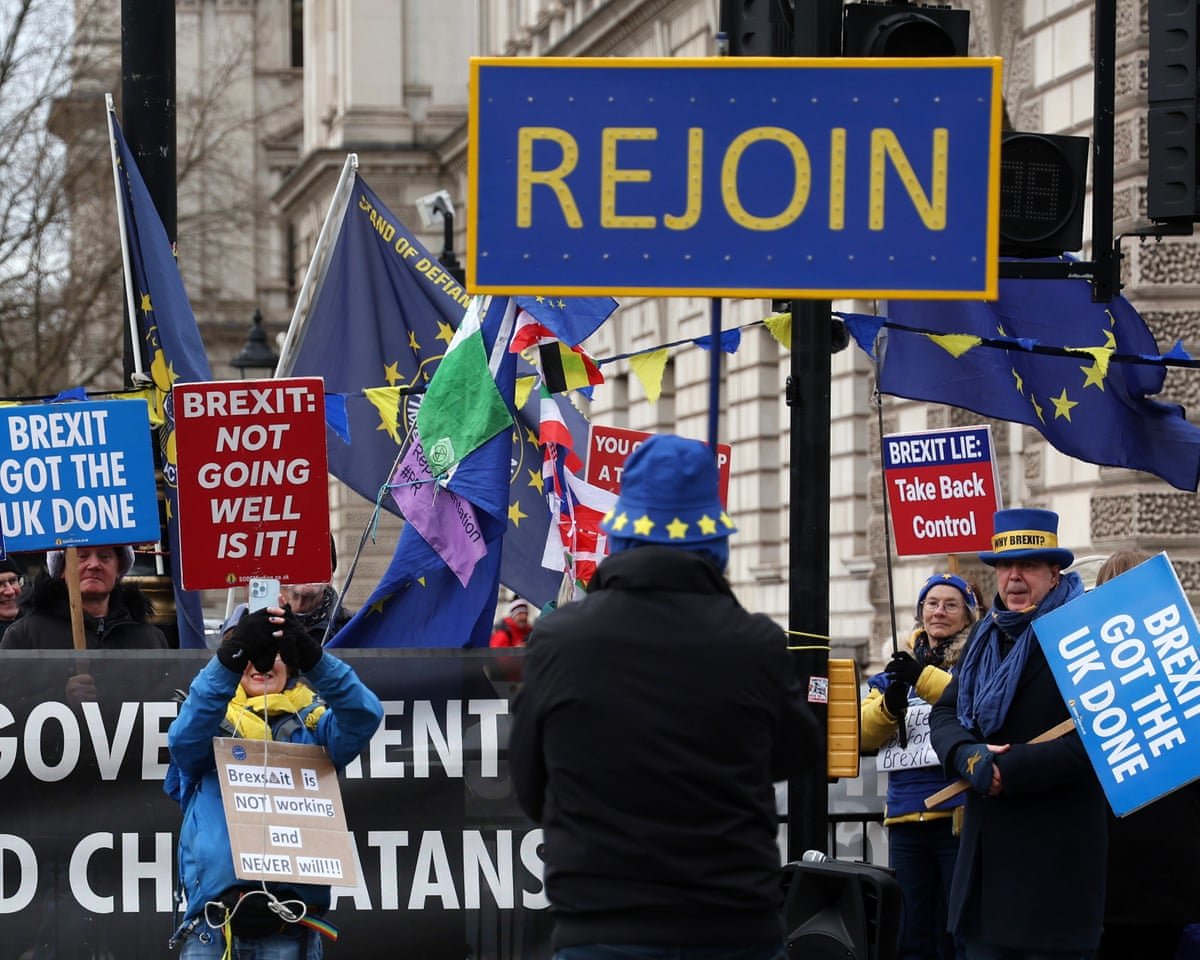
Rejoin, Reset or Swiss-Style Deal: The UK’s Next Brexit Question Comes Into Focus
As economic and political pressures evolve, debate intensifies over whether Britain should deepen EU ties, rebuild trade cooperation, or adopt a looser bilateral model
The structure of the United Kingdom’s relationship with the European Union remains a system-driven constitutional and economic question, shaped by the long-term consequences of Brexit and the limited scope of the current Trade and Cooperation Agreement.
At the centre of renewed political debate is whether the existing framework represents a stable endpoint or a transitional arrangement that may eventually be replaced by deeper integration, a partial reset, or a model resembling Switzerland’s network of bilateral treaties with the EU.
What is confirmed is that the UK has left the European Union’s single market and customs union, resulting in new trade frictions, regulatory divergence, and additional administrative costs for businesses operating across borders.
These structural changes are not temporary and continue to shape investment decisions, labour mobility, and supply chain design.
The current agreement governs tariff-free trade in most goods but provides limited coverage in services, which remain a dominant sector of the UK economy.
The debate over future options has increasingly focused on three broad pathways.
The first is full rejoining of the EU, which would restore single market and customs union membership but would require significant political reversal and acceptance of EU regulatory and institutional obligations.
The second is a negotiated “reset,” often framed as incremental improvements to the existing agreement, potentially including closer alignment in areas such as food standards, energy cooperation, or professional mobility.
The third is a Swiss-style arrangement, involving a dense network of sector-specific agreements that allow partial access to EU markets in exchange for regulatory alignment without full membership.
Each model carries distinct trade-offs.
Full rejoining would maximise economic integration but would also require acceptance of freedom of movement and supranational legal authority, both of which remain politically sensitive in the UK. A limited reset would be easier to achieve politically but would likely deliver only marginal economic gains compared with the current framework.
A Swiss-style approach would offer flexibility but would introduce complexity, requiring continuous negotiation and alignment without guaranteed access to decision-making structures inside the EU.
The stakes are shaped by broader economic pressures, including productivity growth, labour shortages in key sectors, and the UK’s need to maintain export competitiveness in a fragmented global trading environment.
Businesses that trade heavily with the EU continue to report regulatory costs linked to border checks, compliance requirements, and differences in standards.
At the same time, political constraints mean that any major shift in direction would require sustained public consent and parliamentary alignment.
The direction of travel will ultimately depend on how UK governments interpret the long-term balance between sovereignty and economic integration.
While no immediate policy shift has been confirmed, the persistence of economic friction and the evolving political debate ensure that the question of how far the UK should move back toward European alignment remains open and structurally unresolved, shaping future negotiations and domestic policy choices.
At the centre of renewed political debate is whether the existing framework represents a stable endpoint or a transitional arrangement that may eventually be replaced by deeper integration, a partial reset, or a model resembling Switzerland’s network of bilateral treaties with the EU.
What is confirmed is that the UK has left the European Union’s single market and customs union, resulting in new trade frictions, regulatory divergence, and additional administrative costs for businesses operating across borders.
These structural changes are not temporary and continue to shape investment decisions, labour mobility, and supply chain design.
The current agreement governs tariff-free trade in most goods but provides limited coverage in services, which remain a dominant sector of the UK economy.
The debate over future options has increasingly focused on three broad pathways.
The first is full rejoining of the EU, which would restore single market and customs union membership but would require significant political reversal and acceptance of EU regulatory and institutional obligations.
The second is a negotiated “reset,” often framed as incremental improvements to the existing agreement, potentially including closer alignment in areas such as food standards, energy cooperation, or professional mobility.
The third is a Swiss-style arrangement, involving a dense network of sector-specific agreements that allow partial access to EU markets in exchange for regulatory alignment without full membership.
Each model carries distinct trade-offs.
Full rejoining would maximise economic integration but would also require acceptance of freedom of movement and supranational legal authority, both of which remain politically sensitive in the UK. A limited reset would be easier to achieve politically but would likely deliver only marginal economic gains compared with the current framework.
A Swiss-style approach would offer flexibility but would introduce complexity, requiring continuous negotiation and alignment without guaranteed access to decision-making structures inside the EU.
The stakes are shaped by broader economic pressures, including productivity growth, labour shortages in key sectors, and the UK’s need to maintain export competitiveness in a fragmented global trading environment.
Businesses that trade heavily with the EU continue to report regulatory costs linked to border checks, compliance requirements, and differences in standards.
At the same time, political constraints mean that any major shift in direction would require sustained public consent and parliamentary alignment.
The direction of travel will ultimately depend on how UK governments interpret the long-term balance between sovereignty and economic integration.
While no immediate policy shift has been confirmed, the persistence of economic friction and the evolving political debate ensure that the question of how far the UK should move back toward European alignment remains open and structurally unresolved, shaping future negotiations and domestic policy choices.