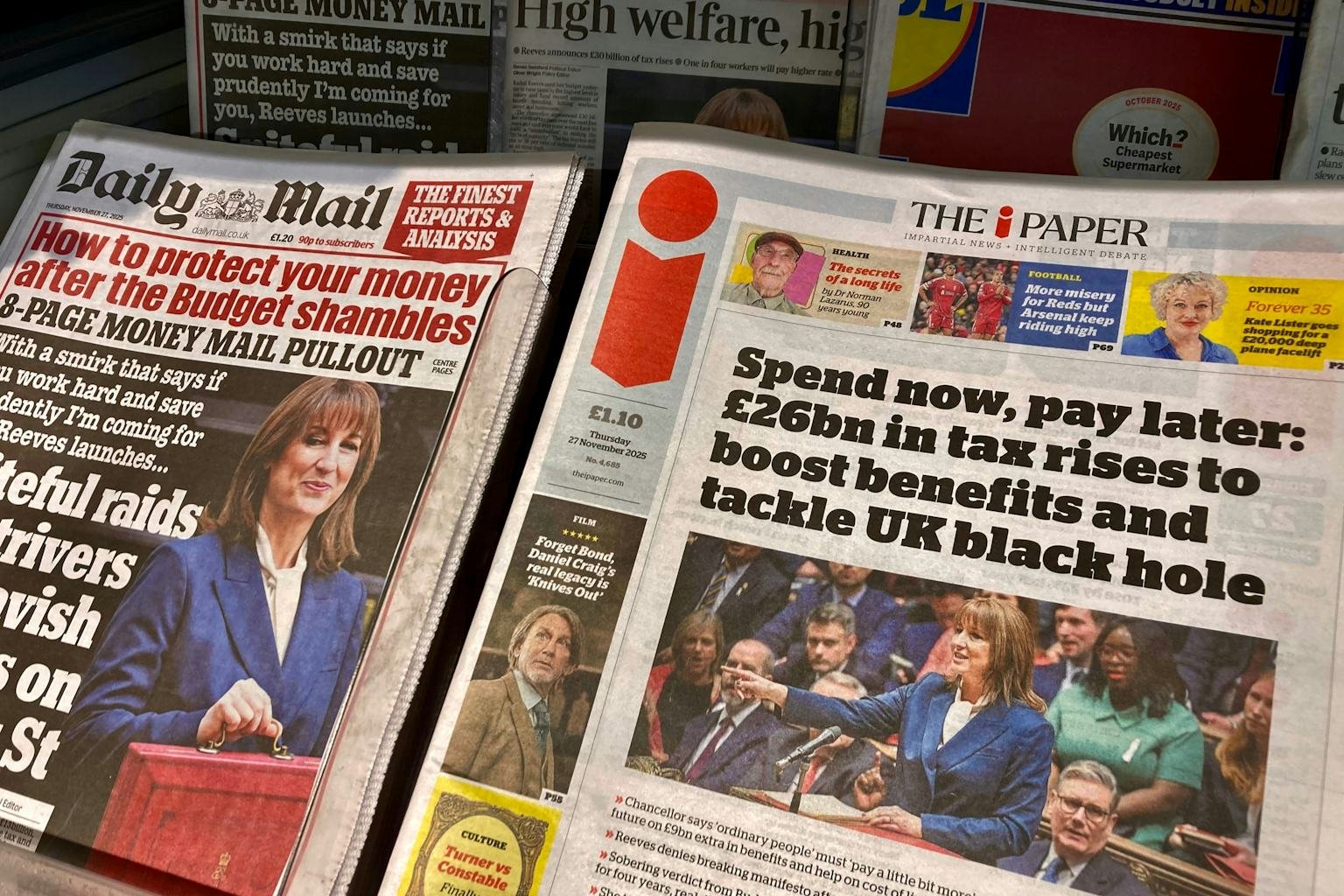
UK Confronts Fundamental Choice: High Taxes Fueling Welfare or Lower Taxes for Growth
With record tax hikes and sweeping welfare reforms, Britain now faces a pivotal decision over its national identity: a high-tax welfare state or a leaner, low-tax economy
Britain stands at a crossroads following the 2025 Autumn Budget, as the government rolls out a sweeping fiscal plan that dramatically raises taxes while simultaneously expanding welfare provision.
The result is a stark question for the nation: does it want to be a high-tax, high-welfare society — or shift toward lower taxes and leaner government?
Chancellor of the Exchequer Rachel Reeves announced that tax policy changes are expected to raise some £26.6 billion by 2030–31, pushing the tax take to about 38 percent of GDP. This marks one of the largest tax increases by a UK government in recent history.
The revenue boost is designed to fund expanded social spending, especially welfare and benefits.
Key among the measures is the scrapping of the two-child limit on certain family benefits under Universal Credit — a reversal intended to lift hundreds of thousands of children out of poverty.
The measure is expected to cost roughly £3 billion annually and is projected to lift about 450,000 children out of poverty over the next several years.
Defenders of the budget argue that the expanded welfare provisions — including strengthened child benefits, support for childcare costs, and other measures for low-income families — reflect a commitment to social fairness and long-term investment in the country’s social fabric.
This approach seeks to modernize welfare by supporting families in hardship and redistributing resources from higher earners to more vulnerable households.
Yet critics, both political and economic, warn that burdening households and businesses with higher taxes may undercut economic growth, discourage investment, and reduce work incentives.
Some economic studies now argue that high-tax, high-spend welfare systems have failed to deliver superior welfare outcomes compared with lower-tax economies.
One recent analysis suggests that low-tax countries such as Switzerland, Japan, and South Korea now lead in welfare quality rankings — while high-tax nations, including the UK, have seen their welfare performance decline despite rising tax burdens.
This dynamic has revived a long-standing debate over national direction: whether Britain should accept higher taxes to fund robust social welfare, or scale back welfare ambitions and reduce taxes to foster growth, productivity, and private-sector initiative.
The choice has deep implications for social equality, public services, business investment, and overall economic vitality.
As households begin to feel the impact of both tax hikes and welfare reforms, the coming years may reveal which path — high-tax welfare or lower-tax growth — the UK chooses to follow.
The result is a stark question for the nation: does it want to be a high-tax, high-welfare society — or shift toward lower taxes and leaner government?
Chancellor of the Exchequer Rachel Reeves announced that tax policy changes are expected to raise some £26.6 billion by 2030–31, pushing the tax take to about 38 percent of GDP. This marks one of the largest tax increases by a UK government in recent history.
The revenue boost is designed to fund expanded social spending, especially welfare and benefits.
Key among the measures is the scrapping of the two-child limit on certain family benefits under Universal Credit — a reversal intended to lift hundreds of thousands of children out of poverty.
The measure is expected to cost roughly £3 billion annually and is projected to lift about 450,000 children out of poverty over the next several years.
Defenders of the budget argue that the expanded welfare provisions — including strengthened child benefits, support for childcare costs, and other measures for low-income families — reflect a commitment to social fairness and long-term investment in the country’s social fabric.
This approach seeks to modernize welfare by supporting families in hardship and redistributing resources from higher earners to more vulnerable households.
Yet critics, both political and economic, warn that burdening households and businesses with higher taxes may undercut economic growth, discourage investment, and reduce work incentives.
Some economic studies now argue that high-tax, high-spend welfare systems have failed to deliver superior welfare outcomes compared with lower-tax economies.
One recent analysis suggests that low-tax countries such as Switzerland, Japan, and South Korea now lead in welfare quality rankings — while high-tax nations, including the UK, have seen their welfare performance decline despite rising tax burdens.
This dynamic has revived a long-standing debate over national direction: whether Britain should accept higher taxes to fund robust social welfare, or scale back welfare ambitions and reduce taxes to foster growth, productivity, and private-sector initiative.
The choice has deep implications for social equality, public services, business investment, and overall economic vitality.
As households begin to feel the impact of both tax hikes and welfare reforms, the coming years may reveal which path — high-tax welfare or lower-tax growth — the UK chooses to follow.