UK Identifies Newly Evolved Mpox Variant After Traveller Tests Positive
Health officials confirm recombinant strain and strengthen surveillance while maintaining low overall public risk
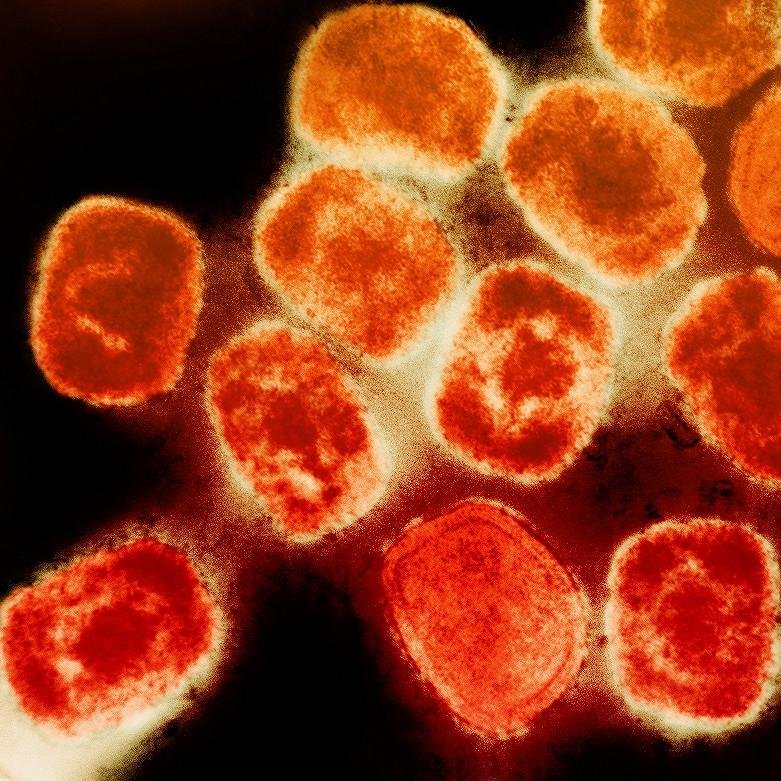
Health authorities in the United Kingdom have confirmed the detection of a newly evolved variant of mpox in England, identified through genomic sequencing after an individual who recently travelled to Asia tested positive.
The strain carries genetic components from both the more severe clade 1b and the globally circulating clade 2b, forming what scientists classify as a recombinant mpox variant.
Officials described the finding as a significant development that underscores the virus’s capacity to adapt and evolve.
Public health teams have begun tracing contacts linked to the case, offering testing and vaccination where appropriate.
Authorities are urging the public to remain attentive to symptoms such as fever, rash and swollen lymph nodes, while emphasising that the overall risk to the wider population remains low.
The United Kingdom’s established diagnostic capabilities, existing vaccine supplies and experience from previous outbreaks provide substantial protection against broader transmission.
Experts note that viral recombination can occur when different strains circulate simultaneously, a possibility heightened by increased global travel and more frequent movement between regions where mpox remains present.
The emergence of this new variant has therefore prompted renewed calls for robust genomic monitoring and coordinated international reporting.
Officials stressed that the discovery serves as an early warning rather than a sign of widespread threat.
Surveillance systems are being reinforced, and health agencies are maintaining close communication with global partners to assess any potential change in transmissibility or disease severity.
While the situation continues to be monitored closely, current evidence indicates that existing public health tools remain effective against this newly detected strain.
The strain carries genetic components from both the more severe clade 1b and the globally circulating clade 2b, forming what scientists classify as a recombinant mpox variant.
Officials described the finding as a significant development that underscores the virus’s capacity to adapt and evolve.
Public health teams have begun tracing contacts linked to the case, offering testing and vaccination where appropriate.
Authorities are urging the public to remain attentive to symptoms such as fever, rash and swollen lymph nodes, while emphasising that the overall risk to the wider population remains low.
The United Kingdom’s established diagnostic capabilities, existing vaccine supplies and experience from previous outbreaks provide substantial protection against broader transmission.
Experts note that viral recombination can occur when different strains circulate simultaneously, a possibility heightened by increased global travel and more frequent movement between regions where mpox remains present.
The emergence of this new variant has therefore prompted renewed calls for robust genomic monitoring and coordinated international reporting.
Officials stressed that the discovery serves as an early warning rather than a sign of widespread threat.
Surveillance systems are being reinforced, and health agencies are maintaining close communication with global partners to assess any potential change in transmissibility or disease severity.
While the situation continues to be monitored closely, current evidence indicates that existing public health tools remain effective against this newly detected strain.