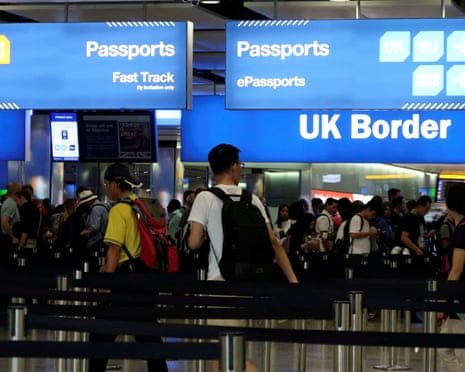
UK Immigration System Transitions Fully Digital with eVisas and Mandatory ETAs from February 2026
Britain phases out physical visa stickers and enforces advance digital authorisations in a major overhaul of border controls and immigration procedures
The United Kingdom is implementing a landmark transformation of its immigration and border system with a fully digital framework set to take effect in February 2026. From 25 February, all visitors who previously travelled visa-free to the UK from more than eighty-five countries, including the United States, European Union member states, Canada and Australia, must obtain an Electronic Travel Authorisation or an eVisa before boarding.
This requirement marks the first time the UK will enforce a universal digital permission to travel, signalling a significant modernisation of immigration procedures and aligning the UK with other major travel-authorisation systems globally.
The UK Home Office has also confirmed that physical visa labels, passport vignette stickers, biometric residence permits and other paper-based immigration documentation will be replaced entirely by eVisas — online records of a person’s immigration status accessible via a UK Visas and Immigration account.
Applicants for visas across work, study, family and settlement categories have already begun transitioning to the digital system, with new applicants from earlier phases receiving eVisas in place of traditional stickers.
The shift is designed to improve security, streamline verification at borders, reduce the risk of lost or tampered documents, and offer greater convenience for travellers and long-term visa holders alike.
In addition, dual British citizens and those with Certificate of Entitlement status will see the introduction of digital certificates that link their nationality entitlements to their online account, simplifying travel documentation.
Carriers such as airlines will be responsible for checking travellers’ authorisations before departure, moving the point of compliance upstream from the UK border.
The Home Office has emphasised that carriers will refuse boarding to anyone without the appropriate electronic permissions after the enforcement date.
While the digital transition creates new requirements for passengers and migrants, government officials have characterised the changes as enhancing border security and better managing immigration in a connected world, supporting the UK’s status as a safe and efficient destination for visitors, students and skilled workers.
This requirement marks the first time the UK will enforce a universal digital permission to travel, signalling a significant modernisation of immigration procedures and aligning the UK with other major travel-authorisation systems globally.
The UK Home Office has also confirmed that physical visa labels, passport vignette stickers, biometric residence permits and other paper-based immigration documentation will be replaced entirely by eVisas — online records of a person’s immigration status accessible via a UK Visas and Immigration account.
Applicants for visas across work, study, family and settlement categories have already begun transitioning to the digital system, with new applicants from earlier phases receiving eVisas in place of traditional stickers.
The shift is designed to improve security, streamline verification at borders, reduce the risk of lost or tampered documents, and offer greater convenience for travellers and long-term visa holders alike.
In addition, dual British citizens and those with Certificate of Entitlement status will see the introduction of digital certificates that link their nationality entitlements to their online account, simplifying travel documentation.
Carriers such as airlines will be responsible for checking travellers’ authorisations before departure, moving the point of compliance upstream from the UK border.
The Home Office has emphasised that carriers will refuse boarding to anyone without the appropriate electronic permissions after the enforcement date.
While the digital transition creates new requirements for passengers and migrants, government officials have characterised the changes as enhancing border security and better managing immigration in a connected world, supporting the UK’s status as a safe and efficient destination for visitors, students and skilled workers.