Trump’s Greenland Tariff Threat Sparks EU Response and Risks Deep Transatlantic Rift
European Union capitals weigh triggering €93 billion in counter-tariffs as President Trump’s threat to levy duties over Greenland sovereignty escalates tensions with NATO allies
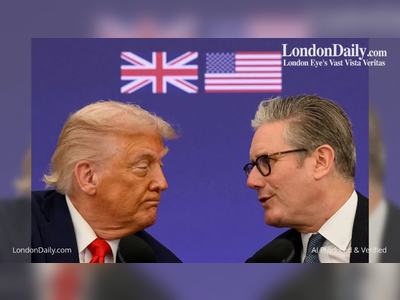
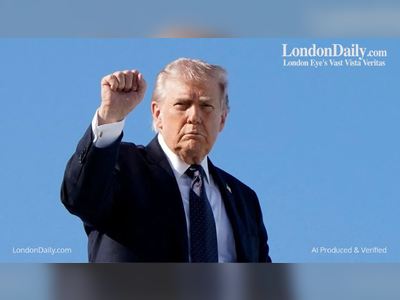
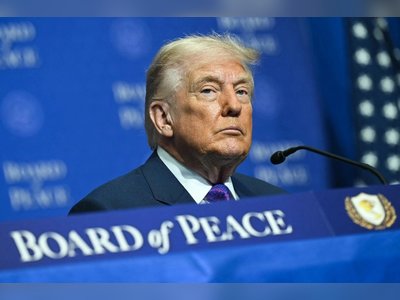
President Donald Trump has announced sweeping tariff measures against eight European allies in a dramatic escalation of his bid to press for U.S. interests in Greenland, prompting unified diplomatic pushback and plans in Brussels for significant counter-measures.
Speaking from Florida, Mr Trump said he will impose a ten per cent tariff from February on imports from Denmark, Norway, Sweden, France, Germany, the United Kingdom, the Netherlands and Finland — to rise to twenty-five per cent in June — unless an agreement is reached for the “complete and total purchase of Greenland,” a semi-autonomous territory of NATO ally Denmark that he argues is vital to U.S. national security.
European governments rejected the proposition forcefully, terming their support for Denmark’s sovereignty and Arctic security cooperation a matter for NATO and diplomatic dialogue, not economic coercion.
Massive “Hands off Greenland” protests erupted simultaneously in Nuuk and cities across Denmark, drawing thousands of participants asserting that the island is not for sale and underscoring public resistance to the proposals from Washington.
European Union capitals are now considering a calibrated response that could include imposing counter-tariffs on up to €93 billion of U.S. goods, a package developed previously during earlier trade disputes and now under renewed review as a deterrent to American economic pressure.
French President Emmanuel Macron urged fellow EU leaders to activate the bloc’s powerful anti-coercion instrument, known informally as the “trade bazooka,” which would allow punitive measures to shield the EU’s economic interests against threats from third countries.
Diplomats suggested that such reprisals could target a broad range of products, including American industrial goods, food and vehicles, escalating what is already seen as the most serious transatlantic crisis in decades.
Leaders from the affected European states issued a joint statement warning that tariff threats undermine long-standing alliances and risk a downward spiral in international relations.
In Copenhagen, officials reaffirmed Denmark and Greenland’s commitment to NATO cooperation and the principle that the island’s future rests with its people and Danish governance.
While Mr Trump’s administration has defended its stance by framing Greenland as a strategic bulwark against geopolitical rivals, European counterparts have called for measured diplomacy and stressed the importance of upholding established security partnerships.
The crisis has also stalled progress on a proposed EU-U.S. trade agreement previously negotiated, illustrating the broader economic repercussions of the dispute and placing transatlantic trade cooperation in jeopardy.
Speaking from Florida, Mr Trump said he will impose a ten per cent tariff from February on imports from Denmark, Norway, Sweden, France, Germany, the United Kingdom, the Netherlands and Finland — to rise to twenty-five per cent in June — unless an agreement is reached for the “complete and total purchase of Greenland,” a semi-autonomous territory of NATO ally Denmark that he argues is vital to U.S. national security.
European governments rejected the proposition forcefully, terming their support for Denmark’s sovereignty and Arctic security cooperation a matter for NATO and diplomatic dialogue, not economic coercion.
Massive “Hands off Greenland” protests erupted simultaneously in Nuuk and cities across Denmark, drawing thousands of participants asserting that the island is not for sale and underscoring public resistance to the proposals from Washington.
European Union capitals are now considering a calibrated response that could include imposing counter-tariffs on up to €93 billion of U.S. goods, a package developed previously during earlier trade disputes and now under renewed review as a deterrent to American economic pressure.
French President Emmanuel Macron urged fellow EU leaders to activate the bloc’s powerful anti-coercion instrument, known informally as the “trade bazooka,” which would allow punitive measures to shield the EU’s economic interests against threats from third countries.
Diplomats suggested that such reprisals could target a broad range of products, including American industrial goods, food and vehicles, escalating what is already seen as the most serious transatlantic crisis in decades.
Leaders from the affected European states issued a joint statement warning that tariff threats undermine long-standing alliances and risk a downward spiral in international relations.
In Copenhagen, officials reaffirmed Denmark and Greenland’s commitment to NATO cooperation and the principle that the island’s future rests with its people and Danish governance.
While Mr Trump’s administration has defended its stance by framing Greenland as a strategic bulwark against geopolitical rivals, European counterparts have called for measured diplomacy and stressed the importance of upholding established security partnerships.
The crisis has also stalled progress on a proposed EU-U.S. trade agreement previously negotiated, illustrating the broader economic repercussions of the dispute and placing transatlantic trade cooperation in jeopardy.