
UK Police Launch ‘Unprecedented’ Security Operation Ahead of High-Risk Protest Weekend in London
Authorities will deploy thousands of officers, surveillance tools, and strict controls as rival demonstrations and a major football final converge amid rising security tensions
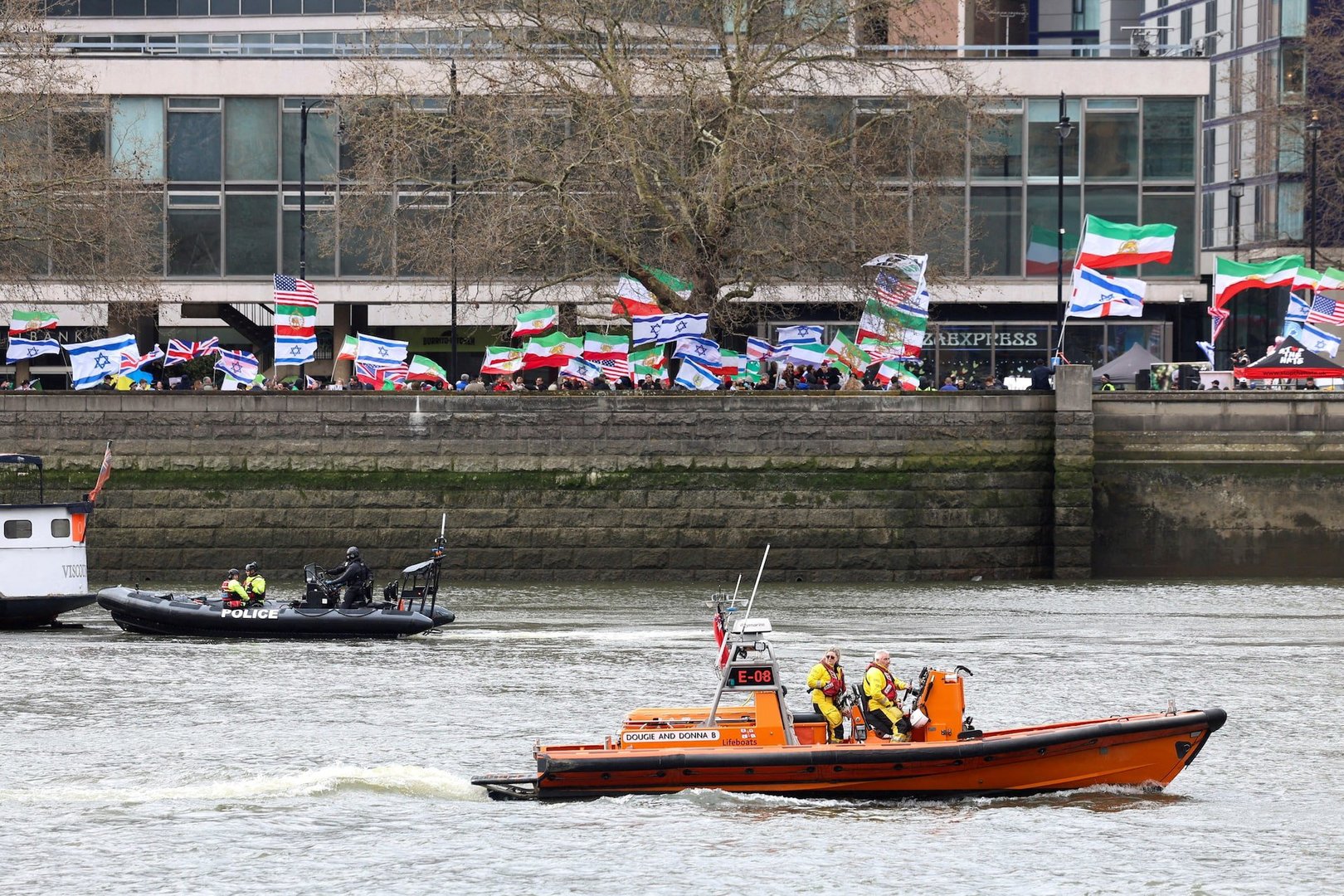
British police are preparing what they describe as an “unprecedented” public order operation in London as two large and politically charged protests are expected to take place alongside the FA Cup Final, creating one of the most complex security challenges the capital has faced in years.
What is confirmed is that authorities expect at least eighty thousand people across the demonstrations on Saturday.
One march will mark Nakba Day and is being organised by pro-Palestinian groups.
The other, branded the “Unite the Kingdom” rally, is associated with anti-immigration campaigning led by activist Stephen Yaxley-Lennon, widely known as Tommy Robinson.
Both events are scheduled in central London at the same time as the FA Cup Final at Wembley Stadium, increasing the risk of crowd congestion and overlapping movement across transport networks.
Police planning indicates a deployment of roughly four thousand officers, including reinforcements drawn from outside London.
The operation will include helicopters, police dogs, mounted units, riot-trained officers, and armed support vehicles held in reserve.
Officials have described the approach as the most assertive use of public order powers in recent years, with a stated aim of preventing confrontation between opposing groups and stopping escalation before it begins.
A significant feature of this weekend’s policing is the use of live facial recognition technology in a protest context for the first time.
The system will be deployed around areas linked to the “Unite the Kingdom” rally and used to identify individuals on police watchlists.
The pro-Palestinian march will not be subject to the same biometric screening, a distinction that has already drawn attention in discussions around proportionality and civil liberties.
The security environment surrounding the operation is shaped by broader concerns about public order and political tension in the United Kingdom.
Authorities point to recent incidents of antisemitic violence, heightened sensitivity around Middle East-related demonstrations, and fears of disorder linked to far-right mobilisation.
Police have also highlighted the potential involvement of football hooligan groups, a factor that has historically increased the risk of violence at large-scale gatherings.
Government officials have taken additional steps ahead of the events, including blocking entry to several foreign individuals described as having links to extremist or inflammatory activity, under powers used to prevent actions not considered conducive to the public good.
Organisers of both marches have been warned they will be held accountable for unlawful speech or incitement occurring within their events.
The convergence of multiple high-attendance events has placed exceptional strain on policing resources and planning.
Officers are not only tasked with separating rival demonstrations but also managing travel flows across the city during one of the busiest sporting weekends of the year.
The operational priority is to prevent flashpoints from forming in real time rather than responding after violence occurs.
The outcome of the weekend is expected to influence how British authorities manage future large-scale protests occurring in parallel with major national events.
The deployment signals a shift toward more technologically assisted and pre-emptive crowd control strategies, with implications for how protest policing is conducted in the United Kingdom moving forward.
What is confirmed is that authorities expect at least eighty thousand people across the demonstrations on Saturday.
One march will mark Nakba Day and is being organised by pro-Palestinian groups.
The other, branded the “Unite the Kingdom” rally, is associated with anti-immigration campaigning led by activist Stephen Yaxley-Lennon, widely known as Tommy Robinson.
Both events are scheduled in central London at the same time as the FA Cup Final at Wembley Stadium, increasing the risk of crowd congestion and overlapping movement across transport networks.
Police planning indicates a deployment of roughly four thousand officers, including reinforcements drawn from outside London.
The operation will include helicopters, police dogs, mounted units, riot-trained officers, and armed support vehicles held in reserve.
Officials have described the approach as the most assertive use of public order powers in recent years, with a stated aim of preventing confrontation between opposing groups and stopping escalation before it begins.
A significant feature of this weekend’s policing is the use of live facial recognition technology in a protest context for the first time.
The system will be deployed around areas linked to the “Unite the Kingdom” rally and used to identify individuals on police watchlists.
The pro-Palestinian march will not be subject to the same biometric screening, a distinction that has already drawn attention in discussions around proportionality and civil liberties.
The security environment surrounding the operation is shaped by broader concerns about public order and political tension in the United Kingdom.
Authorities point to recent incidents of antisemitic violence, heightened sensitivity around Middle East-related demonstrations, and fears of disorder linked to far-right mobilisation.
Police have also highlighted the potential involvement of football hooligan groups, a factor that has historically increased the risk of violence at large-scale gatherings.
Government officials have taken additional steps ahead of the events, including blocking entry to several foreign individuals described as having links to extremist or inflammatory activity, under powers used to prevent actions not considered conducive to the public good.
Organisers of both marches have been warned they will be held accountable for unlawful speech or incitement occurring within their events.
The convergence of multiple high-attendance events has placed exceptional strain on policing resources and planning.
Officers are not only tasked with separating rival demonstrations but also managing travel flows across the city during one of the busiest sporting weekends of the year.
The operational priority is to prevent flashpoints from forming in real time rather than responding after violence occurs.
The outcome of the weekend is expected to influence how British authorities manage future large-scale protests occurring in parallel with major national events.
The deployment signals a shift toward more technologically assisted and pre-emptive crowd control strategies, with implications for how protest policing is conducted in the United Kingdom moving forward.











