Diplomatic friction grows after Polish far-right politician detained at London airport
The incident has triggered accusations of political interference and renewed debate over border checks, security powers and freedom of movement
An actor-driven diplomatic dispute has emerged between Poland and the United Kingdom after a Polish far-right political figure was detained at a London airport and later released, prompting accusations that British authorities acted in a “totalitarian” manner.
The case has quickly escalated beyond a routine border-control interaction into a wider controversy over security enforcement, political speech, and the treatment of foreign politicians entering the UK.
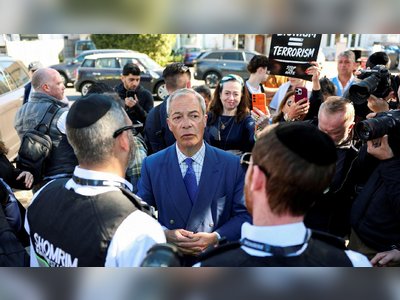
What is confirmed is that the individual, described as a Polish far-right leader, was stopped and held for questioning by UK border officials upon arrival in London.
He was subsequently released and allowed to continue his travel.
The detention was carried out under standard immigration and border security procedures, which permit officers to question or temporarily hold individuals if concerns arise about admissibility, security risks, or compliance with entry rules.
Following the incident, the politician publicly condemned the UK authorities, characterising the detention as evidence of authoritarian behaviour.
These claims have not been substantiated beyond his own statements, and UK officials have not indicated that the detention was politically motivated.
Instead, border enforcement actions of this kind typically fall under routine powers applied to all travellers regardless of nationality or political status.
The UK’s border system operates under strict entry controls that allow officers to detain individuals for further examination when necessary.
These measures are part of broader national security and immigration enforcement frameworks designed to assess eligibility for entry, verify documentation, and address potential risks.
Such powers are not unusual in international travel systems, though their application to political figures can generate diplomatic sensitivity.
The Polish political reaction reflects broader tensions surrounding the role of far-right movements in European politics and their relationship with mainstream institutions.
In several countries, far-right leaders have increasingly framed enforcement actions by other European states as politically motivated, particularly in contexts involving immigration, protest activity, or public order concerns.
The UK government has not publicly framed the incident as politically significant, and there is no indication that it represents a shift in bilateral relations between London and Warsaw.
However, the episode highlights how routine border security procedures can escalate into diplomatic friction when they involve politically active individuals with polarising reputations.
The immediate consequence is increased scrutiny of how border enforcement decisions are communicated and perceived in politically sensitive cases.
It also reinforces the broader reality that immigration control mechanisms, while administrative in nature, can have direct political repercussions when they intersect with high-profile individuals and charged ideological contexts.
The case has quickly escalated beyond a routine border-control interaction into a wider controversy over security enforcement, political speech, and the treatment of foreign politicians entering the UK.
What is confirmed is that the individual, described as a Polish far-right leader, was stopped and held for questioning by UK border officials upon arrival in London.
He was subsequently released and allowed to continue his travel.
The detention was carried out under standard immigration and border security procedures, which permit officers to question or temporarily hold individuals if concerns arise about admissibility, security risks, or compliance with entry rules.
Following the incident, the politician publicly condemned the UK authorities, characterising the detention as evidence of authoritarian behaviour.
These claims have not been substantiated beyond his own statements, and UK officials have not indicated that the detention was politically motivated.
Instead, border enforcement actions of this kind typically fall under routine powers applied to all travellers regardless of nationality or political status.
The UK’s border system operates under strict entry controls that allow officers to detain individuals for further examination when necessary.
These measures are part of broader national security and immigration enforcement frameworks designed to assess eligibility for entry, verify documentation, and address potential risks.
Such powers are not unusual in international travel systems, though their application to political figures can generate diplomatic sensitivity.
The Polish political reaction reflects broader tensions surrounding the role of far-right movements in European politics and their relationship with mainstream institutions.
In several countries, far-right leaders have increasingly framed enforcement actions by other European states as politically motivated, particularly in contexts involving immigration, protest activity, or public order concerns.
The UK government has not publicly framed the incident as politically significant, and there is no indication that it represents a shift in bilateral relations between London and Warsaw.
However, the episode highlights how routine border security procedures can escalate into diplomatic friction when they involve politically active individuals with polarising reputations.
The immediate consequence is increased scrutiny of how border enforcement decisions are communicated and perceived in politically sensitive cases.
It also reinforces the broader reality that immigration control mechanisms, while administrative in nature, can have direct political repercussions when they intersect with high-profile individuals and charged ideological contexts.